




Pressure regulator 20 (see fig. 170) is mounted on the body bracket and connected to the rear axle beam via torsion lever 23 and rod 13. The other end of lever 23 acts on piston 10 (Fig. 196).
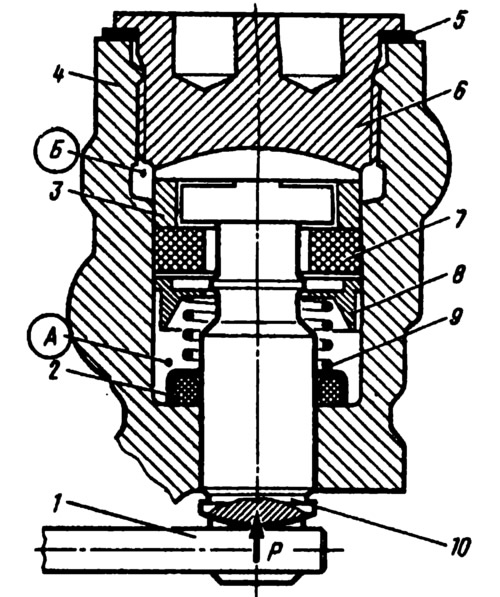
Fig. 196. Rear brake pressure regulator (in working position):
1 - lever; 2 - thrust washer with sealing ring; 3 - spacer sleeve; 4 - body; 5 - gasket; 6 - cork; 7 - seal; 8 - plate; 9 - spring; 10 - piston.
The fluid enters cavity A from the main cylinder, and exits from cavity B into the wheel cylinders of the rear brake drive. The force P acting on the piston from the torsion lever increases as the body approaches the axle beam and decreases as the body moves away from the rear axle beam.
Before the regulator starts to operate, piston 10 rests against plug 6 under the action of force P and spring 9. In this case, gaps are formed through which cavities A and B communicate, i.e. the pressure in them will be the same and equal to the pressure in the brake hydraulic drive. When the brakes are applied, the rear of the car rises by inertia and, consequently, the pressure on the piston from lever 1 decreases. The force of fluid pressure on the upper end of the piston, which has a large surface area, will at some point exceed the force of fluid pressure acting on the piston from below, and the piston will move down until it stops against seal 7. Cavities A and B are separated and different pressures are created in them: in cavity A, pressure PA will be equal to the pressure in the main cylinder, and in cavity B the pressure PB will be less than PA by a value that determines the equilibrium of the piston under the action of pressure PA and RB, springs 9 and the force of the torsion lever. Thus, partial or complete separation of cavities A and B by piston 10 regulates the magnitude of the braking torque on the rear wheels.