




Contents: Starting a cold carburetor engine…↓ Starting a warm engine ↓ Starting a hot engine ↓ Jump starting from another car's…↓ Starting the engine using a charging…↓
Attention! Before starting the engine, be sure to move the gearshift lever to neutral. At an air temperature of -25°C and below, we recommend pressing the accelerator pedal 2-3 times.
Caution! The ignition switch has a lock that prevents the starter from turning on when the engine is running, so when restarting the engine, first turn the key to position 0.
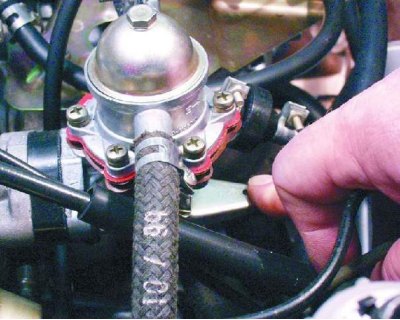
1. After a long period of parking, pump gasoline into the carburetor float chamber by pressing the fuel pump lever several times.
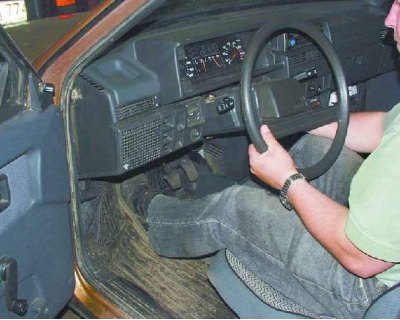
2. At sub-zero air temperatures, press the clutch pedal all the way down and hold it while starting the engine.
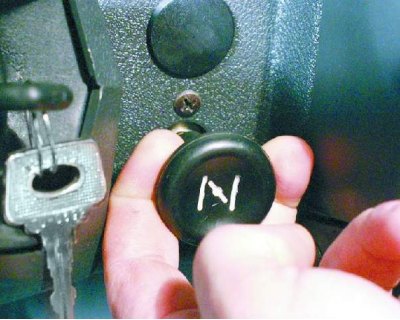
3. Pull the carburetor choke handle all the way out.
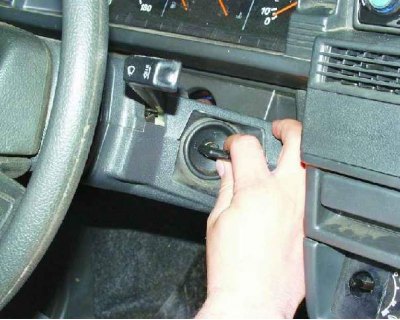
4. Turn on the starter by turning the key to position II (without pressing the accelerator pedal). Do not turn the engine shaft with the starter for more than 10-15 s. If the engine starts, release the key - under the action of the return spring it will return to position I.
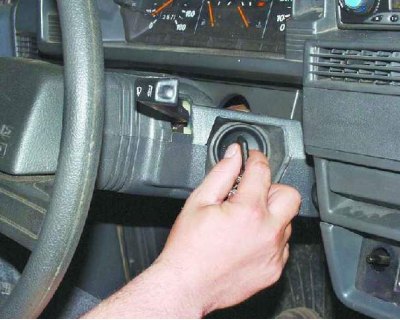
5. If the engine does not start on the first try, turn off the ignition by returning the key to position 0, and after 20–30 seconds, turn on the starter again.
6. If the engine starts running smoothly, release the clutch pedal smoothly (if it was squeezed out).
7. As the engine warms up and the crankshaft speed increases, gradually press the air damper drive handle in. In the warm-up mode, do not allow the engine to operate at speeds exceeding (2000±200) min⁻¹.
Starting a cold carburetor engine equipped with an automatic starting device
At air temperatures below –25°C, press the accelerator pedal 2–3 times before starting the engine.
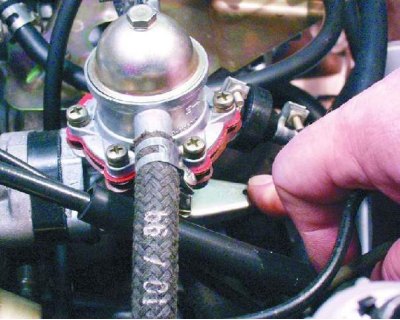
1. After a long period of parking, pump gasoline into the carburetor float chamber by pressing the fuel pump lever several times.
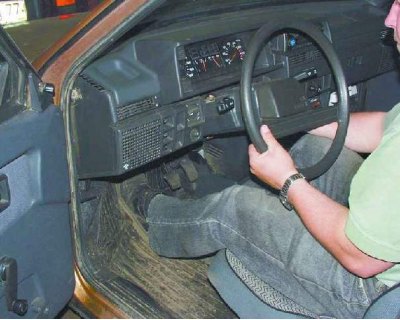
2. If the air temperature is below freezing, press the clutch pedal all the way down and hold it until the engine starts.
3. Press the accelerator pedal all the way down once.
4. Turn on the starter by turning the key to position II (without pressing the accelerator pedal). Do not engage the starter for more than 10–15 s. If the engine starts running steadily, release the key – under the action of the return spring it will return to position I.
5. If the engine does not start on the first try, turn off the ignition by returning the key to position 0, and after 20–30 seconds, turn on the starter again.
6. Release the clutch pedal smoothly (if it was squeezed out) with stable engine operation.
7. As the engine warms up, slowly press and release the accelerator pedal to reduce engine idle speed.
Starting a warm engine
Caution! When starting a warm engine, do not close the carburetor air damper - this may lead to over-enrichment of the combustible mixture and make starting difficult.
1. Press the accelerator pedal gently.
2. Turn the ignition key to position II, engaging the starter. Do not crank the engine shaft with the starter for more than 10–15 s. If the engine starts running steadily, release the key – under the action of the return spring, it will return to position I.
3. After the engine starts, release the accelerator pedal.
4. If the engine does not start on the first attempt, turn off the ignition by returning the key to position 0, and after 20-30 seconds, turn on the starter again. If after three attempts the engine does not start, check the ignition and power supply systems.
Starting a hot engine
Caution! When starting a hot engine, when the coolant temperature gauge needle approaches the red zone, do not close the carburetor air damper - this will lead to over-enrichment of the combustible mixture and make starting difficult.
1. Press the accelerator pedal approximately 1/3 of the way down and hold it while starting the engine.
2. Turn on the starter. Do not turn the engine shaft with the starter for more than 10-15 s. If the engine starts running steadily, release the key - under the action of the return spring it will return to position I.
3. When the engine starts to run smoothly, gradually release the accelerator pedal.
Jump starting from another car's battery
You will need:
- special wires for starting the engine from an external source
Caution! Make sure that the cars do not touch.
[The text is on the website vazbook.ru]
Caution! Do not touch the body during starting.
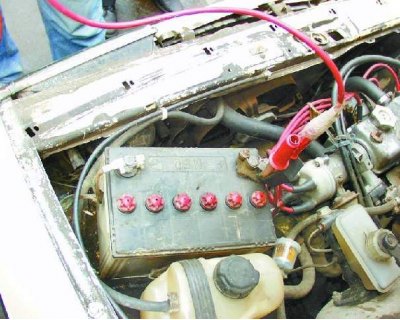
1. Connect the red wire to the "+" terminal of the charged battery (on another car).
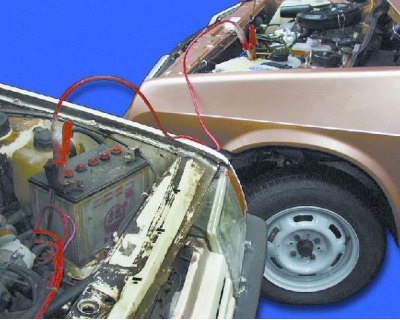
2. Connect the other end of the red wire to the "+" terminal of your car's battery.
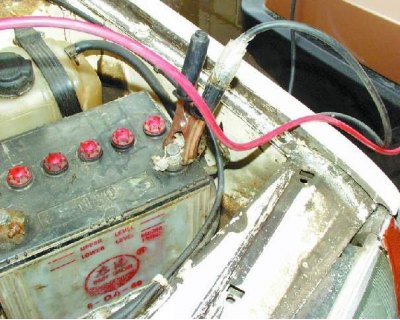
3. Connect the black wire to the "-" terminal of a charged battery (on another car).
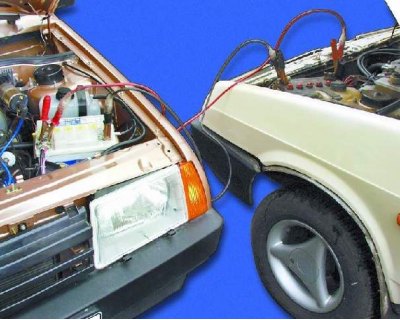
5. Start the car engine with a charged battery and let it run for at least one minute.
6. Try starting the engine of your car. If the engine does not start, wait a few minutes and try again. Once the engine is started, allow it to idle for a few minutes.
4. Connect the other end of the black cable to the "-" terminal of your car's battery. Make sure that the cables do not touch any rotating parts (for example, a fan, a generator belt, etc.).
7. Turn off the engine of a car with a charged battery.
8. Disconnect the wires in the reverse order of connection.
Starting the engine using a charging and starting device
You will need:
- charger-starter
Attention! If the battery is completely discharged, it must be recharged for 20-30 minutes before starting. The high starting current from the charger-starter can damage a completely discharged battery.
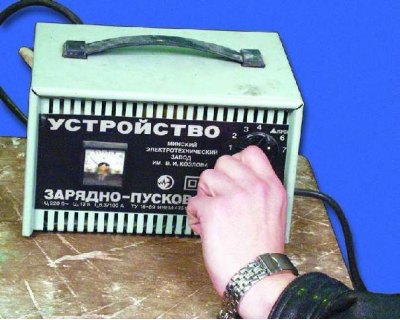
1. Move the charger to the "START" position in accordance with the manufacturer's instructions.
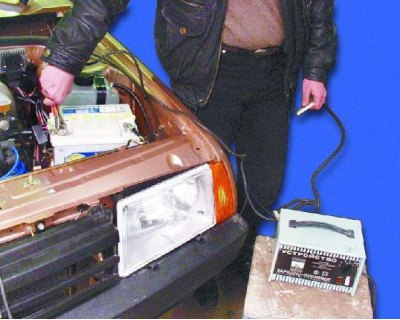
2. Connect the wires of the charger-starter to the terminals of the battery, observing the polarity.
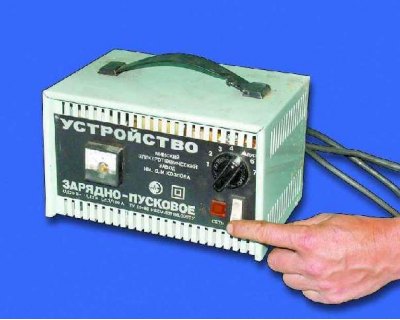
3. Turn on the charger and jumper.
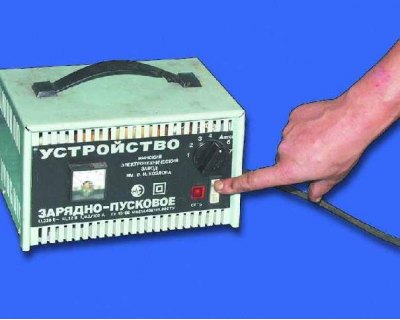
4. Start the engine. If the engine starts, first turn off the charger and then disconnect its wires from the battery terminals.