




1. Raise and support the front of the vehicle. Remove the wheel.
Warnings! Brake the car with the parking brake and install the anti-rollback stops ("shoes") under the rear wheels.
Loosen and tighten wheel bolts only with the vehicle on the ground. Bolt tightening torque 65–95 N·m (6.5–9.5 kgf·m).
2. Clean any dirt from the front strut mount nut.
Helpful Hint: To make it easier to unscrew the nut that secures the tie rod to the bracket, apply a liquid like WD-40 to the threaded connections and wait a bit.
3. Loosen the front strut mount nut…
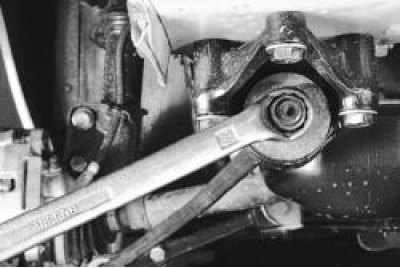
4. …and the rear strut mount nut.
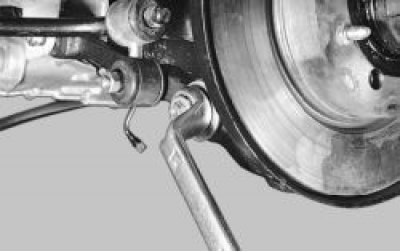
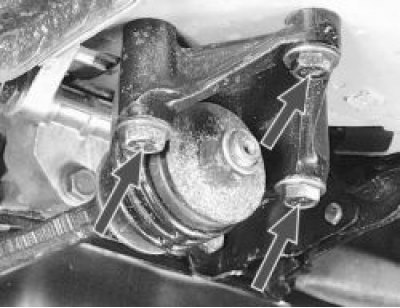
5. Remove the three bolts securing the tensioner bracket.
6. Be sure to count and record the number of shims from the front…
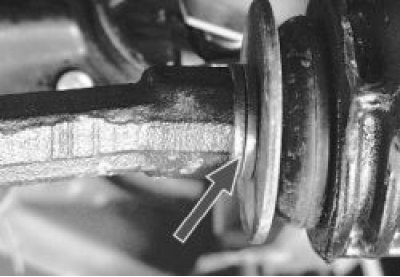
7. …and the rear ends of the stretch.
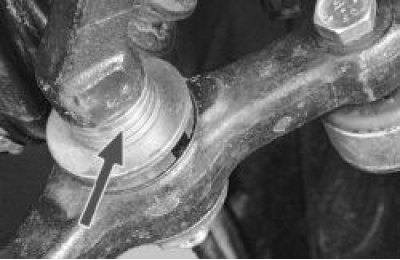
8. Completely unscrew the fastening nut and remove the tensioner.
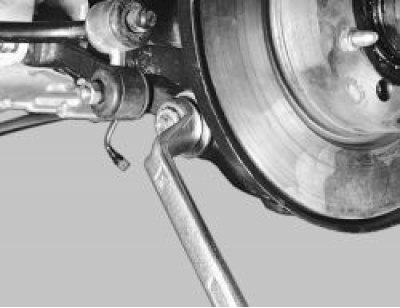
9. Carefully inspect the stretcher. If it is bent or there is damage to the rubber-metal hinges or aging, swelling or loss of elasticity of the rubber, replace the damaged parts.
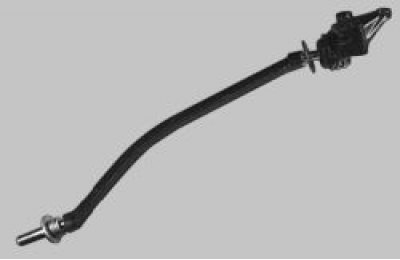
10. If the tensioner bracket is damaged, replace it.
Note: Replacing the rubber-metal strut joints pressed into the bracket and front suspension arm requires special tools and skill. We recommend that you contact a service station to perform this operation.
Helpful advice: If after replacing the strut the car starts to pull to one side while driving, contact a specialized workshop for diagnostics of the front suspension, be sure to inform the repairman that the strut was replaced.
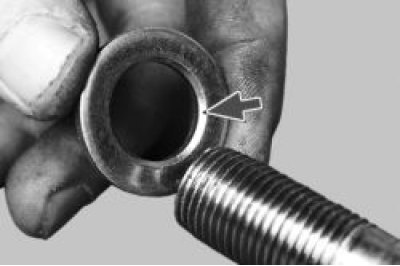
11. Install the tensioner in the reverse order of removal. Install the adjusting washers in the same quantity and on the same ends of the tensioner. The chamfers on their internal diameters should be directed toward the thrust shoulder of the tensioner.
12. After lowering the car to the ground, rock it vigorously several times and tighten the nuts securing the tie rod to the lever and bracket to the appropriate torques – 160–180 N·m (16.0–18.0 kgf·m), and the nuts securing the bracket to the body to 43–53 N·m (4.3–5.3 kgf·m). After driving 100 km, tighten these threaded connections again to the required torques.