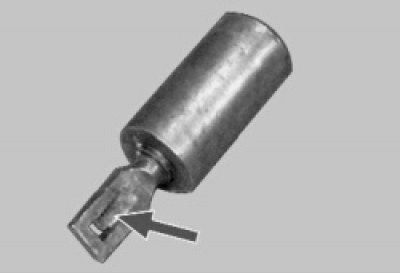

1. Remove the starter from the vehicle (see "Removal and installation the starter").
2. Unscrew the nut from the lower contact bolt.
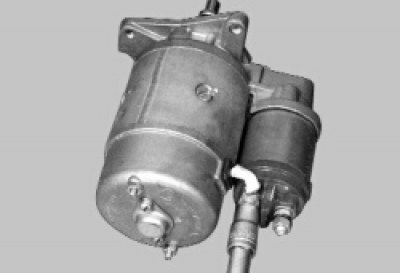
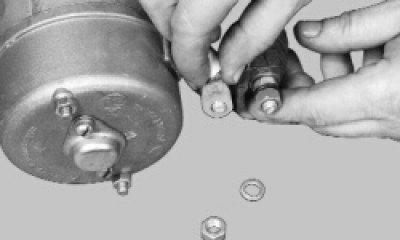
3. Remove the washer and disconnect the stator winding terminal tip.
4. Unscrew the two screws securing the traction relay.
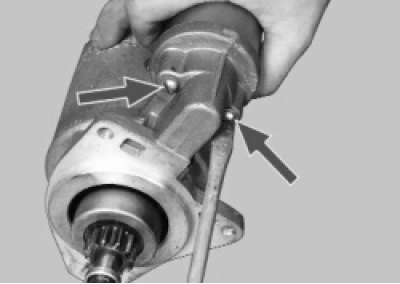
5. Remove the traction relay. To do this, disconnect the relay anchor from the lever by lifting the relay.
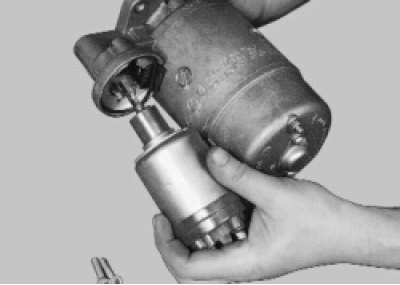
6. Remove the anchor and spring from the traction relay.
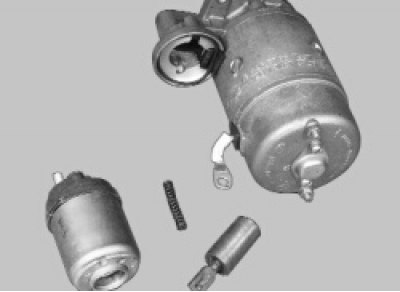
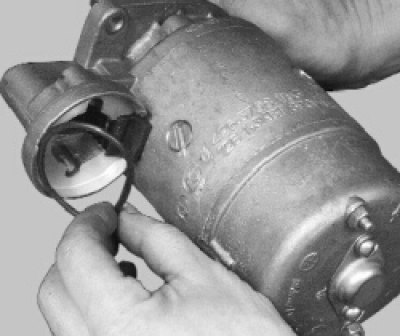
7. Remove the sealing ring.
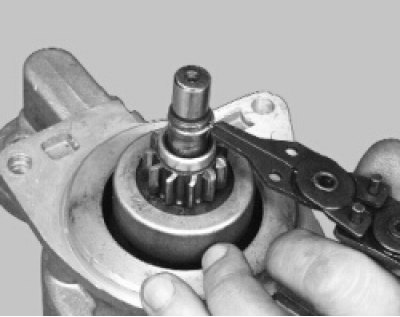
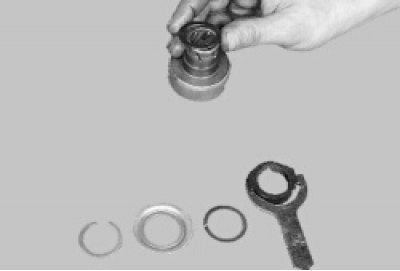
8. Using a tube of suitable diameter, knock the restrictor ring off the retaining ring.
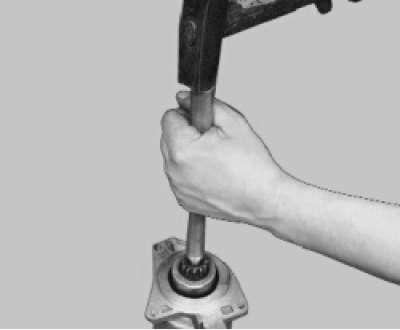
Note: The stop ring is secured by a retaining ring installed underneath it.
9. Remove the retaining ring and then the limiting ring.
10. Unscrew the two mounting screws and remove the protective cover.
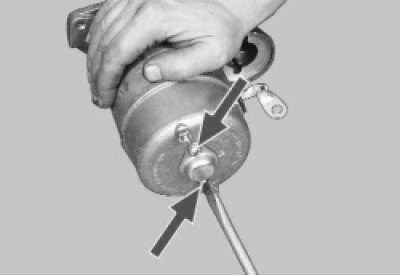
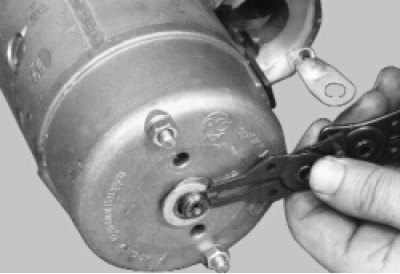
11. Remove the retaining ring…
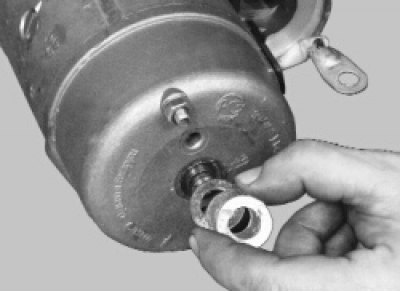
12. …and then the adjusting washers.
13. Unscrew the nuts of the tie rods…
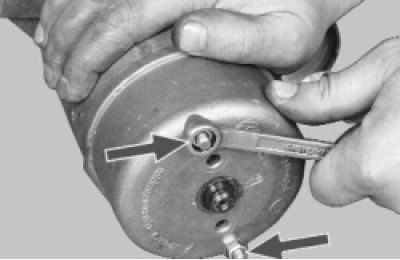
14. …and remove the cover from the manifold side.
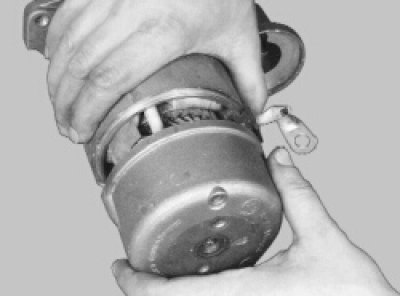
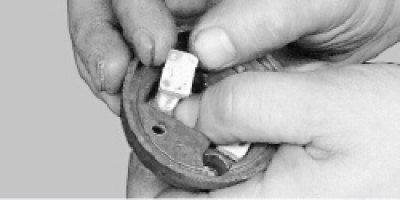
15. Use a screwdriver to press the springs of both insulated brushes and remove the brushes from the brush holder.
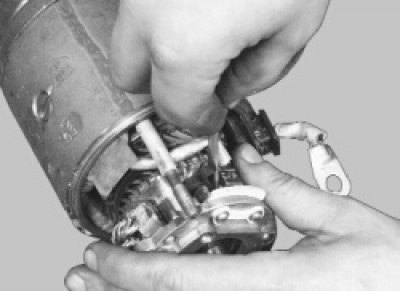
16. Remove the brush holder.
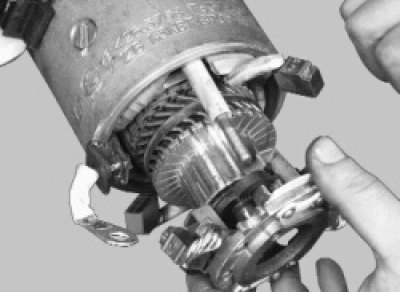
Note. Insulated brushes 1 are soldered to the stator winding terminals, and non-insulated brushes 2 are soldered to the brush holder. When the brush holder is removed, the insulated brushes remain on the stator winding terminals.
17. Remove the housing with the stator.
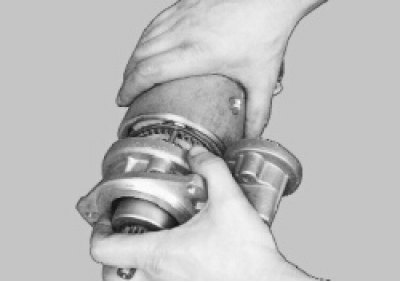
Note: Four excitation windings are fixed in the starter housing.
18. Remove the plastic lever stop.
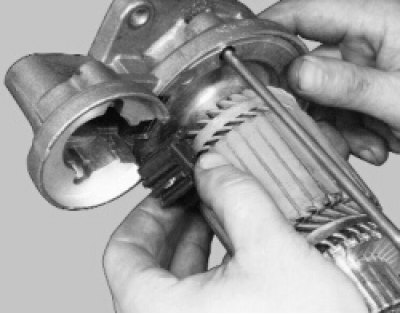
19. Remove the anchor from the drive side cover.
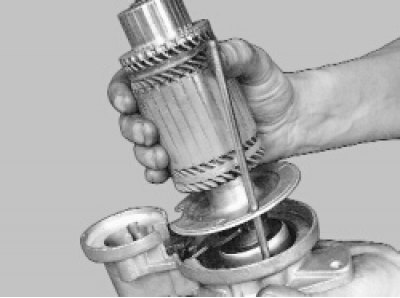
20. Remove the intermediate support from the armature shaft.
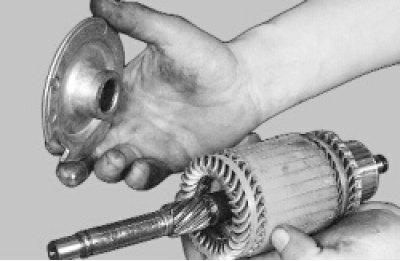
21. Remove the retaining ring from the starter drive.
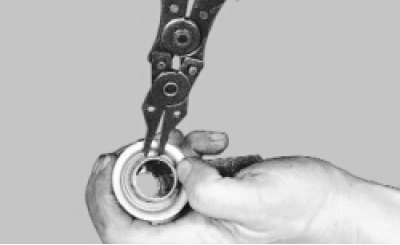
Note: This is what the starter drive parts look like: 1 – gear; 2 – drive lever; 3 – overrunning clutch; 4 – disc washer.
22. Remove the disc washer…
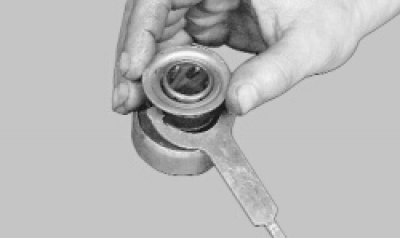
23. … thrust washer…
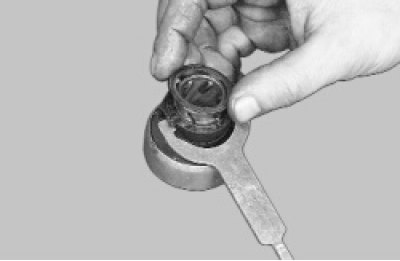
24. …a clutch with a lever…
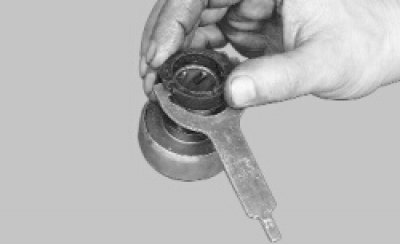
25. …and a thrust ring.
26. Remove the two screws securing the traction relay cover.
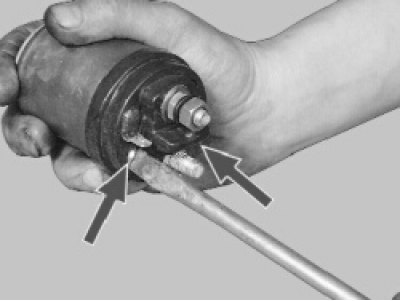
Warning! Disassemble the traction relay only if it needs to be repaired.
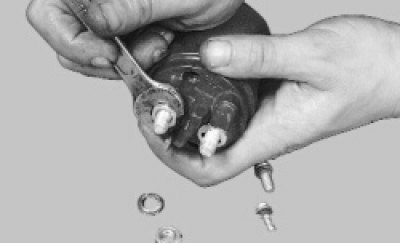
27. Unscrew the nuts from the two contact bolts of the traction relay.
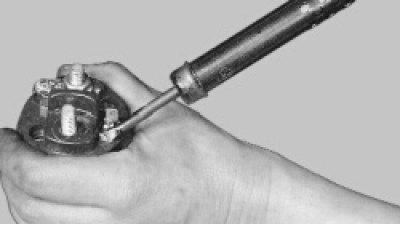
28. Using a soldering iron, disconnect both winding terminals from the traction relay terminals.
29. Remove the traction relay cover.
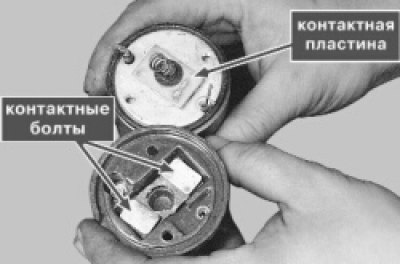
30. Remove the sealing ring.
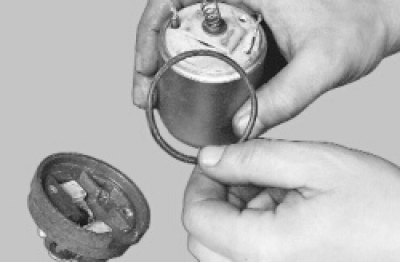
31. Remove the contact plate assembly with the rod.
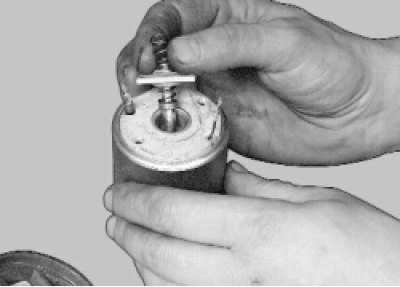
32. Remove the return spring from the rod…
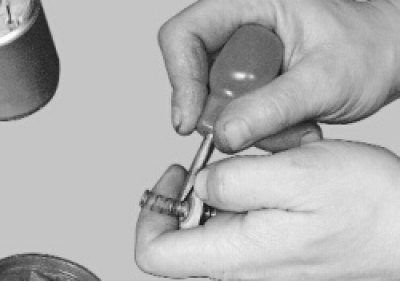
33. …retaining ring…
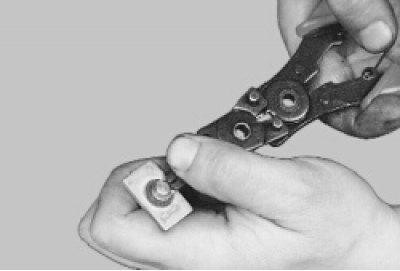
34. …and an insulating washer.
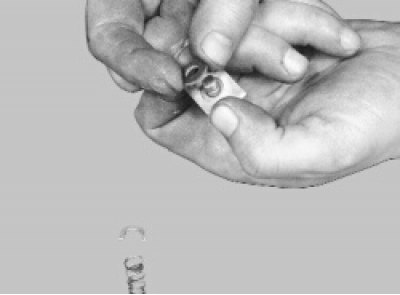
35. Remove the contact plate…
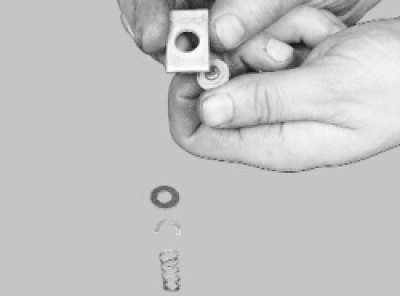
Note: Contact plate mounting details (shown in order of installation on the rod).
36. …insulating sleeve…
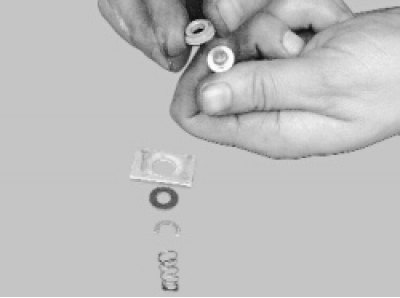
37. …washer…
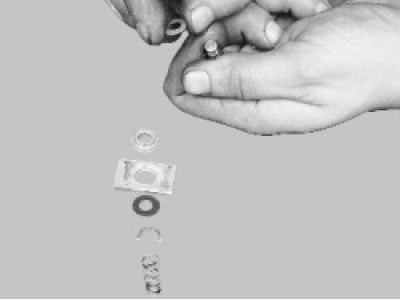
38. …and a damping spring.
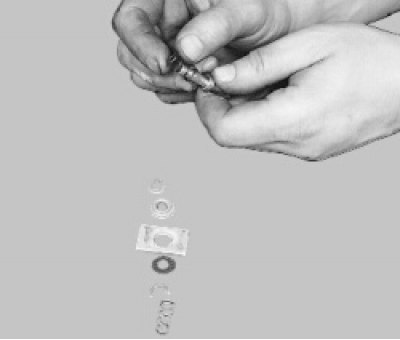
39. Remove the contact bolts from the cover.
Note: The windings of the traction relay are installed in a non-separable housing, therefore, if they are damaged, replace the traction relay assembly.
40. Clean all starter parts from dirt.
41. Check the condition of the stator winding. To do this, turn on the test lamp in the 220 V AC circuit and connect the wire to one of the stator winding terminals, short-circuit the other end of the circuit to the body. If the lamp lights up, the winding insulation is damaged. Replace the winding or stator. Check the second winding in the same way.
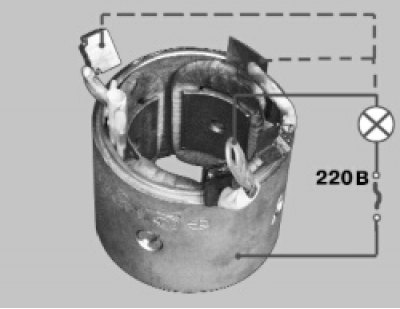
Warning! When testing with 220 V, be careful - do not touch the parts of the starter that are under voltage with your hands.
Helpful Hint: The stator windings can be checked with a megger. Connect one contact to the terminal and the other to the stator housing. The winding resistance should be at least 10 kOhm. If it is less, replace the stator.
42. Inspect the anchor. If the commutator is dirty or has grooves or scratches, polish it with fine glass paper. If the commutator is significantly rough or if mica protrudes between the plates, turn the commutator on a lathe and then polish it with fine glass paper. The runout of the core relative to the shaft journals should not exceed 0.08 mm. If the runout is greater, replace the anchor.
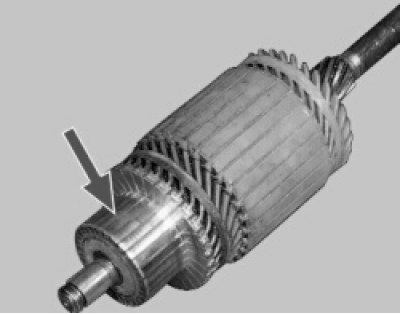
43. If there is yellow deposits from the bearing on the armature shaft, remove them with fine sandpaper, otherwise this will cause the gear to jam on the shaft.
If there are nicks or burrs on the surfaces of the journals and splines of the shaft, replace the anchor.
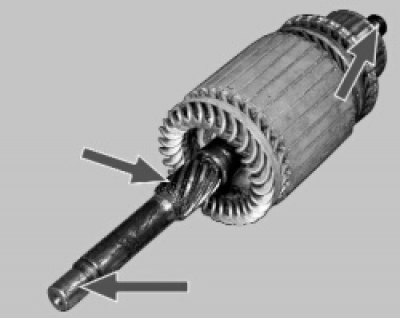
44. Check the reliability of the soldering of the anchor winding terminals to the commutator plates. Inspect the winding at the ends of the anchor: the winding diameter should be smaller than the anchor iron package. If the diameter is larger, replace the anchor.
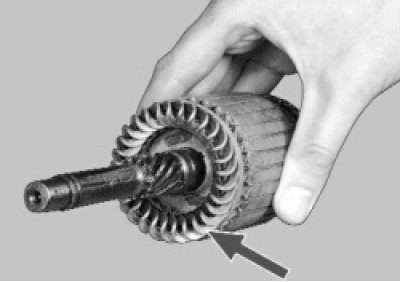
45. Check the condition of the armature winding with a test lamp in the 220 V AC circuit. Connect the wires to the collector plate and the armature core. If the lamp lights up, then there is a short circuit of the armature winding or the collector plate to ground. In this case, the armature must be replaced.
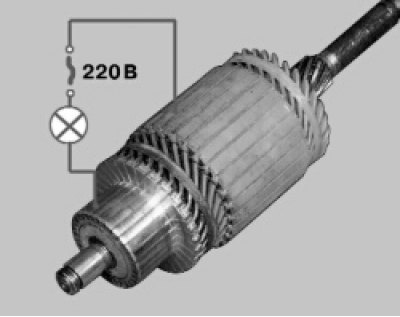
Useful advice. The armature windings can be checked with a megohmmeter. Connect one of its contacts to the collector, the other to the armature core. The resistance of the windings should be no less than 10 kOhm. If the resistance is lower, replace the armature.
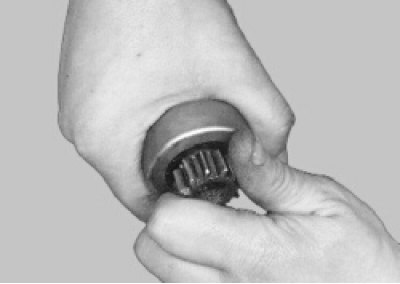
46. While holding the overrunning clutch, try to turn the starter pinion in both directions: it should rotate freely only clockwise. If the pinion rotates in both directions, replace the drive.
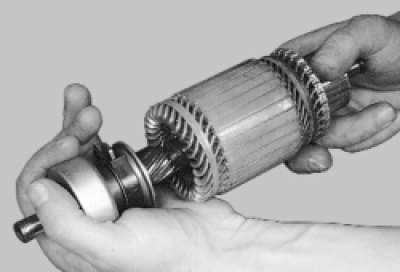
47. Place the starter drive on the armature shaft. It should move freely along the shaft splines without jamming.
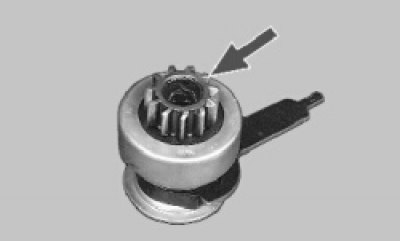
48. If the drive parts are badly worn or damaged, replace the drive. If nicks are found on the lead-in part of the gear teeth, grind them with a fine-grained emery wheel of small diameter.
49. Inspect the starter cover on the collector side and the intermediate support. If cracks appear on these parts, replace them. Also inspect the bushings in the cover and support in which the anchor shaft rotates. If severe wear or mechanical damage is detected, replace the cover or support with defective bushings.
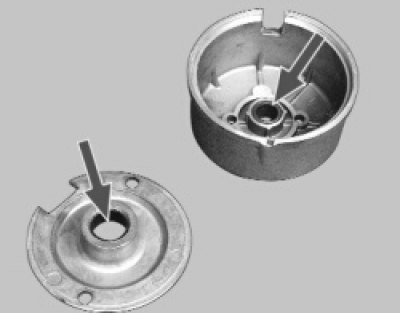
50. Inspect the bushing pressed into the clutch housing. If the bushing is worn or has burrs or cavities, replace the bushing.
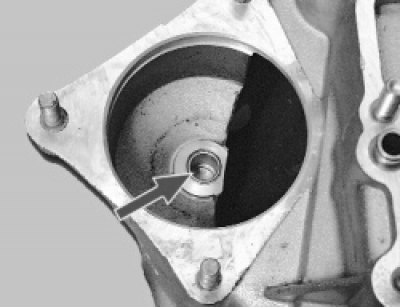
Helpful Hint: The bushing is located in a blind hole in the clutch housing and is therefore difficult to access. To remove the bushing, screw a tap of the appropriate size into it until it stops at the bottom of the hole, as if cutting a thread in the bushing. With further rotation of the tap, the bushing will be pressed out of the hole.
51. Brushes worn to a height of less than 12 mm must be replaced.
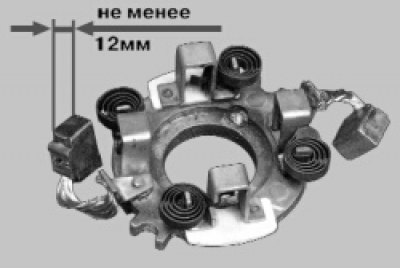
52. Check the movement of the brushes in the holders. The brushes should move easily, without jamming. Check the reliability of the fastening of the brush holders: they should be firmly secured.
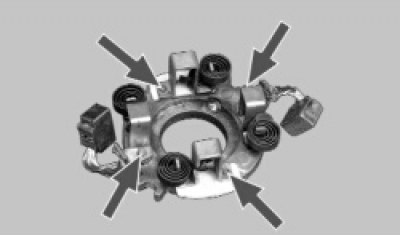
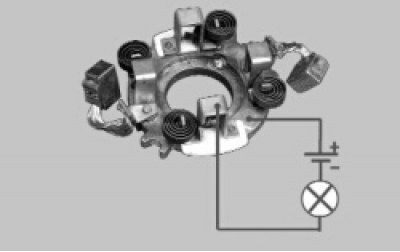
53. The insulated brush holders must not short to ground. Check this with a test lamp.
54. Check the force of the springs pressing the brushes using a dynamometer. To do this, insert the anchor into the cover from the drive side, install the housing and brush holder.
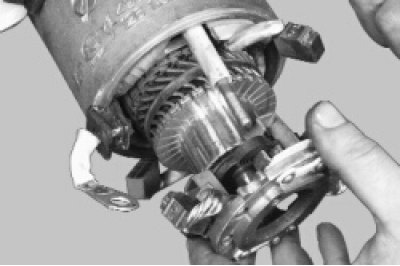
55. Insert the brushes into the brush holders. At the moment the spring separates from the brush, the force should be within 9.0–11.0 N (0.9–1.1 kgf).
The original is available on the online resource VazBook.ru
56. Check the resistance of the traction relay windings with an ohmmeter. The resistance of the pull-in winding should be within 0.52–0.59 Ohm (dotted lines in red), and the holding one – 0.725–0.795 Ohm (solid yellow lines) at an ambient temperature of +15 to +25°C. The traction relay anchor must move freely in the housing, without jamming.
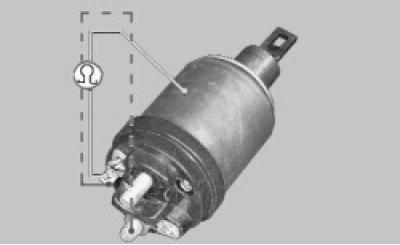
Note. At the same time as checking the winding resistance, check whether the contact plate closes the contact bolts of the traction relay. If the ohmmeter shows infinity, then either there is a break in the winding, or the plate does not close the contact bolts. In the first case, the traction relay must be replaced.
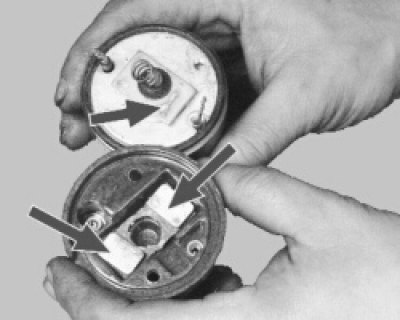
57. Inspect the contact bolts. Clean the burnt bolt heads with fine sandpaper. If the heads are heavily burnt, you can turn the bolts 180° so that they are pressed against the contact plate with the unburnt side. If the surface of the contact plate is heavily worn, you can turn it with the other side facing the contact bolts.
When assembling the starter, do the following.
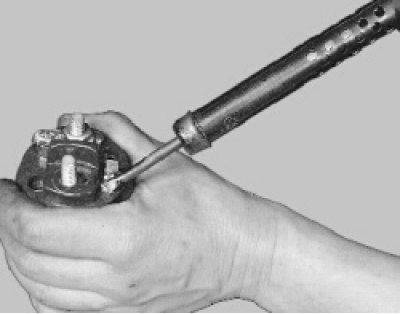
1. Securely solder the winding leads to the traction relay contacts.
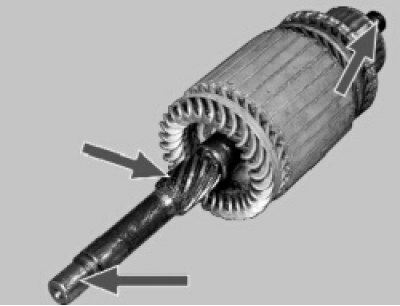
2. Lubricate the splines and journals of the armature shaft with engine oil…
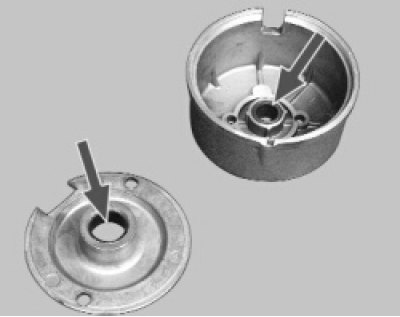
3. … rear cover and intermediate support bushings…
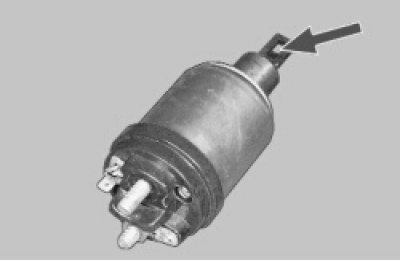
4. …tip of the traction relay anchor…
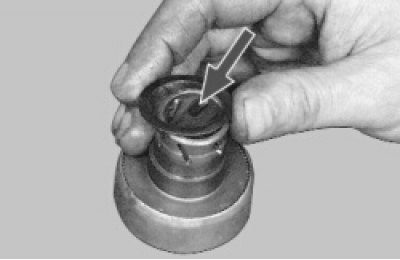
5. …and the splines of the overrunning clutch.
6. Adjust the axial clearance of the starter armature shaft by selecting adjusting washers. The clearance should be no more than 0.5 mm.
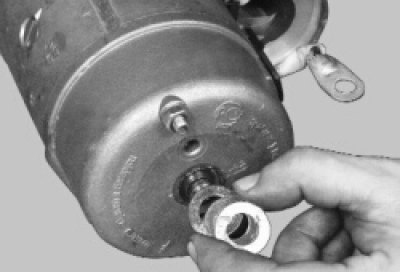
7. Install the support on the lever with the protrusion towards the anchor.
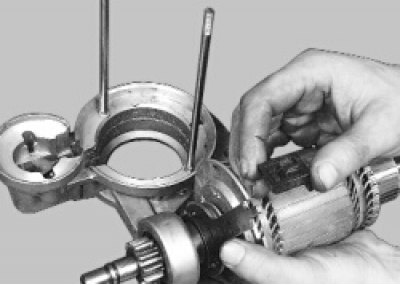
8. Tie rods must pass through the insulating tubes.
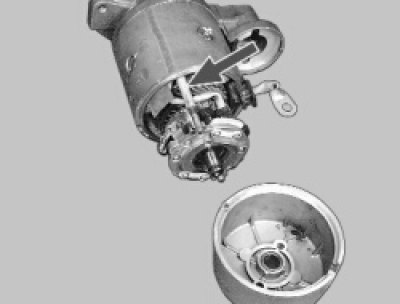
9. When connecting the lever to the end of the traction relay armature, the tongue on the end of the armature must be directed downwards.