




Contents: Disassembly ↓ Assembly ↓
Disassembly
Disassembly is carried out in case of damage to protective covers 6 and casings 5 in order to check the condition of the hinge parts and the quality of the lubricant.
The disassembly procedure is as follows: loosen clamp 9 (fig. 3-85) and remove it from the rubber cover 6; loosen the inner clamp securing the casing 5 and boot 6 to the shaft 4 and slide the casing with the boot on the shaft to open access to the joint sleeve 11; using a punch and a hammer, knock the collar 11 off the shaft; remove thrust ring 7, protective cover 6 and casing 5 from shaft 4; move the protective cover and the inner joint casing on the shaft and, having removed the retainer 2, remove the shaft 4 from the housing 1, complete with the collar, separator and balls; using a punch and a hammer, knock the inner joint collar off shaft 4; after removing the thrust ring, slide the protective cover off the shaft; wash the internal cavities of the hinge housings and other parts.
Warning: To prevent the locking ring 12 from jamming, it is important to prevent the clip from becoming skewed by choosing the right force and direction of impact.
The most difficult and responsible operations are those for disassembling and assembling the outer hinge, the parts of which are shown in Fig. 3-86. Good quality of disassembling and assembling works is ensured by observing the following techniques. Mark with paint the relative positions of the collar, separator and hinge housing. Secure the outer hinge in a vice, as shown in Fig. 3-87. Tilt the collar and separator so that one ball comes out of the groove of the hinge housing as completely as possible. Use a screwdriver made of soft metal to push the ball out of the separator. Then turn all the parts so that the adjacent ball takes the same position, and remove it from the separator. Using the techniques indicated, remove the remaining balls. The sequence of removing the balls from the separator may be different - every other ball.
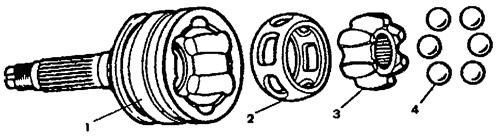
Fig. 3-86. Front wheel drive outer joint parts: 1 - hinge housing; 2 - separator; 3 - clip; 4 - ball
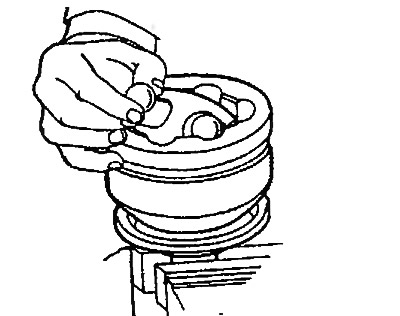
Fig. 3-87. Removing balls from the separator
Light tapping on the separator or cage with an object made of soft material is allowed. Excessive force when turning the separator is unacceptable, as it may block the balls, which will complicate further disassembly.
Install the separator from the collar so that the elongated holes of the separator are located against the projections of the hinge housing (see fig. 3-88) and remove the separator assembly with the clip.
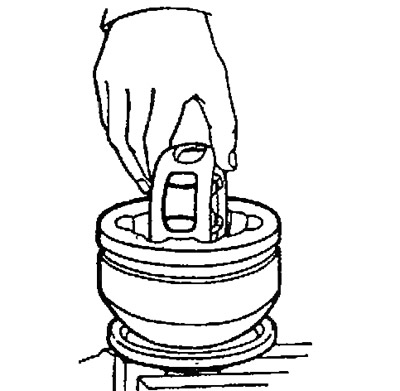
Fig.3-88. Removing the separator assembly with the collar from the hinge housing
Remove the clip from the separator by placing one of the clip's projections in the separator's elongated opening (see fig. 3-89) and then roll the collar towards the straight edge of the hole. Wash all the hinge parts and blow them out with compressed air.
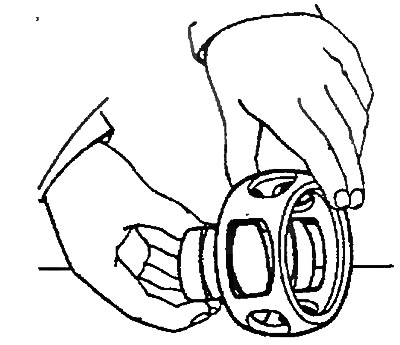
Fig. 3-89. Removing the clip from the separator
Assembly
The outer joint is assembled in the reverse order of disassembly, taking into account the following: before assembly, lightly lubricate all parts with SHRUS-4 grease or Molykote VN 2461c greases; when installing the separator assembly with the collar into the hinge housing, ensure that the marks applied before disassembly match, place the collar with the annular groove (under the thrust ring) towards the shaft; when installing balls into the separator, tilt the cage at an angle approximately twice as large as the separator; fill the joint with one of the specified lubricants in the amount of 60 cm³; before hitting shaft 4 (fig. 3-85) to connect it to the inner race 11, it is necessary to install the retaining ring 12 strictly in the center, and then sharply hit down on the end of the shaft; the retaining ring will be compressed and will slide through the splined hole in the cage; when pressing in the joint housing oil seal ring, use mandrel 67.7853.9533.
After assembly, the cage may lock when the shaft is rocked, when the joint does not rotate. This is not a sign of poor assembly, since such blocking will not occur when the joint rotates during operation. Using the above techniques, completely disassemble the inner joint. In this case, the cage must be removed towards the large diameter of the separator. Assembly of the inner joint is carried out in the reverse order. In this case, it is necessary to align the marks applied before disassembly. The elongated conical part of the separator must be directed towards shaft 12. When assembling, fill the joint with one of the specified lubricants in the amount of 150 cm³. When installing the protective covers of the joints, use mandrel 67.7853.9537. If there are no knocks or vibrations, the protective covers are in good condition, then disassembling the front wheel drive is not recommended.