




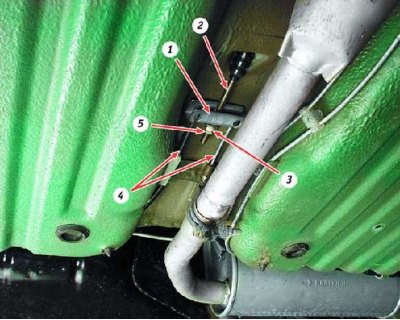
Tensioning device (located under the bottom of the car above the 1st stage muffler): 1 – equalizer; 2 – thrust; 3 – adjusting nut; 4 – cables; 5 – lock nut
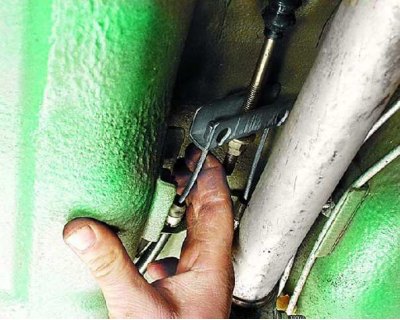
Before adjusting the parking brake, check the condition of the drive cables. If, when pressing the cable, you feel that it does not move in the sheath, then the cable is "soured". In this case, the adjustment will not lead to a positive result and the cable must be replaced.
You will need two 13 mm keys.
Before you start working: Adjust the clearances between the brake shoes and the brake drum.
Attention! On cars produced since 1995, the design of the parking brake lever has been changed (the first tooth of the sector is made double).
Caution! The parking brake must hold the vehicle on a 25% slope. On vehicles manufactured since 1995, the parking brake lever may be moved 2–8 clicks, and on vehicles manufactured before 1995, 4–7 clicks.
Caution! If the lever moves more than 8 clicks (7 for cars manufactured before 1995) when braking the car with the parking brake, the car will not hold on the slope. If the lever travel is less than 2 clicks (4 for cars manufactured before 1995), the wheels may partially lock while the car is moving. In both cases, the parking brake must be adjusted.
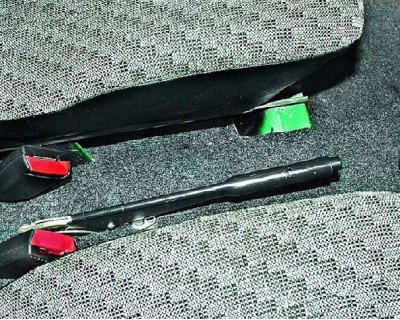
1. Lower the parking brake lever all the way down. On vehicles produced before 1995, raise the lever 1-2 clicks.
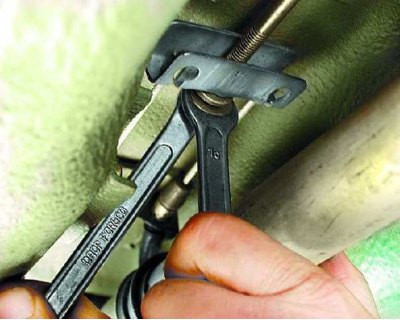
2. Loosen the tensioner lock nut while holding the adjusting nut with another wrench to prevent it from turning.
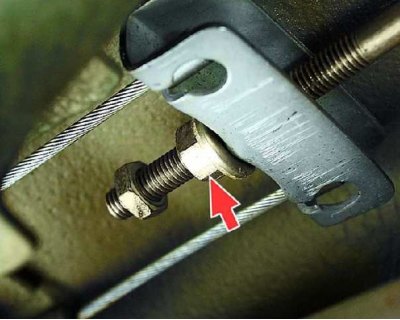
3. Tighten the adjusting nut until the parking brake cable is tensioned.
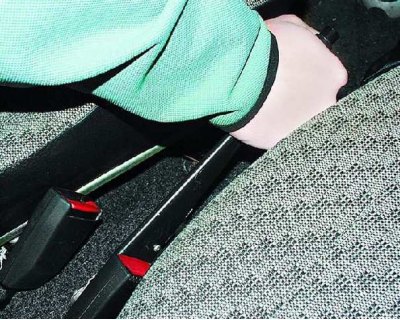
4. Check: the full working stroke of the parking brake lever should be 2-4 clicks (on cars produced before 1995 - 4-5 clicks).
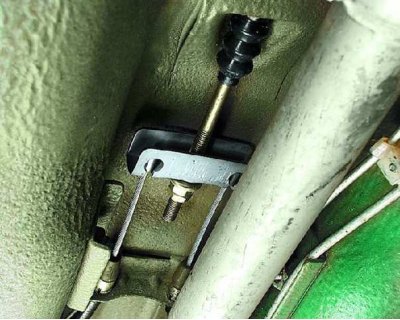
5. After checking the working stroke, tighten the equalizer lock nut while holding the adjusting nut with a wrench.
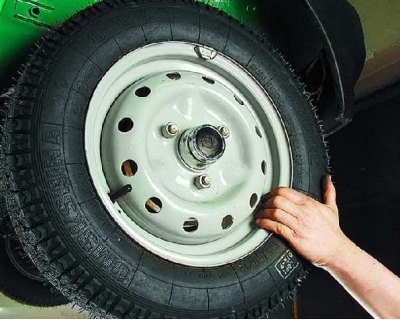
6. Lower the parking brake lever all the way and turn the rear wheels by hand. They should rotate smoothly, without jamming.