




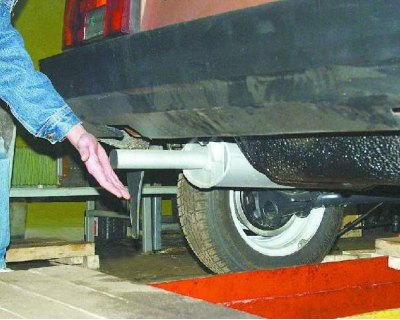
1. Start the engine and let it idle. Go to the exhaust pipe and listen to the exhaust sound. The sound should be smooth, "soft", of one tone. Pops from the exhaust pipe at regular intervals indicate that one cylinder is not working due to a faulty spark plug, no spark on it, a strong air leak in one cylinder or a significant decrease in compression in it. Pops at irregular intervals occur due to improper adjustment of the carburetor, ignition, severe wear or contamination of the spark plugs.
Popping sounds from the exhaust pipe at regular intervals?
Yes: see point 3
2. You can try to replace the entire set of spark plugs yourself, regardless of mileage and appearance, but it is better to do this after contacting a car service for diagnostics and adjustment of the carburetor and ignition system.
3. Stop the engine and open the hood.
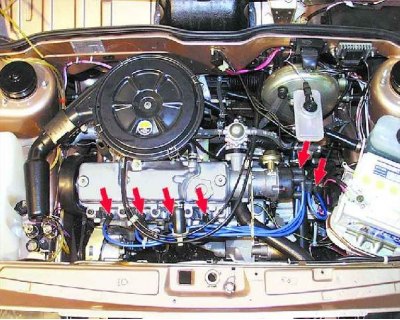
4. Check the condition of the ignition system wires. High-voltage wires should not have damaged insulation, and their tips should not be oxidized.
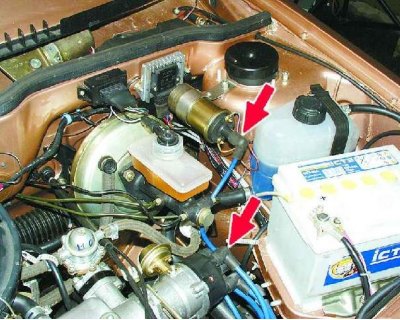
Is there any damage to the wires?
No: see point 6
5. Replace the damaged wire.
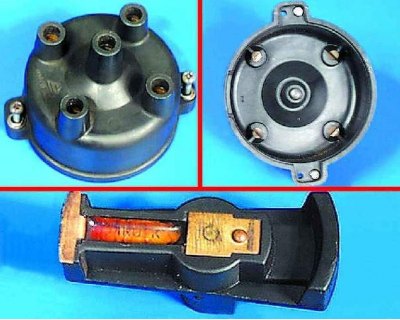
6. Check the condition of the distributor cap and rotor. Loosen the two screws securing the plastic distributor cap and remove it. Inspect the cap from the inside and outside. The cap should not have any cracks or carbon deposits, and the carbon contact should not be damaged or worn out. The rotor should not have any cracks or burnouts. Replace any faulty or questionable parts.
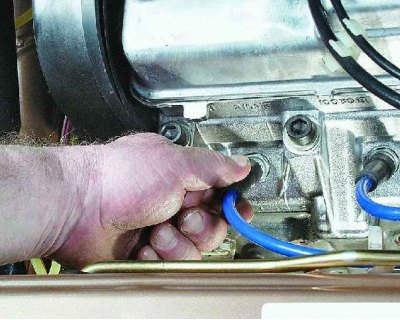
7. Remove the high-voltage wire ends and unscrew the spark plugs with a spark plug wrench.
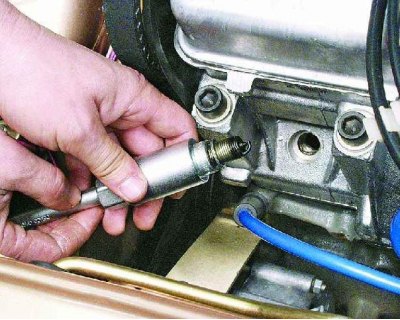
Warning! When removing high-voltage cable lugs, never pull on the cable itself. Grasp the lug directly with your hand and twist it from side to side before removing it, then pull.
8. Carefully inspect the spark plugs and compare their appearance with the photos provided at the end of the section. The gap between the spark plug electrodes should be 0.8–0.9 mm. If the spark plug is black and wet, it can be thrown away.
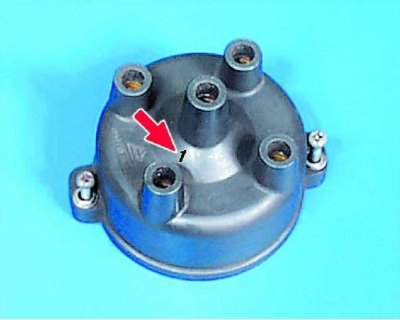
9. If all spark plugs appear to be in good condition, reinstall them and reconnect the spark plug wires.
Cylinder firing order 1–3–4–2, cylinder numbering (1st, 2nd, 3rd, 4th) is produced from the plastic cover of the timing belt. On the distributor cover, the number 1 indicates the 1st cylinder, then - counterclockwise, if you look at the cover from the side of the high-voltage wire sockets - the 3rd, 4th, 2nd.
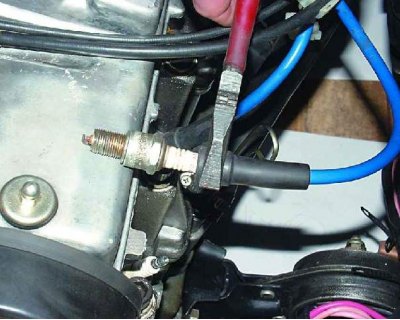
10. Take a spare spark plug. Secure it to the engine in any way.
Warning! Do not attach the spark plug to the oil filler neck, dipstick, fuel pump, fuel hoses, or carburetor.
Reliable contact of the body or threaded part of the spark plug with the "ground" is not necessary, but desirable. Connect the high-voltage wire from the 1st cylinder to the spare spark plug. Start the engine.
Have your engine misfires gotten worse?
Yes: see point 13.
11. Replace the spark plug in the cylinder with a known good one. Put on the high-voltage wire and start the engine.
Engine misfires continue?
Yes: see point 14.
12. Have a nice trip!
13. Repeat steps 10–11 sequentially for all cylinders.
14. If the engine misfires are not eliminated as a result of the measures taken, contact a car service for ignition system diagnostics on a stand or engine diagnostics - compression measurement. Normal compression is more than 1.1 MPa (11 kgf/cm²), a difference of more than 0.1 MPa (1 kgf/cm²) in one cylinder indicates the need for engine repair.
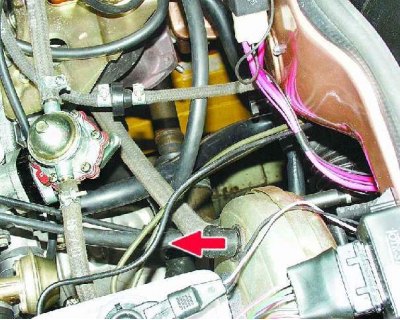
Tip: If diagnostics reveal a fault in cylinder 3, remove the hose connecting the brake booster to the engine, plug it securely and start the engine.
If the engine misfires have stopped, contact a service center for diagnostics and replacement of the brake booster.
If the engine continues to misfire, try pouring a liquid like WD40 into the hose from the outside. If the engine stops misfires even for a short period of time, try replacing the hose.
Diagnosis of engine condition by the appearance of spark plugs
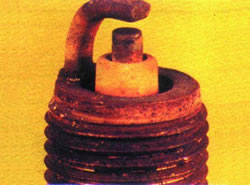 | Normal Symptoms.Brown or grayish-yellowish color and slight wear of the electrodes. Accurate thermal value for the engine and operating conditions. Advice.When replacing spark plugs with new ones, install spark plugs with the same characteristics. | |
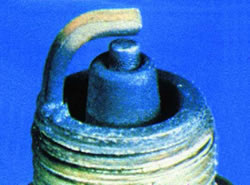 | Soot deposits Symptoms.Dry soot deposits indicate a rich fuel-air mixture or late ignition. Causes misfires, difficult starting and erratic engine operation. Advice.Check if the air filter is clogged, the fuel level in the carburetor float chamber, the ignition timing, use a "hotter" spark plug (extended insulator with central electrode). | |
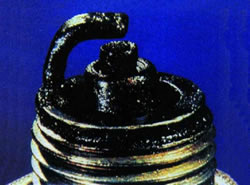 | Oil deposits Symptoms.Oily spark plug electrodes and insulator. Cause: oil getting into the combustion chamber. Oil gets into the combustion chamber through the valve guides or through the piston rings. Causes difficult starting, cylinder misfires, and jerking of the running engine. Advice.Perform the necessary repairs to the cylinder head and piston group of the engine. Replace the spark plugs. | |
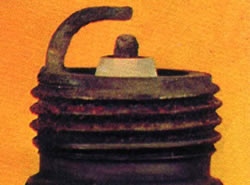 | Overheat Symptoms.Glossy white insulator of the central electrode, burnt electrodes and absence of deposits. Leads to reduction of service life of spark plugs. Advice.The reasons may be: the spark plug type does not match the recommended one for your car's engine, early ignition, lean mixture, air leakage into the intake manifold. Check the coolant level and whether the radiator is clogged. | |
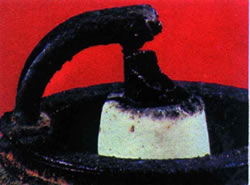 | Early ignition Symptoms.Melted electrodes. The insulator is white, but may be contaminated due to spark misfires and combustion chamber deposits. May cause engine damage. Advice.Check the spark plug type, ignition timing, fuel-air mixture composition, and operation of the cooling and lubrication systems. | |
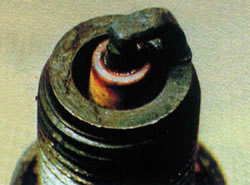 | Glaze Symptoms.The insulator is yellowish and glazed. Indicates that the combustion chamber temperature rises unexpectedly during rapid acceleration of the vehicle. Normal deposits become conductive. Causes misfires at high speeds. Advice.Install new spark plugs. Try installing "colder" spark plugs if you don't want to change your driving style. | |
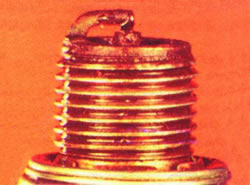 | Bridge between electrodes Symptoms.Deposits from the combustion chamber get between the electrodes. "Heavy" deposits collect in the gap between the electrodes and form a bridge. The spark plug stops working and the cylinder is switched off. Advice.Identify the faulty spark plug and remove deposits between the electrodes. | |
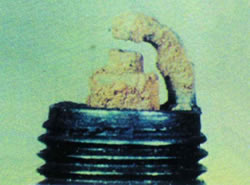 | Ash deposits Symptoms.Light brown deposits that crust over the central and side electrodes. They are released from oil or gasoline additives. Large amounts of them can lead to insulation of the spark plug electrodes, causing misfires and interruptions in acceleration. Advice.If excessive deposits form in a short time or at low mileage, replace the valve guide oil seals to prevent oil from entering the combustion chamber. If the cause is gasoline quality, change the refueling location. | |
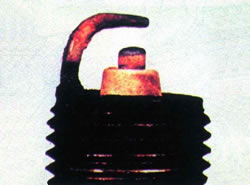 | Wear Symptoms.Rounded electrodes with a small amount of deposits on the working ends. Normal color. Causes difficult starting in cold or wet weather and poor fuel economy. Advice.Replace with new spark plugs with the same characteristics. | |
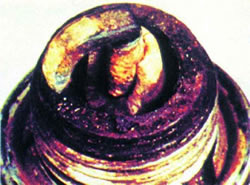 | Detonation Symptoms.The insulator may be cracked or chipped. This may cause damage to the piston. Advice.Make sure that the octane rating of the gasoline meets the required level. | |
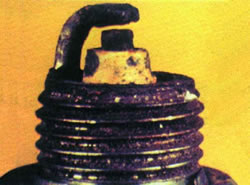 | Spotted deposits Symptoms.The carbon deposits that have been deposited in the combustion chamber, after proper adjustment, begin to burn out and at high engine speeds break away from the piston and stick to the spark plug insulator, causing individual misfires in its operation. Advice.Replace the spark plugs with new ones or clean the old ones. | |
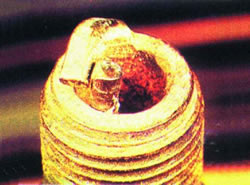 | Mechanical damage Symptoms.Damage can be caused by foreign objects getting into the combustion chamber, and if a spark plug is too long, its electrodes can catch on the piston. This leads to the destruction of the spark plug, the cylinder being disconnected and can damage the piston. Advice.Remove the foreign object from the cylinder and (or) replace the spark plug. | |