




Checking the cooling system
At the first signs of overheating, if the temperature gauge needle has moved into the red zone, but no clouds of steam are escaping from under the hood, fully open the heater valve and the air intake control flap, and turn on the heater motor at maximum speed.
Turn on the hazard warning lights, depress the clutch pedal and, using the car's momentum, try to carefully move to the edge of the roadway and stop as far to the right as possible at the curb, and if possible - outside the roadway. Let the engine run for a couple of minutes at normal idle speed with the heater on full power.
Attention! Do not stop the engine immediately! The only condition is to maintain the tightness of the cooling system. If the hose bursts or comes off or another leak occurs other than the liquid being knocked out from under the expansion tank cap, the engine will have to be stopped immediately!
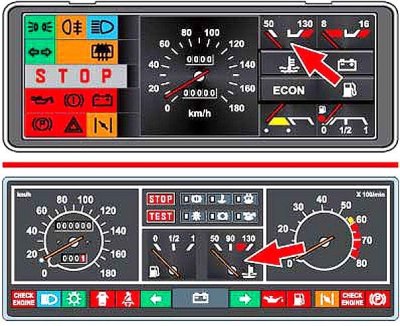
After an overheated engine stops, local overheating of the coolant begins in the places where it contacts the most heat-stressed engine parts and vapor locks form. This phenomenon is called "thermal shock".
Stop the engine. Keep in mind that an overheated engine cannot stop immediately after the ignition is turned off and continues to operate due to the so-called pseudo-glow ignition. Such work is harmful to the engine, so you should stop it forcibly, either by smoothly pressing the gas pedal to the floor, or by engaging any gear with the clutch depressed, and then pressing the brake and releasing the clutch.
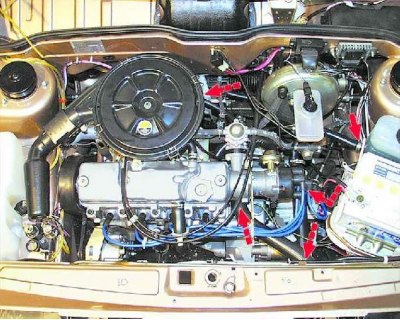
1. Open the hood and inspect the underhood space. Determine where the steam is coming from.
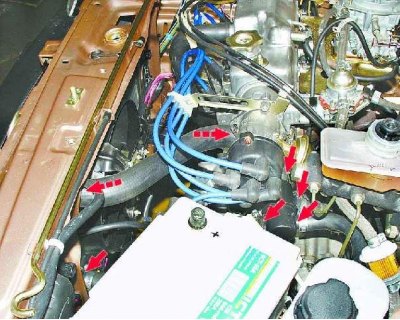
Warning! Never open the expansion tank cap immediately. The liquid in the cooling system is under pressure, when you open the cap the pressure will drop sharply, the liquid will boil and its splashes can scald you. If you want to open the radiator cap on a hot engine, first throw a thick, dense rag on top and only then carefully turn the cap.
2. When inspecting the engine, pay attention to the presence of coolant in the expansion tank, the integrity of the rubber hoses, radiator, and thermostat.
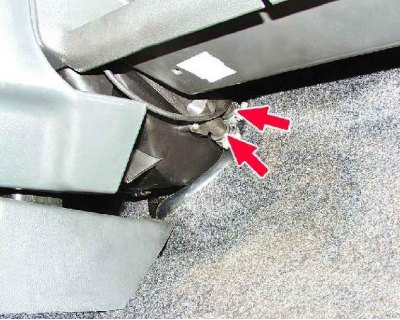
3. Look under the front floor mats in the car to see if there are any leaks or traces of coolant leaking from the radiator or heater valve.
Found a leak?
No: see point 5.
4. A burst hose can be temporarily repaired with adhesive tape. A leaking radiator, thermostat or heater is quite difficult to fix on the spot, so in such a situation it is necessary to add water to the cooling system and carefully monitor the temperature gauge while driving, periodically restoring the level in the cooling system.
Warnings!
- Long-term use of water instead of antifreeze leads to the formation of scale in the engine cooling system, deterioration of its cooling and, as a result, a reduction in service life.
- Never add cold water to an overheated engine. Allow the engine to cool with the hood open for at least 30 minutes.
5. While the engine is still warm, turn on the ignition and make sure that the electric cooling fan is rotating.
Are the fan blades spinning?
Yes: see point 13.
[The material is posted on the website: www.VAZbook.ru]
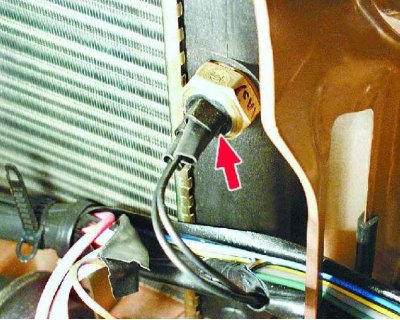
6. Check if the sensor that turns on the fan motor is working properly. To check, remove two wires from the terminals of the sensor installed in the radiator and connect them together. Turn on the ignition.
Are the fan blades spinning?
No: see point 8.
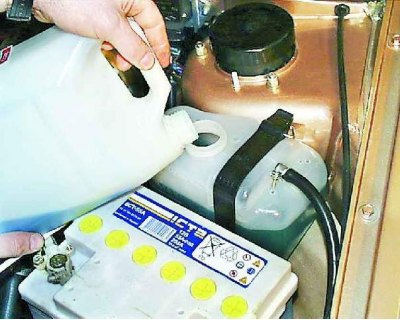
7. Bring the liquid level in the cooling system to the norm, isolate the wire tips so that they do not short to ground. The fan motor will work constantly. This is acceptable for some time, but at the first opportunity, replace the sensor in the radiator with a working one, and the antifreeze diluted with water with a new one, since the freezing temperature of such a "cocktail" is much higher.
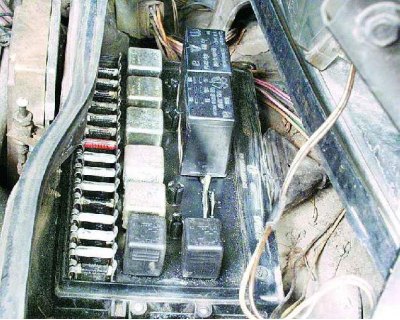
8. If the fan does not turn on when the wires going to the sensor are shorted, the reasons may be a blown fuse, a faulty switch relay or a burnt-out electric motor. Replace fuse #5 (mounting block type 2114–3722010–60) or #4 and 8 (mounting block type 17.3722).
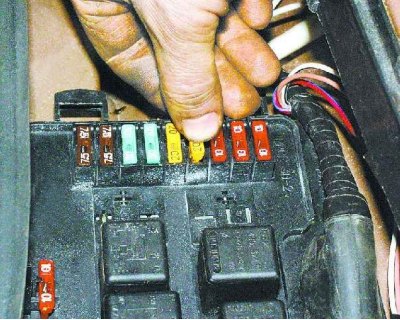
Tip: The fuse numbers can be checked by the markings on the cover of the fuse box.
To check the result of the replacement, short-circuit the two wires connected to the fan switch and turn on the ignition.
Did the electric motor start working?
No: see point 10.
9. Have a nice trip!
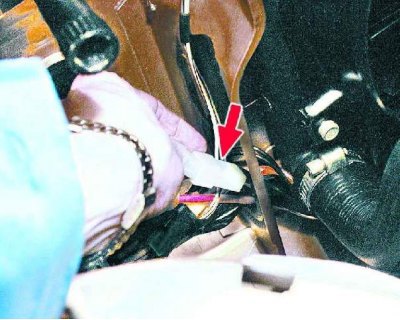
10. To test the electric motor, take two additional wires and apply power to it directly from the battery. The wires must be securely fastened and insulated.
Warnings!
- Do not allow wires to short-circuit each other!
- Pay attention to the polarity of the connection: the electric motor must rotate so that the fan forces air through the radiator onto the engine, and the directions of the generated air flow and the incoming (path) flow coincide.
Did the electric motor start working?
No: see point 12.
11 Contact a car service center to check the wiring or replace the cooling system fan relay.
12. Contact a car service center to check the wiring or replace the cooling system fan motor.
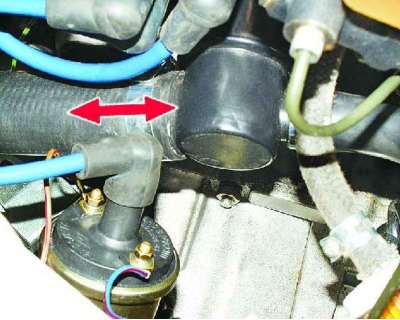
13. The engine may overheat if the thermostat, which regulates the flow of fluid in the cooling system through or past the radiator, fails (to speed up the warming up of a cold engine).
14. To check the thermostat, you need to check the temperature of the upper and lower hoses connecting the engine to the radiator on a warm engine. If the lower radiator hose is cold, the thermostat is faulty, there is no circulation through the radiator.
Recommendations
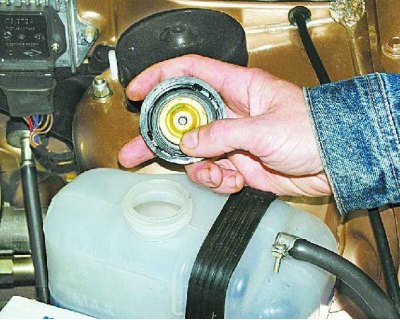
The expansion tank plug valve plays a major role in ensuring the optimal temperature regime. It maintains excess pressure in the system of at least 0.1 MPa (1.1 kgf/cm²). In this case, the boiling point of water rises to 120°C, and antifreeze to 130°C. Unfortunately, when the valve gets stuck in the closed position due to overheating, a significant excess of pressure occurs [more than 0.2 MPa (2 kgf/cm²)], which can lead to a rupture of the expansion tank or a tear of one of the hoses. Therefore, once a year, the expansion tank plug must be washed with running water, and the valve must be checked for sticking by pressing with a finger. If in doubt, replace the plug.
It is obvious that if the expansion tank cap is removed on an overheated engine and this action coincides with the "thermal shock", boiling of the liquid and the formation of air locks in the cooling system will be guaranteed.
Once a year, flush the radiator cells with a high-pressure water jet (at a special car wash), directing the stream first towards the oncoming air flow, and then in its direction to remove dirt, stuck insects and road debris from the radiator surface. This partially restores the radiator's efficiency.