




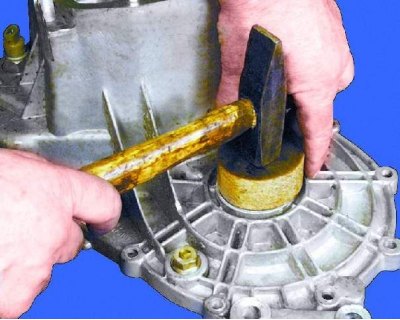
1. Press the seals into the clutch and gearbox housings using a suitable mandrel. Lubricate the working edge of the seals with Litol-24 grease.
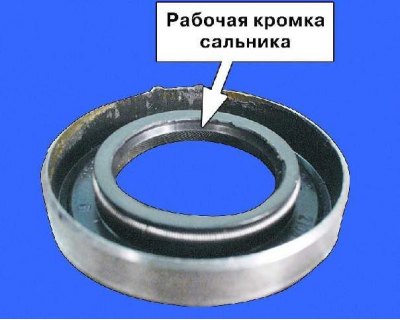
Warning: Press the seals with the working edge inside the box (metal frame facing out).
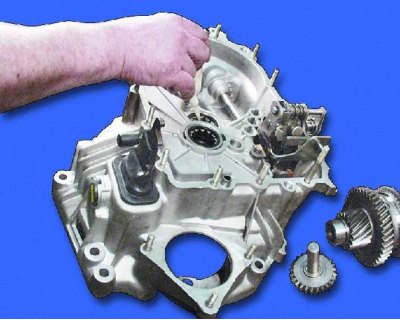
2. Press the front bearings of the primary and secondary shafts into the clutch housing and lubricate them with transmission oil.
When assembling the gearbox, lubricate all parts with the same transmission oil that you will later pour into the gearbox.
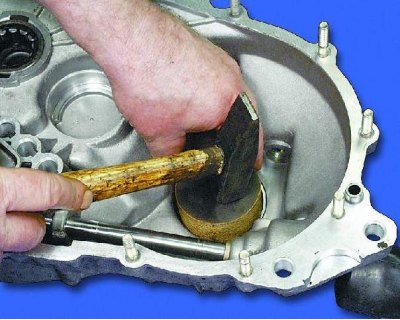
3. Press the outer races of the differential bearings into the clutch and gearbox housings.
Select the correct thickness adjusting ring when replacing one of the following parts: clutch or gearbox housing, differential housing or differential bearings (see paragraph 12.9.4.).
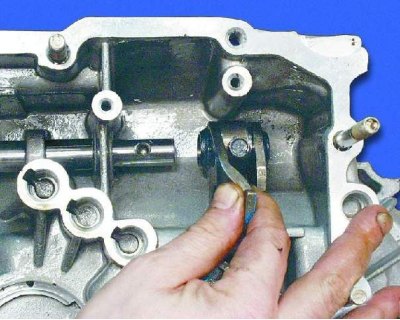
4. Insert the gear shift rod into the crankcase hole. Then install the lever on the rod.
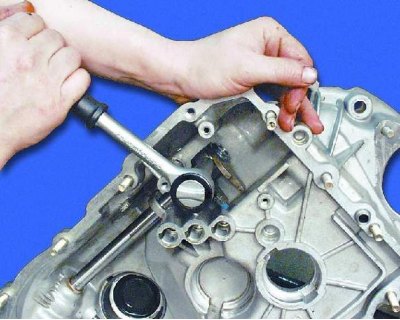
5. Apply TB-1234 glue to the bolt threads (having previously degreased it) and tighten the lever mounting bolt to a torque of 34.0 N·m (3.4 kgf·m).
[The information can be read on the website VAZBOOK]
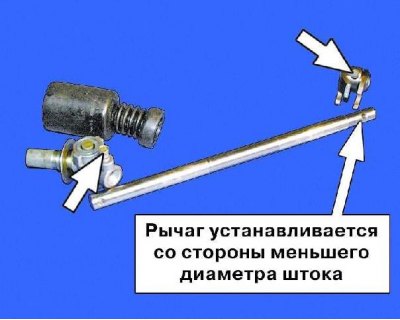
Note: The bolts that secure the lever and the pivot on the rod are different lengths. The bolt that secures the lever is dark in color (phosphatized) it is 19.5 mm long and has a gold-colored hinge mounting bolt (cadmium plated) – 24 mm.
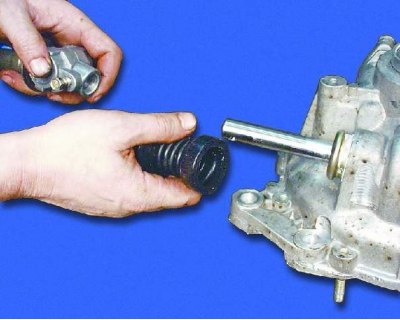
6. Install a protective cover on the rod.
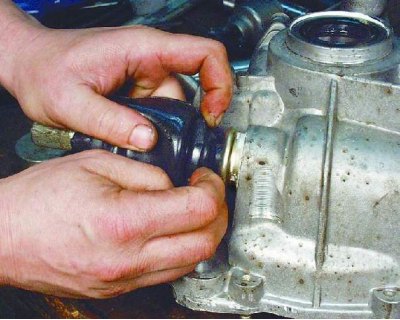
7. Slide the edge of the protective cover over the flange along the entire perimeter.
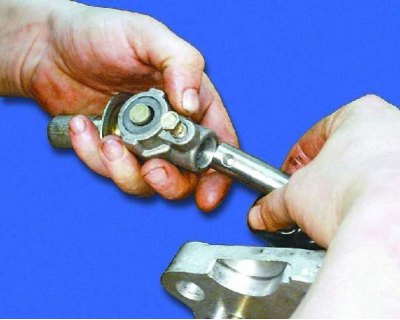
8. Install the hinge onto the stem.
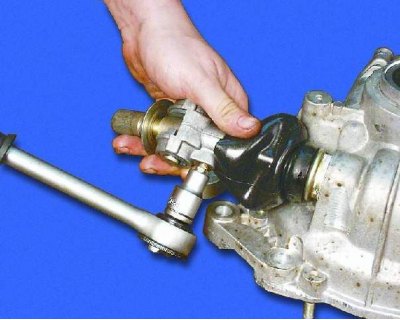
9. Apply TB-1234 glue to the bolt threads (having previously degreased it) and tighten the hinge mounting bolt to a torque of 19.0 N·m (1.9 kgf·m).
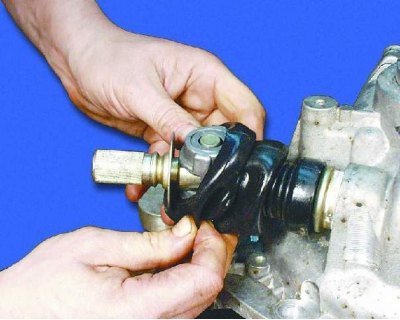
10. Slide the edge of the protective cover over the entire perimeter of the hinge flange.
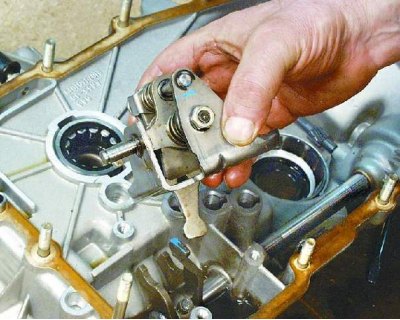
11. Position the gear shift mechanism so that the mechanism lever fits between the tabs of the rod lever.
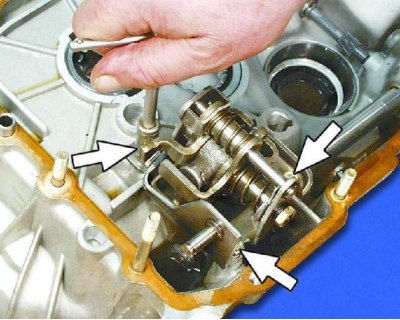
12. Tighten the three gearshift mechanism mounting bolts to a torque of 5–8.3 N·m (0.5–0.83 kgf·m).
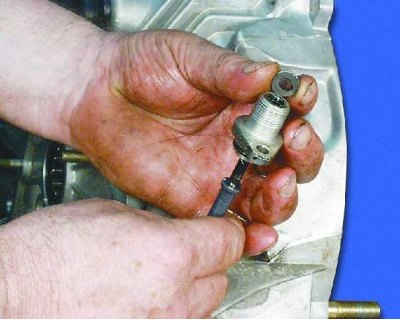
13. Insert the speedometer drive shaft into the housing. Then install the sealing ring.
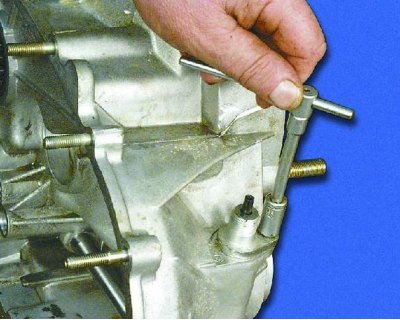
14. Insert the speedometer drive into the clutch housing and tighten the mounting nut to a torque of 4.5–7.2 N·m (0.45–0.72 kgf·m).
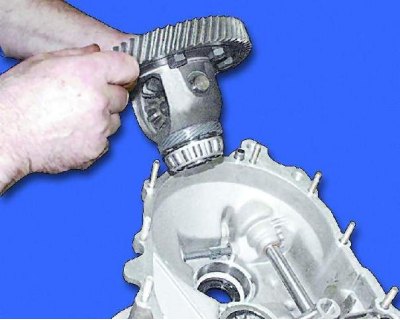
15. Install the differential into the clutch housing.
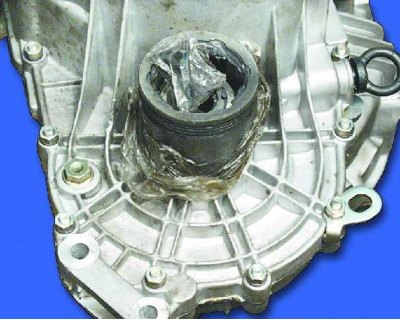
16. Insert the mandrel into the differential axle gear (you can use the old inner CV joint).
Be sure to secure the axle gear on the clutch housing side so that the gears do not move from their seats, otherwise difficulties may arise when installing the drive shafts.
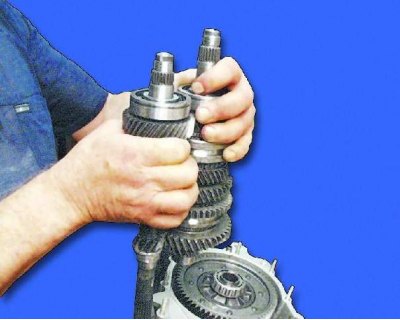
17. Engage the gears of the primary and secondary shafts.
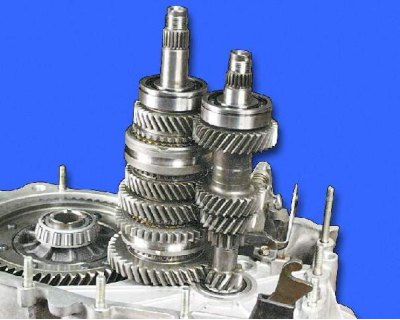
18. In this position, install the shafts into the clutch housing.
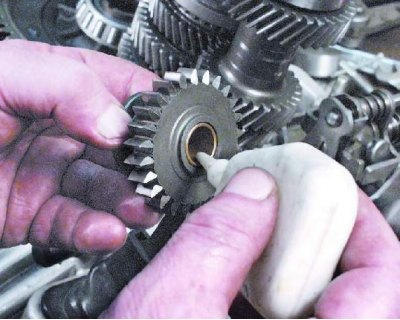
19. Lubricate the reverse idler gear bushing with transmission oil.
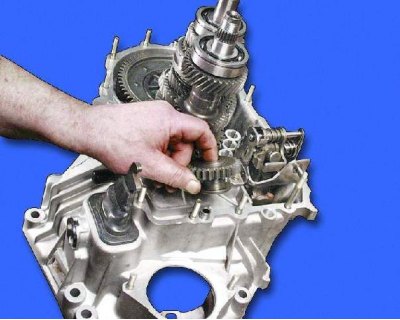
20. Install the reverse idler gear into the clutch housing.
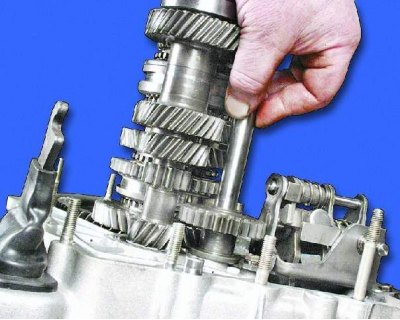
21. Insert the reverse intermediate gear shaft.
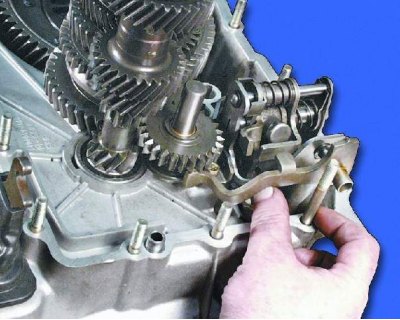
22. Install the reverse gear lever onto the gear shift shaft.
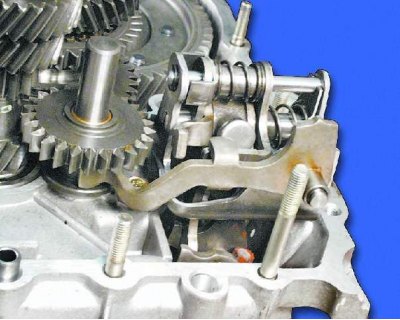
Note: The end of the reverse gear lever must be located in the groove of the intermediate gear.
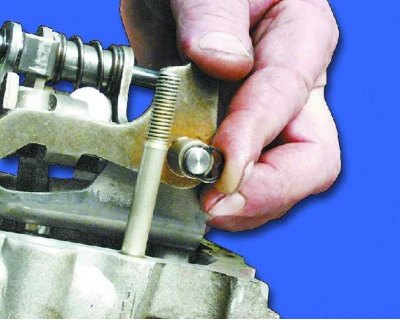
23. Install the retaining ring.
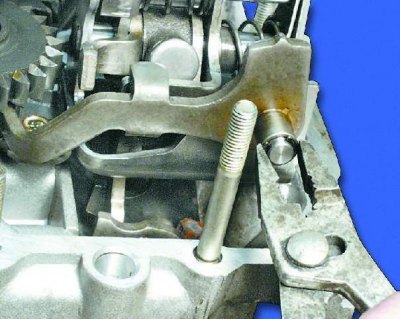
Note: If the reverse gear lever retaining ring has play, squeeze the ends of the ring with pliers.
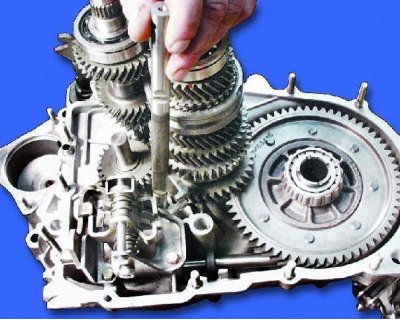
24. Install the 5th gear fork rod. Rotate it around the vertical axis and engage the rod with the locking bracket.
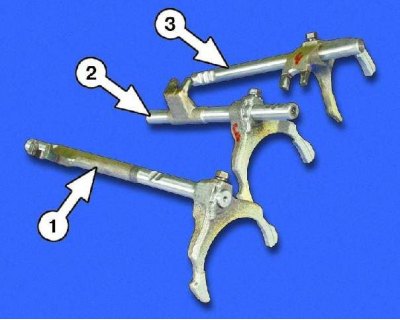
1 – rod with 5th gear engagement fork
2 – rod with fork for engaging 3rd and 4th gears
3 – rod with fork for engaging 1st and 2nd gears
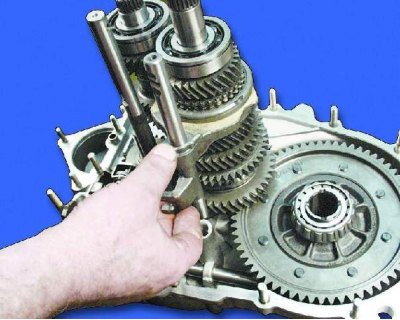
25. Install the 3rd/4th gear shift fork onto the rod and slide it onto the rod head. Insert the fork into the groove of the 3rd/4th gear synchronizer clutch.
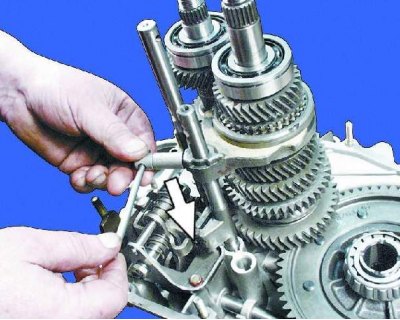
26. Lower the rod into the crankcase hole and turn it, while engaging the rod head with the gearshift lever. Tighten the fork mounting bolt on the rod with a torque of 12.0–18.0 N·m (1.2–1.8 kgf·m).
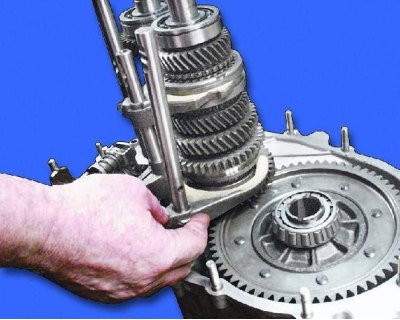
27. Install the 1st/2nd gear shift fork onto the rod and slide it onto the rod head. Insert the fork into the groove of the 1st/2nd gear synchronizer clutch.
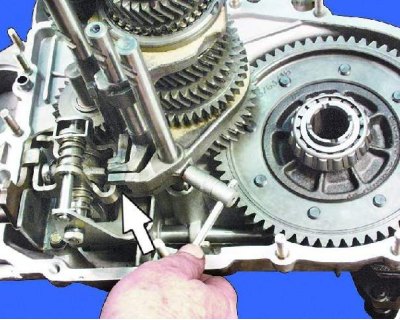
28. Lower the rod into the crankcase hole, turn it, bringing the fork head into engagement with the locking bracket. Tighten the fork mounting bolt on the rod with a torque of 12.0–18.0 N·m (1.2–1.8 kgf·m).
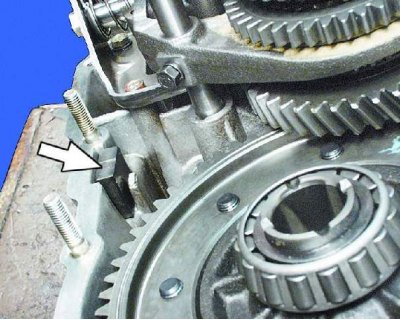
29. Clean the magnet from metal particles and insert it into the crankcase.
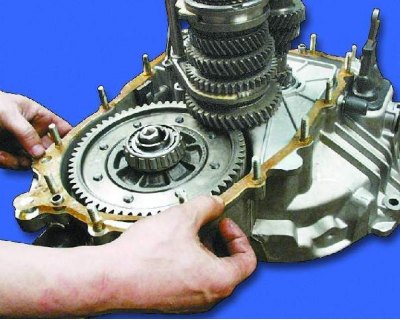
30. Install the sealing gasket.
Note: Replace torn and heavily compressed sealing gaskets. Before installation, it is recommended to lubricate the gaskets with a thin layer of Litol-24 grease so that they do not shift during assembly.
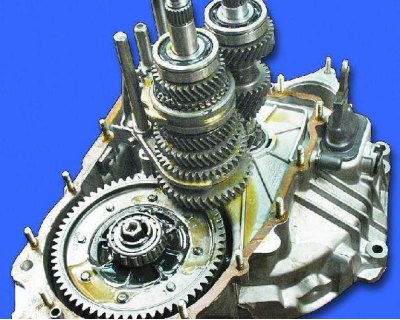
31. Install the gearbox housing onto the clutch housing.
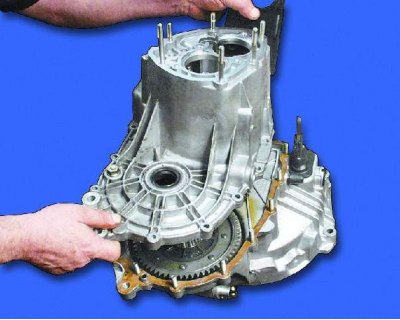
32. Generously lubricate the gearbox parts with transmission oil.
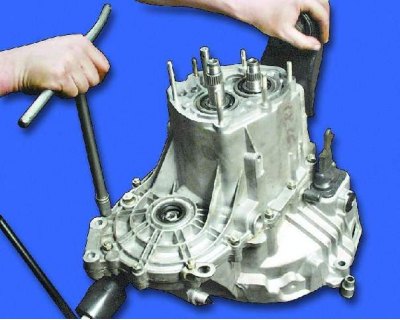
33. Tighten the crankcase mounting nuts to a torque of 16.0–26.0 N·m (1.6–2.6 kgf·m).
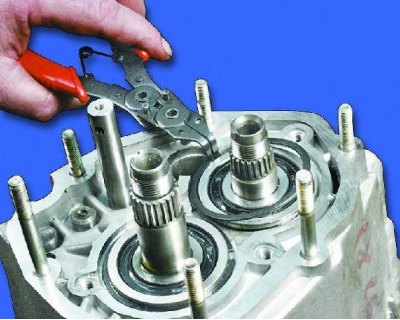
34. Install the retaining rings onto the rear shaft bearings.
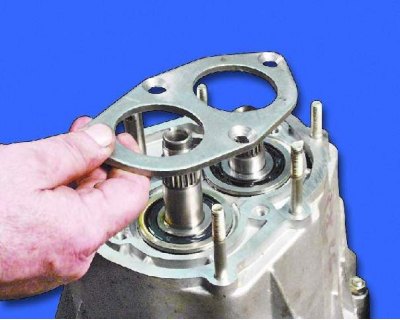
35. Install the bearing mounting plate.
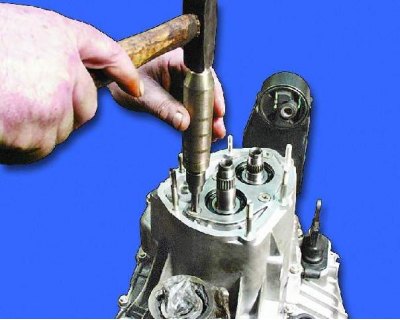
36. Replace the four screws that secure the plate. Then tighten them with an impact driver.
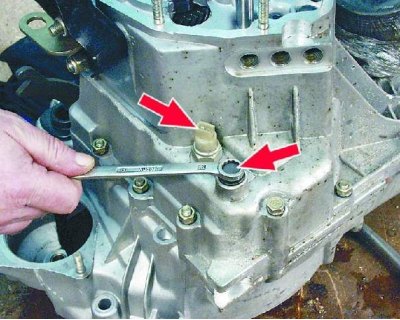
37. Insert the ball with the reverse gear lock spring and tighten the plug to a torque of 29.0–45.0 N·m (2.9–4.5 kgf·m). Screw in the reverse light switch to a torque of 29.0–46.0 N·m (2.9–4.6 kgf·m).
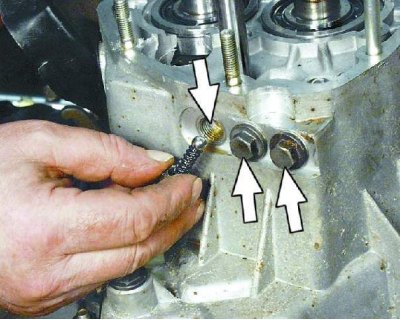
38. Install the balls with the gear lock springs and tighten the plugs to a torque of 29.0–45.0 N·m (2.9–4.5 kgf·m).
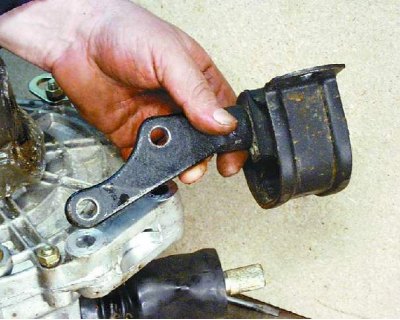
39. Install the rear powertrain support.
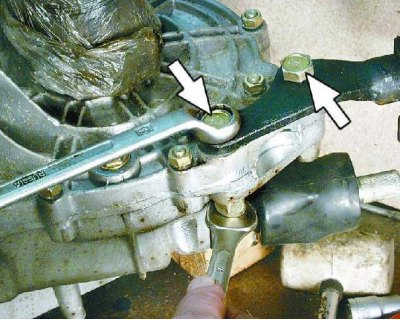
40. Tighten the two support mounting bolts to a torque of 62.0–100.0 N·m (6.2–10.0 kgf·m).
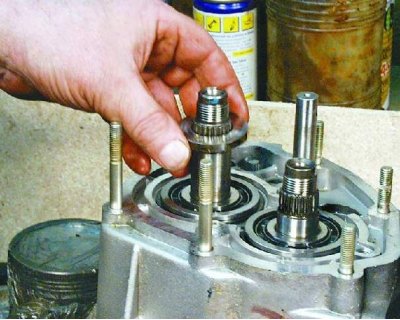
41. Install the thrust washer.
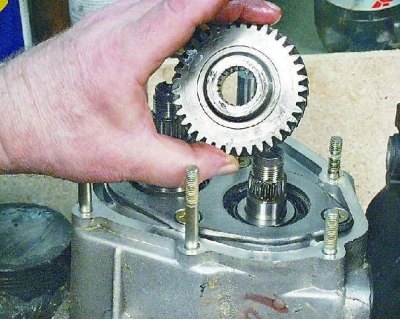
42. Install the 5th gear onto the input shaft.
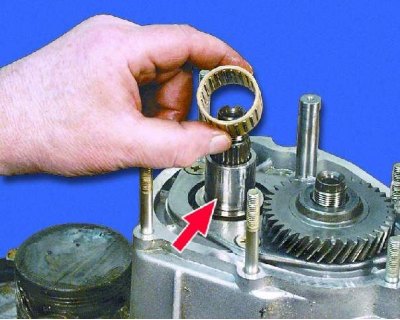
43. Install the sleeve onto the secondary shaft until it stops, and then the needle bearing. Lubricate the bearing with transmission oil.
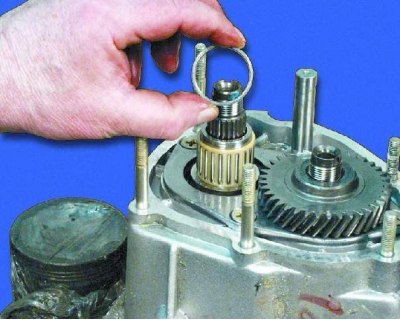
44. Install the spacer ring.
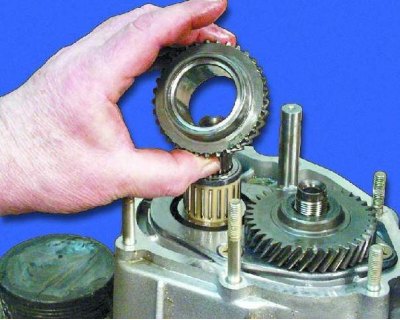
45. Install the 5th gear on the secondary shaft.
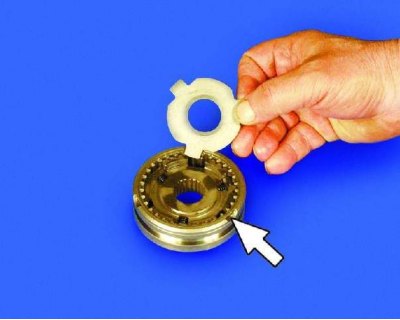
46. Insert the thrust plate into the 5th gear synchronizer from the side with the protrusions on the clutch.
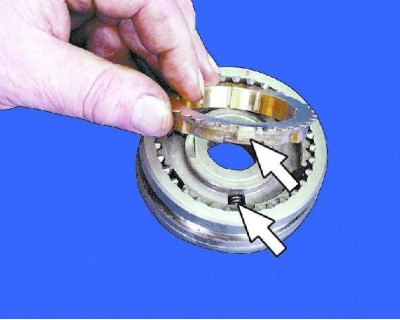
47. On the other side of the synchronizer, insert the locking ring so that the small projections of the ring are located opposite the grooves with the synchronizer hub locks.
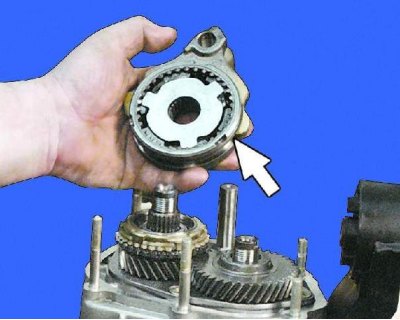
48. Insert the engagement fork into the groove of the synchronizer clutch.
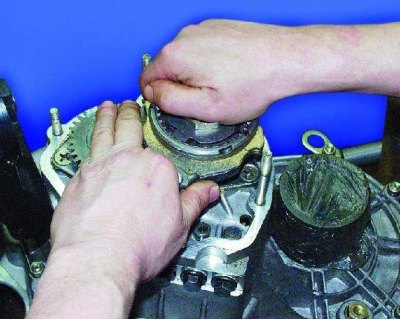
49. Install the synchronizer on the secondary shaft and the fork on the rod at the same time, holding the locking ring from below. Press the synchronizer onto the shaft, applying force to the hub.
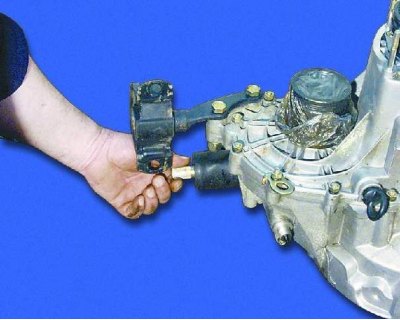
50. Engage 3rd or 4th gear.
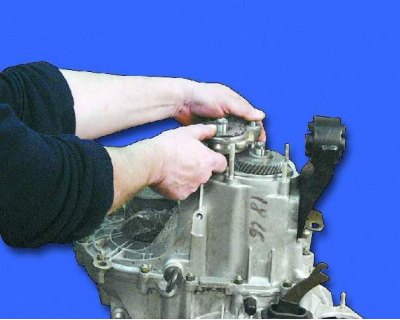
51. Engage 5th gear by moving the synchronizer clutch down.
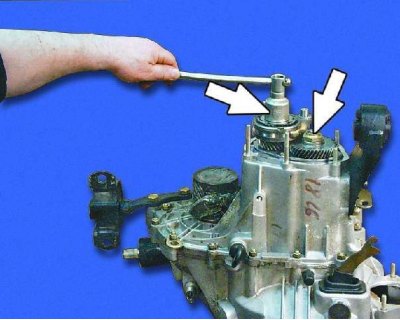
52. Tighten the primary and secondary shaft nuts to a torque of 123.0–150.0 N·m (12.3–15.0 kgf·m).
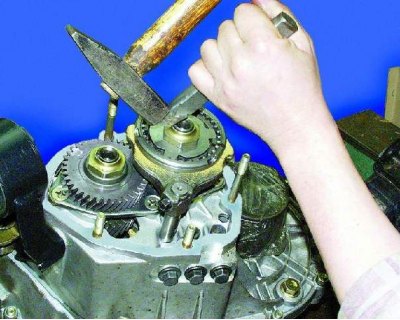
53. Secure the nuts to the shafts by punching them.
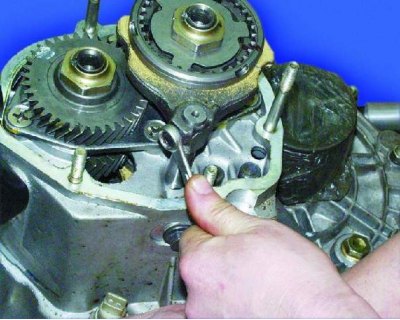
54. Tighten the fork mounting bolt to the stem with a torque of 12.0–18.0 N·m (1.2–1.8 kgf·m).
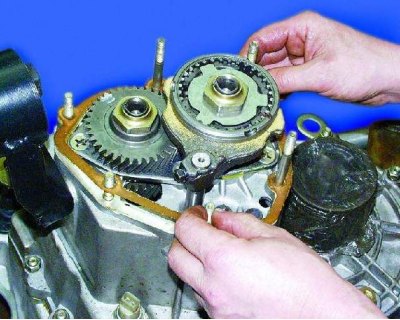
55. Install the sealing gasket.
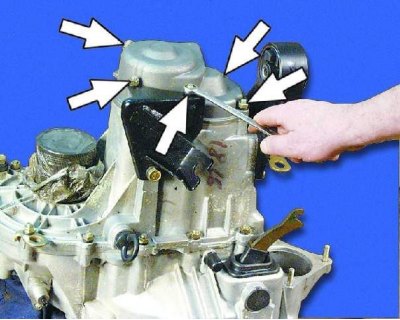
56. Install the rear cover with the bracket and tighten the mounting nuts to a torque of 16.0–26.0 N·m (1.6–2.6 kgf·m), as well as the bracket mounting bolt.