




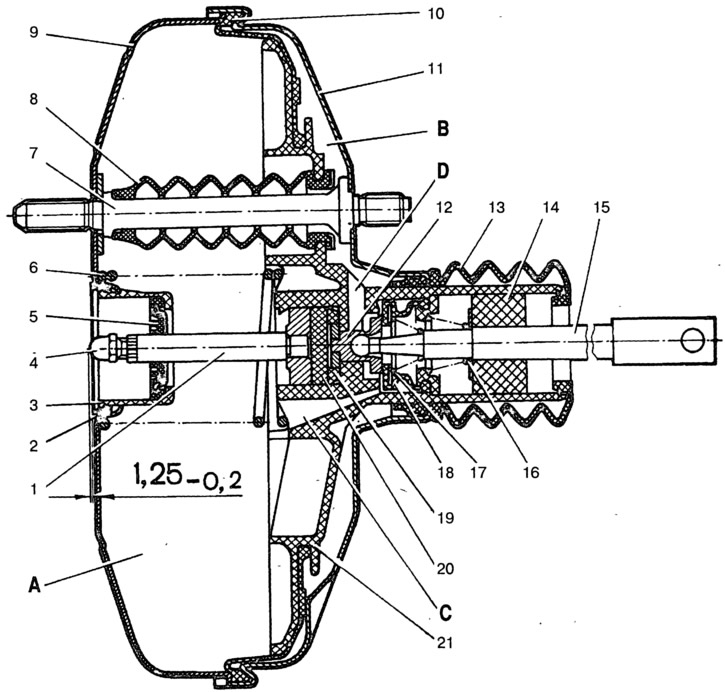
Fig. 6-2. Vacuum booster:
1 - rod; 2 - master cylinder flange sealing ring; 3 - amplifier body cup; 4 - adjusting bolt; 5 - rod seal; 6 - diaphragm return spring; 7 - amplifier pin; 8 - sealing cover; 9 - amplifier body; 10 - diaphragm; 11 - amplifier housing cover; 12 - piston; 13 - valve body protective cover; 14 - air filter; 15 - pusher; 16 - pusher return spring; 17 - valve spring; 18 - valve; 19 - valve body bushing; 20 - rod buffer; 21 - valve body; A - vacuum chamber; B - atmospheric chamber; C, D - channels.
Stop the brake pedal in the middle of its travel and start the engine. If the vacuum booster is working properly, the brake pedal should "go forward" after the engine starts.
If the pedal "does not go forward", check the fastening of the hose tip, the condition and fastening of the tip flange in the booster, the hose to the tip and the fitting of the engine intake pipe, since loosening of the fastening or damage to them sharply reduces the vacuum in cavity A and the efficiency of the booster.
In case of spontaneous braking of the car, check the vacuum booster for leaks with the engine running, first with the brake pedal released and then pressed. The "suction" of the protective cap 13 to the valve body tail and the hissing of sucked-in air indicate insufficient tightness of the booster. In these cases, replace the vacuum booster.
The original source is published on the website: VazBook