




Contents: Setting the fuel level in the float…↓ Adjusting the starting device ↓ Adjusting the carburetor drive ↓ Adjusting engine idle speed ↓
Setting the fuel level in the float chamber
The fuel level required for normal operation of the carburetor is ensured by the correct installation of serviceable elements of the shut-off device.
Correct installation of float 1 (figure 54) is checked with gauge 4, for which it is installed perpendicular to cover 2 with gasket 3. The cover must be held horizontally with the floats facing up. There must be a gap of no more than 1 mm between the gauge along the contour and the floats. If necessary, adjust by bending the tongue and the float levers. The supporting surface of the tongue must be perpendicular to the axis of the needle valve and must not have dents or nicks.
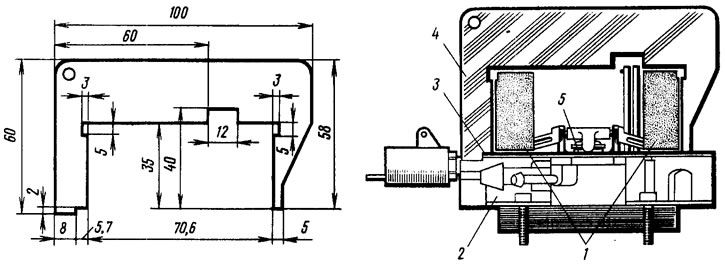
Figure 54. Setting the fuel level in the carburetor float chamber
Adjusting the starting device
When turning lever 4 (see figure 17) control of the air damper 5 completely counterclockwise, the air damper should be completely closed under the action of the spring 7. If the damper is not closed, eliminate the cause of the jamming.
With the air damper fully closed, press manually on the rod 3 of the starting device until it stops. In this case, the air damper should open by (3±0.2) mm (starting gap B). If necessary, adjust the gap with screw 2.
The throttle valve 10 of the first chamber with the air damper fully closed should be slightly open by 0.88 mm (starting gap D). This gap is adjusted with screw 9.
Adjusting the carburetor drive
With pedal 1 fully depressed (figure 55) throttle valve control, the throttle valve of the first chamber should be fully open and sector 15 should not have any additional travel. When the pedal is released, the throttle valve should be fully closed. If this is not the case, adjust the position of the pedal and throttle valve using adjusting nuts 13 on the front end of the drive cable.
In the air damper drive, the casing 10 of the rod 14 is secured so that it protrudes by 40 mm. The rod 14 is secured to the air damper control lever 16 so that when the handle 8 is pulled out, the air damper is completely closed, and when the handle is recessed, it is completely open.
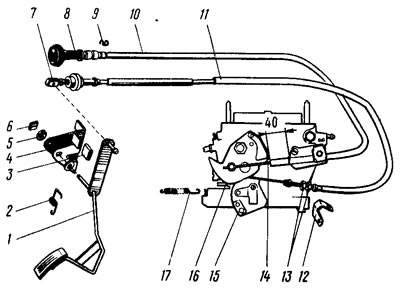
Figure 55. Carburetor control drive: 1 - throttle control pedal (accelerator); 2, 17 - return springs; 3 - pedal stop gasket; 4 - bracket; 5 - bushing; 6 - locking bracket; 7 - cable tip; 8 - air damper control handle; 9 - locking spring; 10 - thrust shell; 11 - cable sheath; 12 - Adjusting tip bracket; 13 - adjusting nuts; 14 - air damper drive rods; 15 - throttle control sector; 16 - air damper control lever
Adjusting engine idle speed
The idle speed adjustment elements include adjusting screw 2 (figure 56) quality (composition) of the mixture and adjusting screw 1 of the quantity of the mixture. Adjusting screw 2 with sealing ring 3 is closed by plug 4. To access the screw, it is necessary to break the plug.
The information is published on the website (www.vazbook.ru)
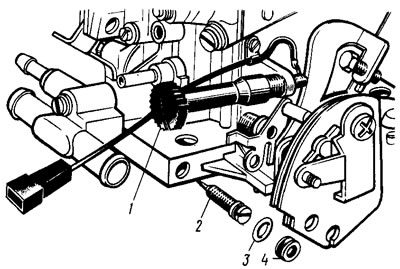
Figure 56. Carburetor idle speed adjustment screws
Idle speed adjustment must be performed on a warm engine (coolant temperature should be 90-95°C) with adjusted valve timing clearances, with the ignition timing angle set correctly and the air damper fully open.
Using the adjusting screw 1 for the mixture quantity, the engine crankshaft speed is set within 750-800 rpm according to the stand tachometer. Then, using the adjusting screw 2 for the mixture quality (composition), the carbon monoxide (CO) concentration in the exhaust gases is achieved within 0.5-1.2% at the given position of screw 1 (the CO concentration is adjusted to 20°C and 760 mm Hg). Using screw 1, the crankshaft speed is restored to 750-800 rpm. If necessary, using adjusting screw 2, the CO concentration is restored to 0.5-1.2%.
After completing the adjustment, sharply press the accelerator and release it; the engine must increase the crankshaft speed without interruption, and if it decreases, it must not stall. If the engine stops, screw 1 increases the crankshaft speed within 750-800 rpm.
After adjustment, install a new plastic plug 4 into the hole for the adjusting screw 2.