




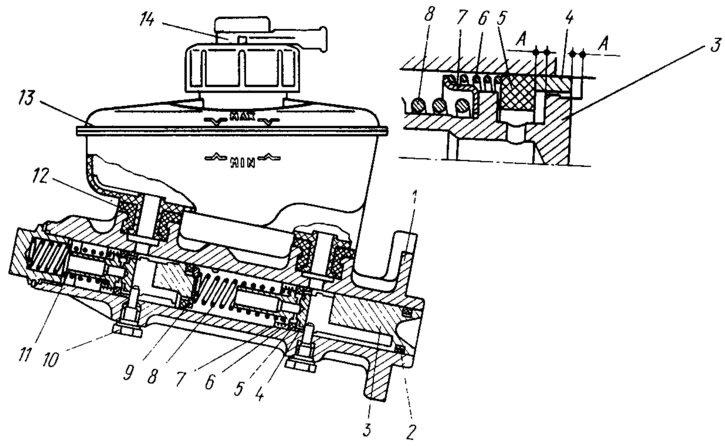
Figure 79. Master cylinder assembly with tank:
1 - master cylinder body; 2 - low pressure sealing ring; 3 - piston of the drive "left front - right rear brake"; 4 - spacer ring; 5 - high pressure sealing ring; 6 - sealing ring pressure spring; 7 - spring plate; 8 - piston return spring; 9 - washer; 10 - lock screw; 11 - piston of the drive "right front - left rear brakes"; 12 - connecting sleeve; 13 - tank; 14 - brake fluid emergency level sensor.
The front floating piston 11 has a similar design, sealing the front part and limitation. Only the rear part of the piston is sealed by a high-pressure ring, which is pressed to the end of the piston by a spring 8 through a washer 9. High-pressure sealing rings are interchangeable with the rings of the wheel cylinders of the rear brakes, which have a diameter of 20.64 mm.
The reservoir 13 is attached to the master cylinder using two rubber connecting bushings 12. On the body of the reservoir, made of translucent plastic, there are two marks: "min" and "max", by which the liquid level in the reservoir is controlled. The reservoir is divided by a partition into two working cavities, which communicate with the working cavities of the master cylinder through the tank nipples and connecting bushings 12.
In the center of the tank there is a guide cylinder, which goes from the filler neck to the bottom of the tank. In the upper part of the cylinder there are two slots, through which the cavity of the guide cylinder communicates with two working cavities of the tank. Therefore, if fluid leaks from one cavity of the tank, enough fluid remains in the other for normal operation of the brake circuit.
A lid is screwed onto the neck of the tank, securing the liquid emergency level sensor to the tank. It consists of a base 3 (figure 80) and the sensor housing 2, made of plastic. The sensor housing is put on the cylindrical belt of the base and together with it and the reflector 6 is pressed by the cover 5 to the end of the filler neck. The gap between the sensor housing and the base is sealed by the ring 4. To fix the cover on the upper part of the base there are two elastic tabs, which snap into place when the cover is completely screwed on. Two fixed contacts 10 with terminals, onto which the wire tips are put, are riveted to the sensor housing. A pusher 7 passes through the opening of the base 3, to the upper end of which a movable contact 11 is rigidly attached. At the lower end of the pusher, a polypropylene float 9 is attached through a plastic connecting sleeve 8. From above, the cavity of the sensor contacts is closed by a protective plastic cap 1.
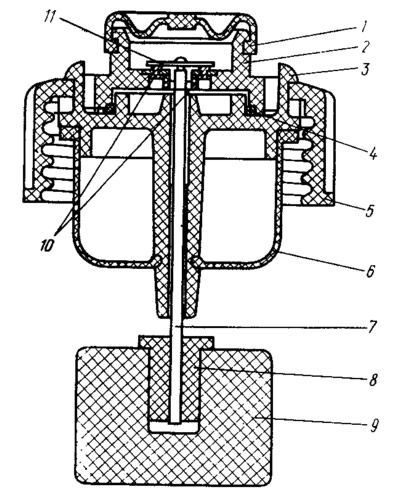
Figure 80. Brake fluid emergency level sensor:
1 - protective cap; 2 - sensor body; 3 - sensor base; 4 - sealing ring; 5 - tank lid; 6 - reflector; 7 - pusher; 8 - bushing; 9 - float; 10 - fixed contact; 11 - movable contact.
The information can be read on the website www.vazbook.ru
When the system is released, pistons 11 and 3 (see figure 79) under the action of the return spring 8, they are pressed to the extreme position and rest against the locking screws 10. In this case, the spacer rings 4, resting against the screws 10, move the sealing rings 5 away from the end grooves of the pistons. As a result, compensation gaps A are formed, through which the working cavities of the master cylinder communicate with the tank.
When braking, the vacuum booster rod moves piston 3. The spacer ring 4 moves away from the locking screw and the sealing ring 5 is pressed by spring 6 to the end face of the groove. The compensation gap is closed and the cavities of the master cylinder and the reservoir are separated. Therefore, with further movement of piston 3, fluid pressure is created in the working cavity of the "left front - right rear brake" drive, which is transmitted through pipelines and hoses to the wheel cylinders of the wheel brake mechanisms. It also acts on the floating piston 11, which, moving, creates pressure in the "right front - left rear brake" drive. The increasing fluid pressure in the working cavities of the cylinder pushes apart the high-pressure rings and they are pressed more strongly against the cylinder walls and the end face of the grooves, which improves the sealing of the pistons in the master cylinder.