




Contents: Removal ↓ Installation and centering ↓
Removal
Position the vehicle over a pit or on a lift. Lower the parking brake lever and set the transfer case and gearbox shift levers to neutral. Loosen the screws securing the floor casing trim and remove the trim. Remove the lever handles and outer covers. Loosen the screws securing and remove the lever hatch cover and inner lever seal cover.
Disconnect the flexible speedometer drive shaft from the transfer case and the wires from the differential lock indicator light sensor. By turning the driveshafts, disconnect the driveshaft flanges from the transfer case shafts, and the intermediate driveshaft flange from the secondary shaft flange of the gearbox.
Unscrew nuts 3 (Fig. 3-37) of the bolts securing the brackets 1 of the transfer case suspension (supports) and remove it together with the brackets and gaskets 5, which are installed under the brackets, and together with the intermediate shaft. Mark each gasket so that they can be put back in place in the same quantity.
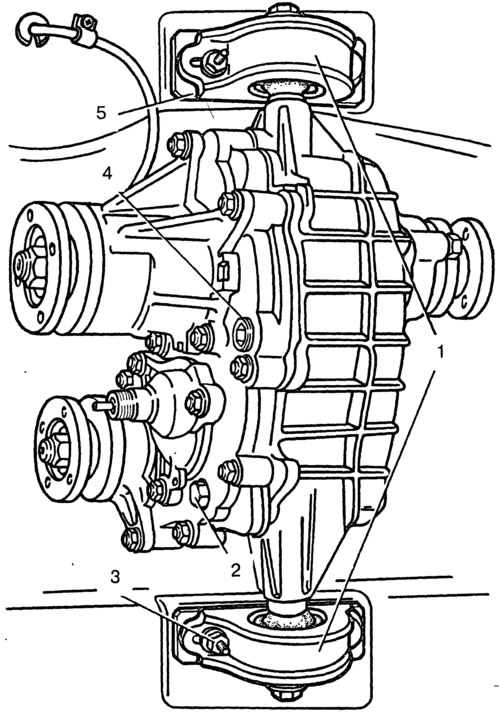
Fig. 3-37. Fastening the transfer case to the vehicle:
1 - transfer case suspension brackets; 2 - filler plug; 3 - suspension bracket mounting nut; 4 - drain plug; 5 - adjusting linings.
Installation and centering
Install and center the transfer case in the following order:
- make sure the engine mounts are installed correctly in the brackets (the centering washers of the front engine mount cushions must fit into the corresponding holes in the side brackets) and tight fit of the transfer case supports to the body bottom. If necessary, straighten the body surface under the supports;
- install the transfer case on the vehicle without fully tightening bolts 4 and 5 (Fig. 3-38) securing the transfer case suspension brackets;
- by moving the transfer case lengthwise and crosswise, as well as in the vertical direction, find a position in which the flanges of the transfer case drive shaft and the intermediate shaft of the cardan transmission are at the same level, parallel and the gap between them is minimal; the transfer case shafts must be positioned parallel to the bottom of the body;
- having installed the previously removed adjusting shims under the suspension brackets (supports), fully tighten the nuts securing the transfer case suspension brackets;
- attach the front and rear cardan shafts to the transfer case shafts; connect the flexible shaft to the speedometer drive and the wires to the differential lock indicator light sensor.
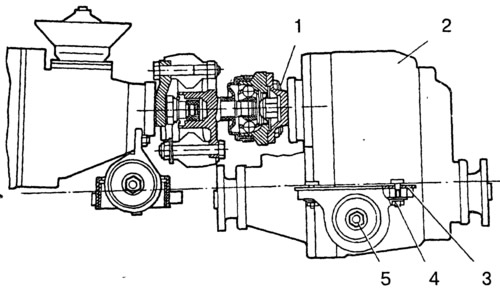
Fig. 3-38. Transfer case installation diagram:
1 - stud for fastening the flanges of the intermediate propeller shaft and the drive shaft of the transfer case; 3 - adjusting shims; 4 - nuts securing the transfer case to the body; 5 - nuts for fastening the transfer case suspension brackets to the axles.
When replacing the transfer case, as well as when the rear engine suspension "settles", causing vibration of the transfer case, it is necessary to select and install a new thickness of gaskets 5 (Fig. 3-37).
The procedure for selecting adjusting shims is as follows:
- make sure that the engine mounts are correctly installed in the brackets (see subsection. "Removal and installation the engine");
- disconnect the flanges of the transfer case input shaft and the intermediate shaft of the cardan transmission;
- loosen the nuts securing the transfer case supports to the body, remove the adjusting linings and, by moving the transfer case along and across the body, as well as in the vertical direction, find its position in which the separated flanges are at the same level, parallel and the gap between them is minimal, and the transfer case shafts are parallel to the bottom of the body;
- fill the resulting gap between the body floor and the supports with the required number of spacers;
- align the centering flanges without creating tension in the transfer case and engine supports, and, holding the transfer case in this position, tighten the previously loosened transfer case support mounting nuts;
- insert and tighten the bolts securing the transfer case flanges and the intermediate shaft; if the bolts pass freely through the flange holes, then the alignment is correct; otherwise, repeat the flange alignment operations.