




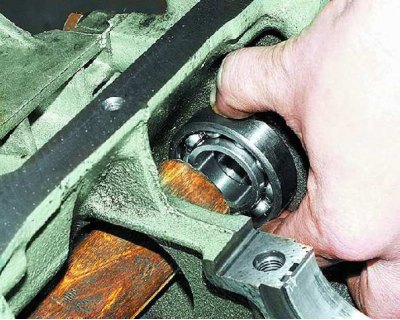
138. Install the bearing retaining rings, press the plugs, applying a thin layer of sealant to them, and the front balance shaft bearings into the cylinder block mounting seats. Press the bearings using a mandrel (Dadv.=50 mm, dint.=30 mm, L=100 mm), applying force to the outer rings. Press the bearings from the inside of the cylinder block.
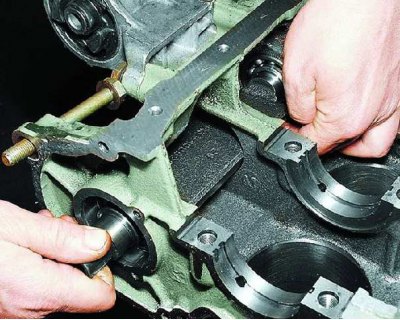
139. Install the balance shafts.
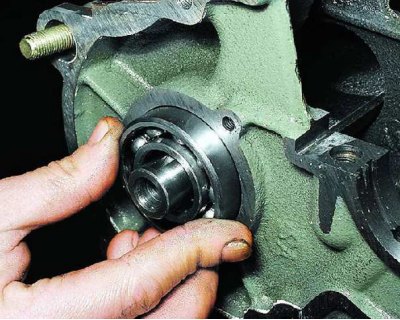
140. Install the rear balance shaft bearings and press them in using a suitable drift, applying force to the outer bearing race.
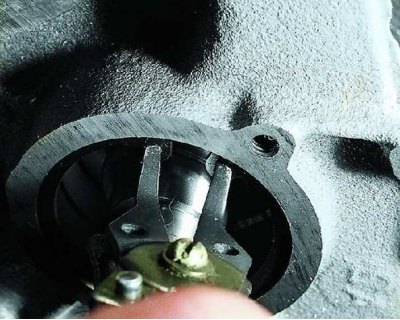
141. Install the retaining rings of the rear balance shaft bearings using special pliers.
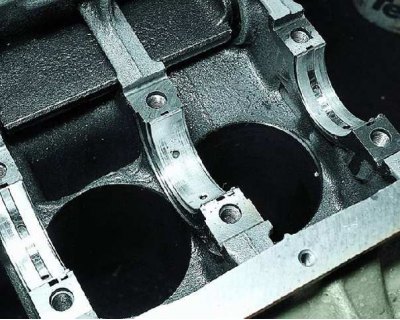
142. Lubricate the crankshaft main bearing shells with a thin layer of engine oil and install them in the cylinder block bed (install the fixing tabs of the inserts into the grooves of the beds). The center neck insert does not have a longitudinal groove.
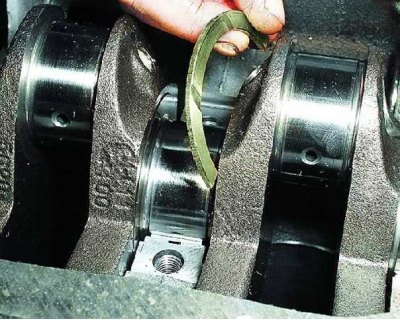
143. Install the engine crankshaft in the cylinder block bed, having previously lubricated the journals of the shaft (main and connecting rod) a thin layer of engine oil. Install the thrust half rings on the middle journal of the crankshaft, having previously lubricated them with a thin layer of engine oil (with the grooves towards the journals of the shaft, install the ring with a white aluminum coating on the front side of the crankshaft bed, and the metal-ceramic one on the other side of the bed). Turn the half rings so that their ends are flush with the end of the bed.
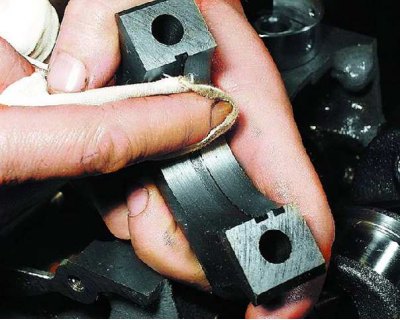
144. Wipe the main bearing caps with a clean cloth.
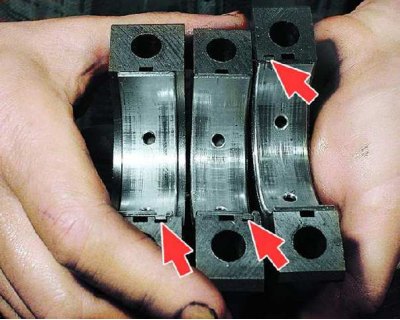
145. Lubricate the bearing shells with a thin layer of engine oil and install them into the main bearing caps (install the fixing tabs of the inserts into the grooves of the covers).
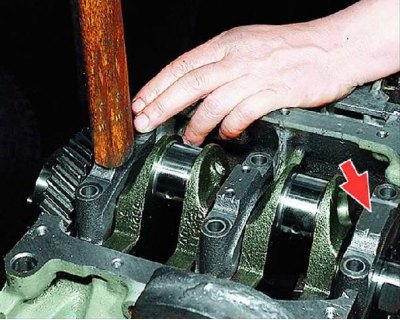
146. Install the main bearing caps according to the marks on them (one mark is the first cap from the front end of the crankshaft, two marks are the second, three marks are the third). The marks on the caps should be located on the generator side.
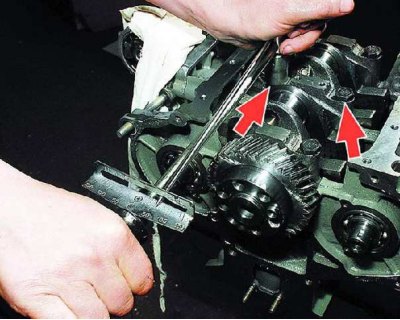
147. Tighten the main bearing cap bolts to 68.31–84.38 N·m (6.97–8.61 kgf·m). Tighten the center cap bolts first.
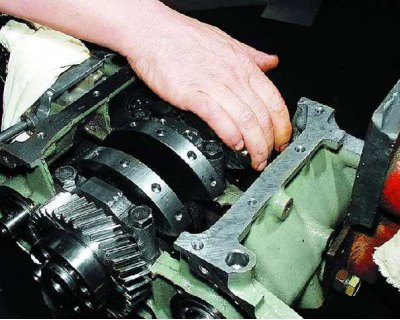
148. Check if the crankshaft rotates. It should rotate easily, without jamming.
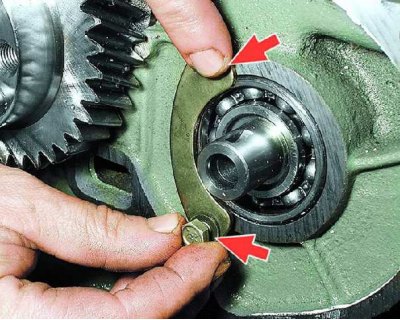
149. Install the balance shaft rear bearing thrust plates and tighten their mounting bolts (two bolts on each plate).
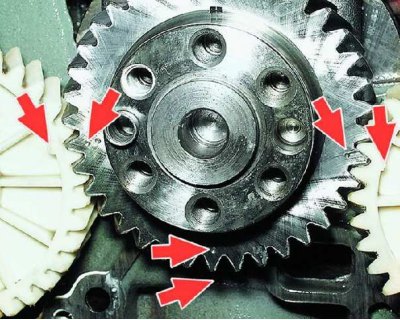
150. Turn the crankshaft so that the mark on the balance shaft drive gear aligns with the lug on the cylinder block. Install the keys in the slots of the rear ends of the balance shafts and the balance shaft gear. The wide mark on the balance shaft gear should align with the double mark on the crankshaft gear, and the narrow mark on the gear of the other balance shaft should align with the single mark on the crankshaft gear.
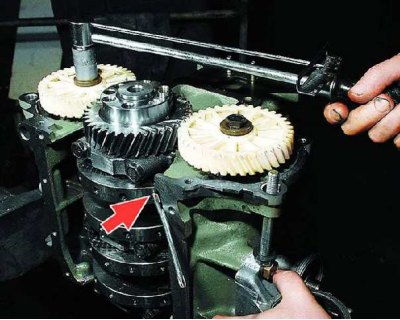
151. Tighten the gear mounting bolts to a torque of 45.82–56.60 N·m (4.68–5.78 kgf·m). To do this, secure the crankshaft from turning by inserting a metal rod into the balancing hole.
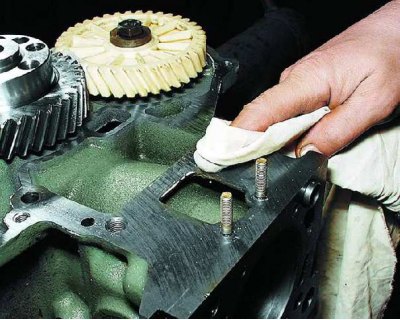
152. Degrease the mating surface of the crankshaft rear oil seal holder and...
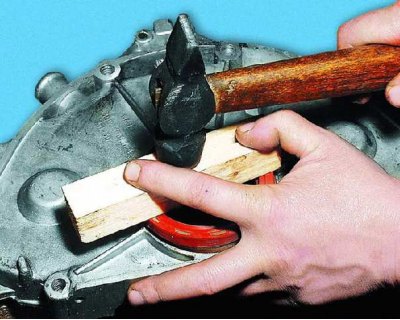
153. Press the seal into the holder (using a wooden block).
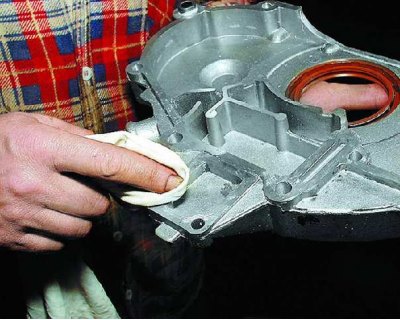
154. Degrease the surface of the cylinder block with gasoline, observing fire safety measures.
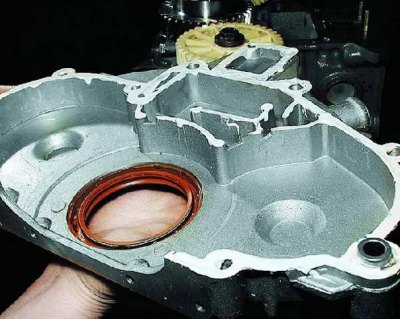
155....apply a thin layer of sealant to this surface.
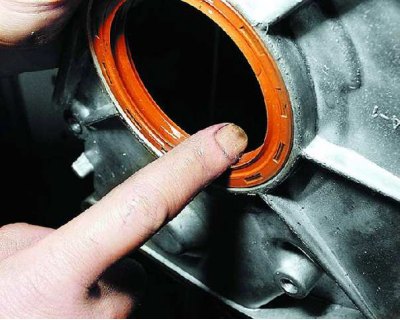
156. Lubricate the working lip of the rear crankshaft oil seal with a thin layer of engine oil.
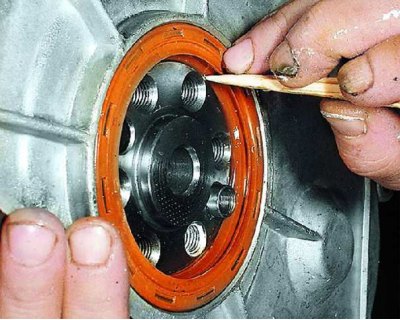
157. Install the crankshaft rear oil seal holder onto the engine. Tuck the working edge of the oil seal with a wooden stick.
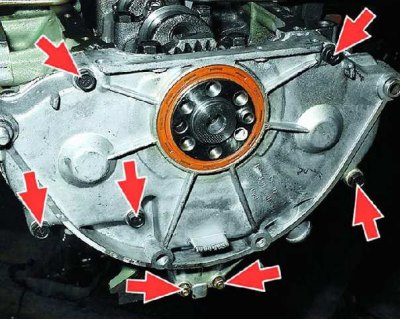
158. Tighten the five bolts and two nuts securing the crankshaft rear oil seal retainer.
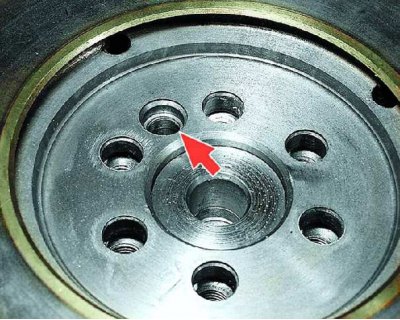
159. Install the flywheel onto the crankshaft with the clutch pins facing outward, aligning the marked hole with the bushing on the crankshaft flange.
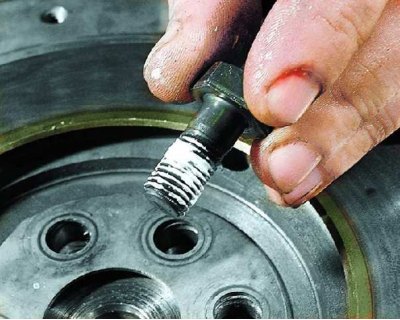
160. Install the flywheel bolt plate, apply a thin layer of sealant to the flywheel mounting bolts and...
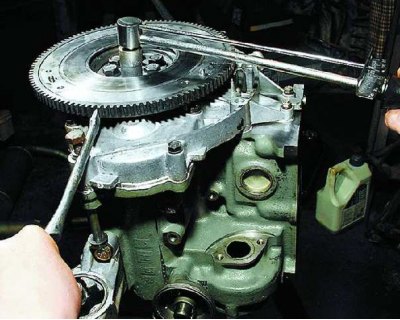
161....holding the flywheel from turning, tighten its mounting bolts to a torque of 70.81–87.47 Nm (7.22–8.92 kgf/m). Tighten the bolts crosswise.
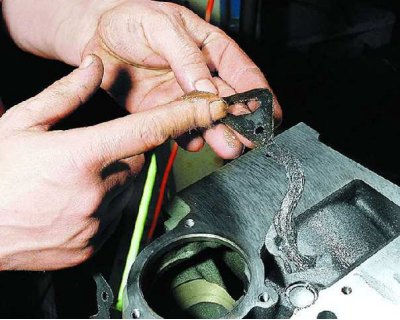
162. For ease of installation of the oil pump, lubricate the pump gasket with a thin layer of consistent grease (Litol-24) and install it on the surface of the cylinder block.
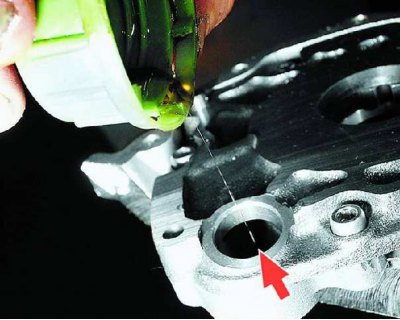
163. Pour 10-20 g of engine oil into the oil pump housing and...
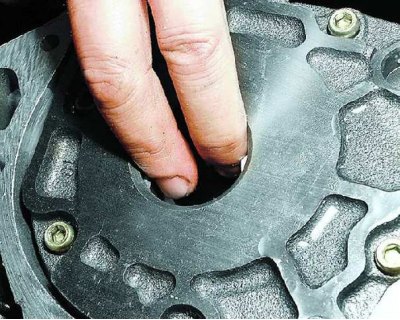
164....turn the oil pump gears a few turns to lubricate them. The gears should turn easily, without sticking.
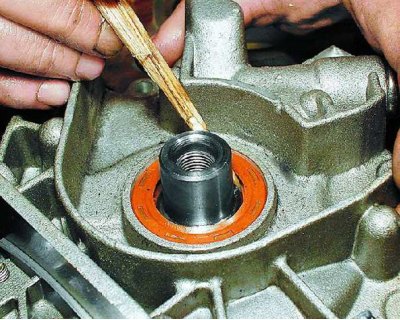
165. Install the oil pump assembly onto the cylinder block mating surface (see subsection 10.8.2.), tuck the working edge of the front oil seal with a wooden stick and...
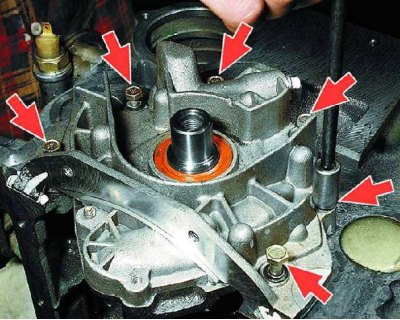
166. Tighten the six bolts securing the oil pump to the cylinder block.
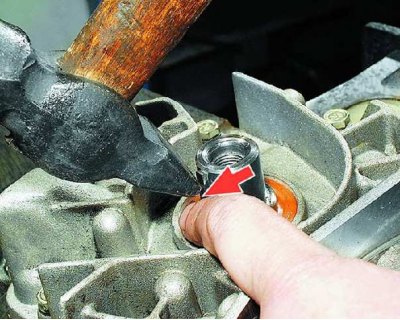
167. Install the key into the groove at the front end of the crankshaft.
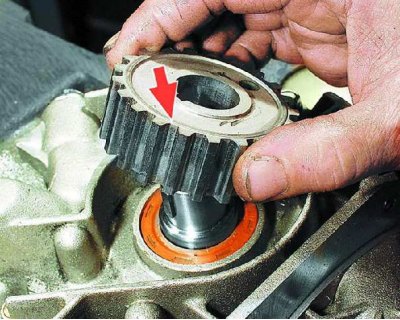
168. Install the crankshaft pulley and...
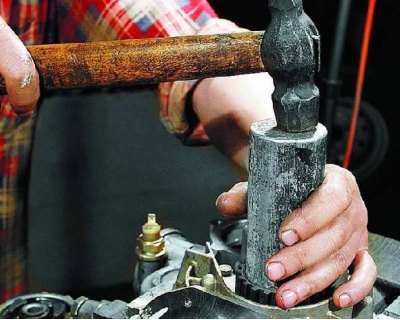
169....press it onto the shaft using a soft metal mandrel.
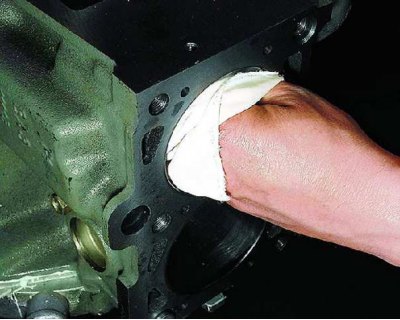
170. Wipe the cylinder mirrors with a clean cloth. Match the pistons to the cylinders by diameter (the group marking is applied to the flange of the cylinder block oil pan on the piston bottom) and mass.
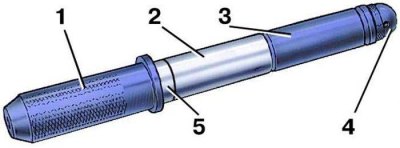
171. Place piston pin 2 on shaft 1 of the piston pin installation device with spacer ring 5. Then place guide sleeve 3 and secure it with screw 4 without tightening the screw. Dimensions of the spacer ring: outer diameter 22 mm, inner diameter 15 mm, thickness 4 mm.
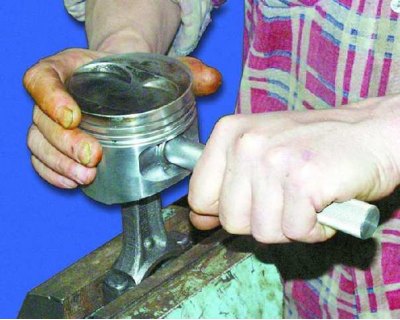
172. Heat the connecting rod upper head to 240°C in an oven for 15 minutes. Clamp the connecting rod in a vice, install the piston on it so that the holes for the pin match, and insert the device with the pin into the holes of the piston and connecting rod until it stops. For correct installation of the pin, the piston must be pressed with the boss against the upper head of the connecting rod in the direction of pressing. Please note that...
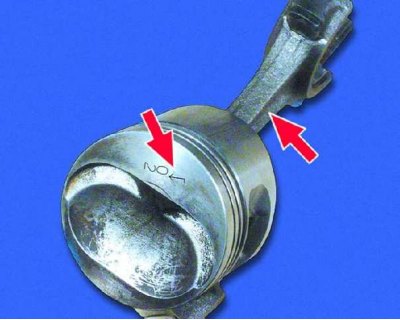
173....the piston is installed on the connecting rod so that the arrow on the piston bottom points in the opposite direction from the part number cast on the connecting rod. If there is an oil outlet hole on the lower head of the connecting rod, the arrow on the piston should point towards this hole.
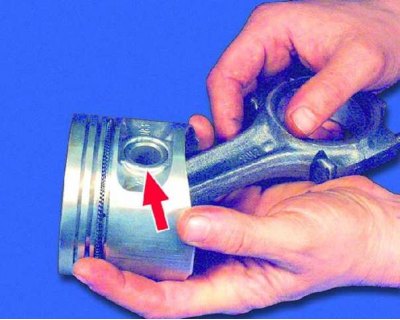
174. After the connecting rod has cooled, lubricate the piston pin through the hole in the piston bosses.
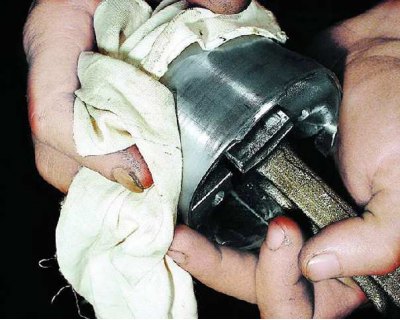
175. Wipe the pistons and connecting rods with a clean rag. Install the rings on the pistons (see operations 100–103).
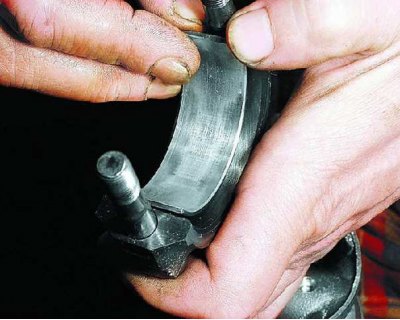
176. Install the connecting rod bearing shells into the connecting rod and lubricate them with engine oil.
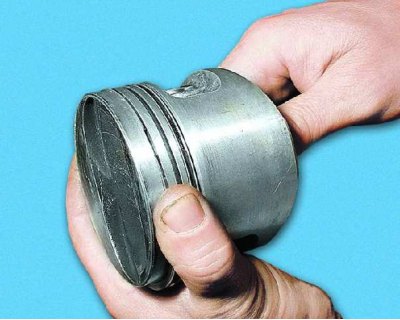
177. Check the ease of movement of the rings in the piston grooves by rotating the rings. Position the ring locks at an angle of 120°.
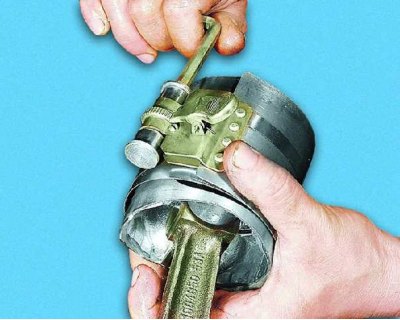
178. Using a special mandrel, compress the piston rings and...
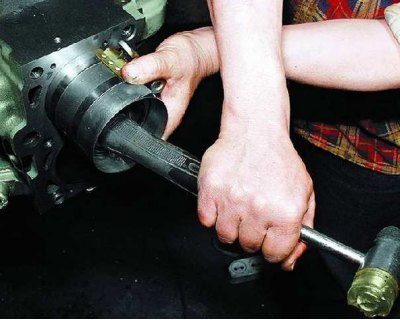
179.... gently hitting the piston bottom with the hammer handle, install the pistons together with the connecting rods into the cylinder so that the arrow on the piston bottom points toward the camshaft drive. The mandrel should be pressed tightly against the cylinder block, otherwise the piston rings may break.
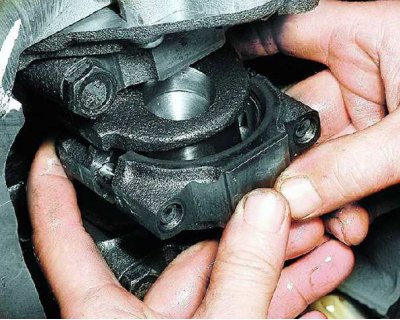
180. Install the connecting rod caps with liners onto the connecting rod bolts (in this case, the cylinder number on the connecting rod and its cover must be located on the same side) and...
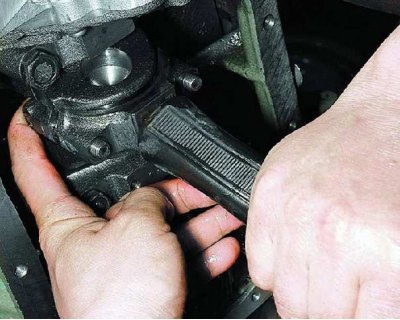
181....settle them down with the handle of a hammer.
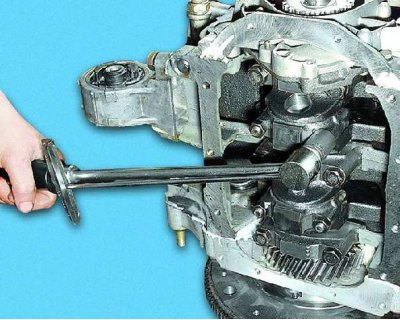
182. Tighten the connecting rod bearing cap nuts to a torque of 43.32–53.51 N·m (4.42–5.46 kgf·m).
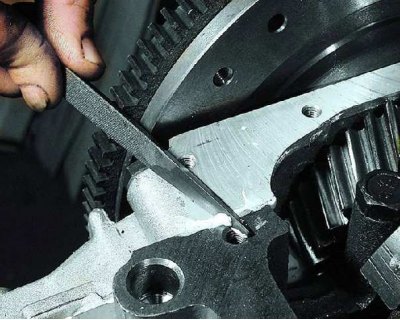
183. Remove any protruding parts of the oil pump gasket and excess sealant from the mating surface of the cylinder block under the oil pan.
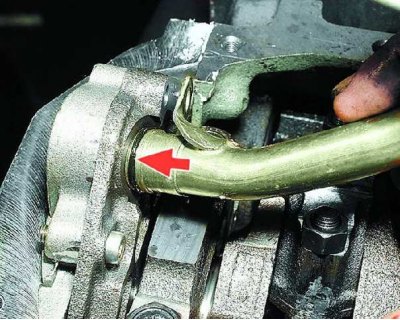
184. Install the oil receiver with the sealing ring (shown by arrow) and tighten the three bolts that secure it.
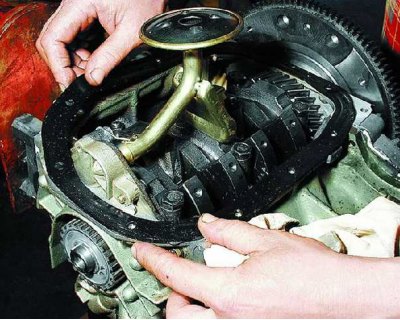
185. To facilitate installation of the crankcase, lubricate the oil pan gasket with a thin layer of consistent grease and install it on the surface of the cylinder block.
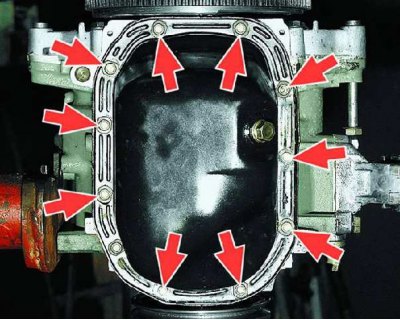
186. Install the oil pan and tighten the eleven bolts that secure it.
187. Install the cylinder head (see subsection 10.4.1.). Then assemble the engine in the reverse order of disassembly. Install the engine on the subframe (see operations 1–40). Adjust the tension of the camshaft and generator drive belts.