




- key "13"
- cap pressing mandrel
- valve spring compressor
- cap remover
- mandrels for pressing out and pressing in guide bushings
- tweezers
- beard
- hammer
- scraper
Remove the head from the cylinder block (see subsection 10.4.1.) and clean it.
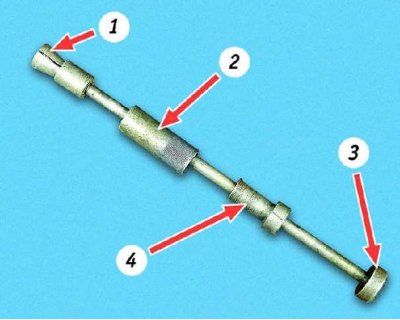
Cap remover tool: 1 - collet; 2 - bushing; 3 - handle; 4 - striker
When the clearance in the valve drive is increased, a characteristic knock appears, usually at regular intervals (its frequency is lower than any other knock in the engine). If adjusting the valve clearances does not produce positive results, check the condition of the camshaft and the bearing surfaces under the camshaft journals.
In workshops equipped with special tools and devices, it is possible to check the radial runout of the middle journal of the camshaft, which should not exceed 0.02 mm, and the gap between the bearing holes and the journals of the camshaft, which should not exceed 0.2 mm (the gap for new parts is 0.069 - 0.11 mm).
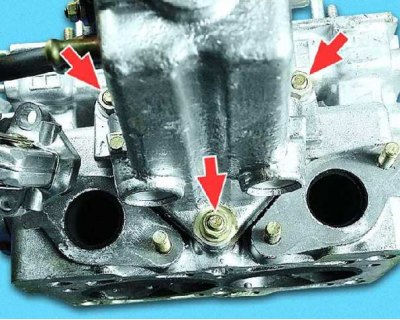
1. Unscrew the three nuts securing the intake pipe to the cylinder head.
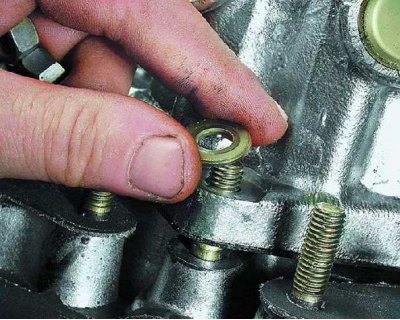
2. Please note: There are flat washers under the nuts.
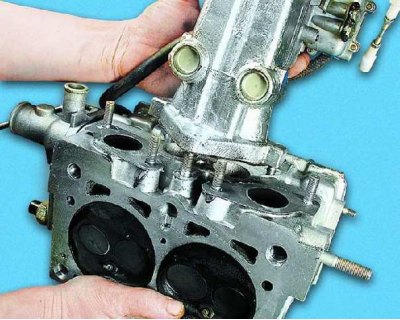
3. Remove the intake pipe from the cylinder head studs.
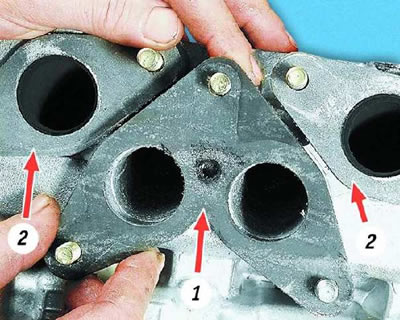
4. Remove the gasket 1 of the intake pipe and two gaskets 2 of the exhaust pipe from the head studs.
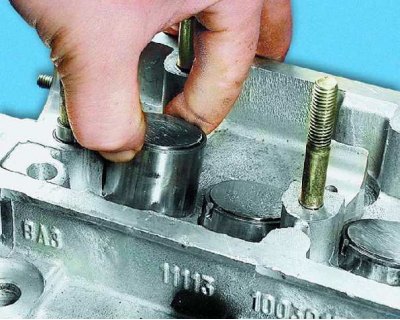
5. Remove the valve lifters with adjusting washers.
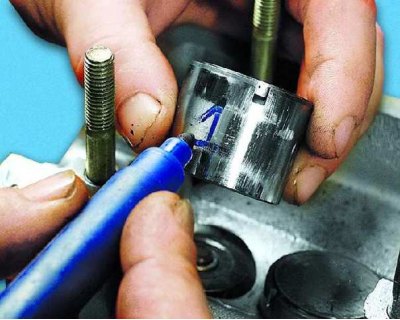
6. Mark the pushers or arrange them in order so that you can put them back in the same place later. In this case...
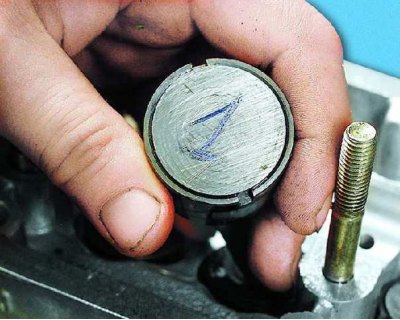
7....do not remove the adjusting washers from the tappets unless necessary, to avoid mixing them up.
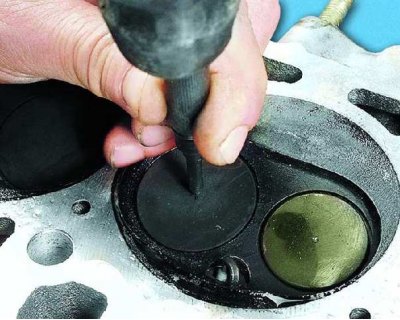
8. Mark the valves with cylinder numbers, for example by punching.
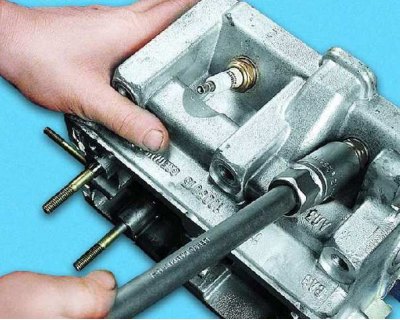
9. Remove both spark plugs.
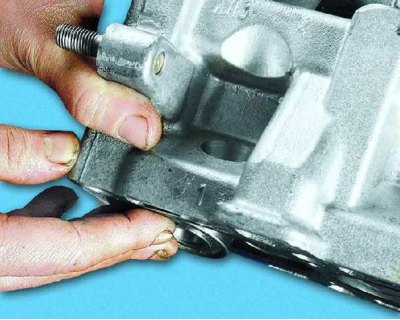
10. Place a suitable support, such as a bearing, under the valve to be removed.
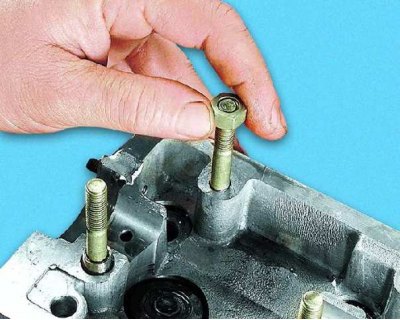
11. Thread a nut onto the stud to secure the valve spring compressor (use a nut without a serrated flange).
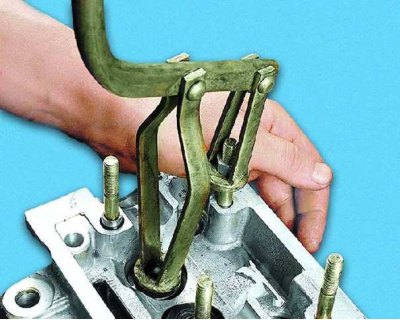
12. Install the valve spring compressor and compress the springs.
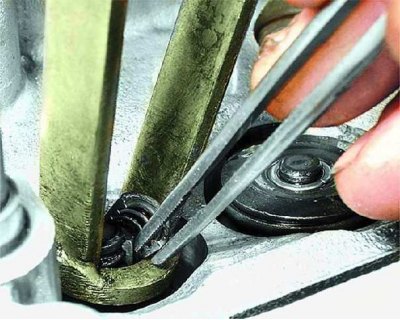
13. Remove the two crackers with tweezers. Then remove the device.
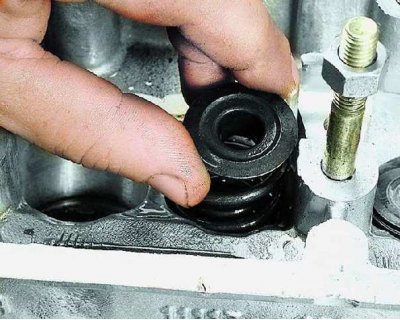
14. Remove the upper spring plate...
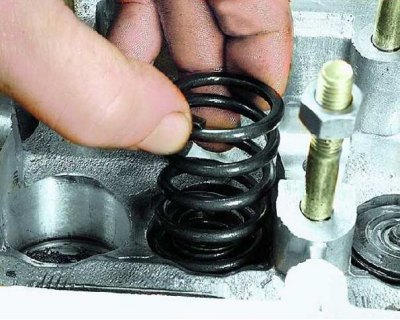
15....the outer spring and...
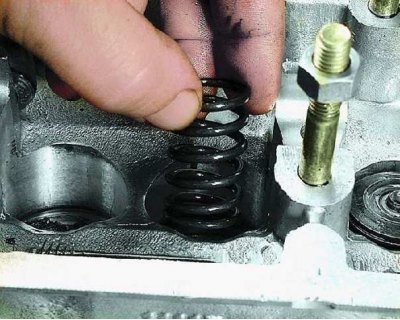
16....the inner valve spring. Remove the crackers and springs of the remaining valves in the same way.
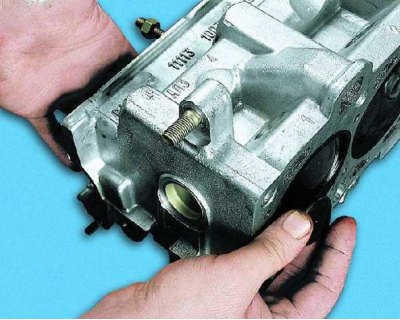
17. Remove the valves from the cylinder head on the combustion chamber side.
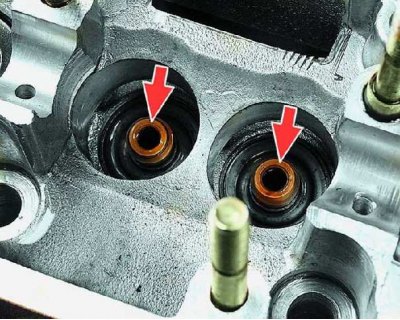
18. Press the oil seals off the guide bushings. To do this...
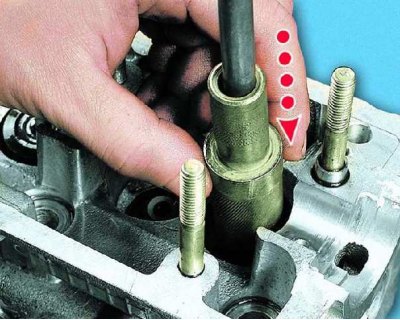
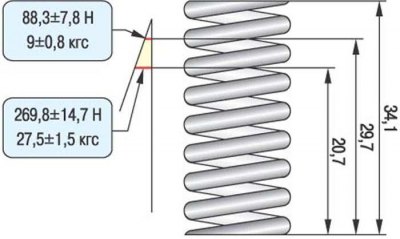
19....install the collet of the device onto the cap and sharply strike the striker on the sleeve of the device.
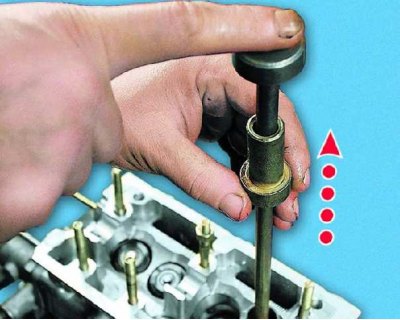
20. Then, just as sharply, hit the handle of the device with the striker...
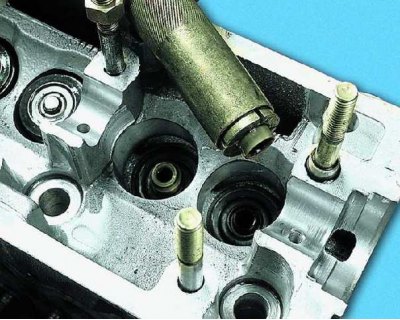
21....thereby pressing the cap off the guide sleeve.
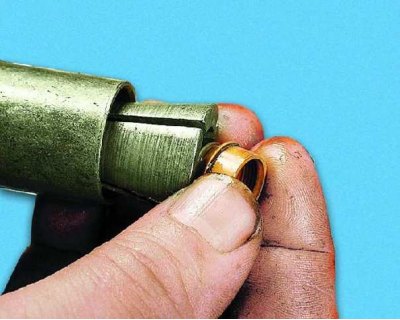
22. Remove the cap from the collet of the device.
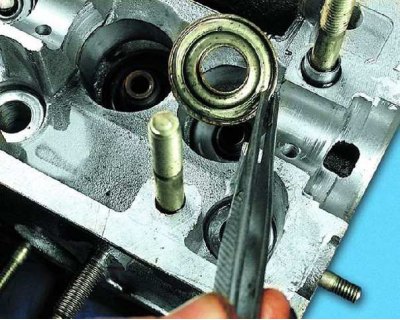
23. Remove the lower valve spring retainers.
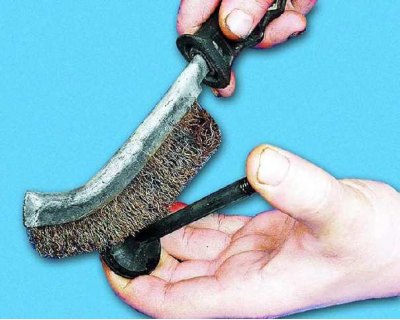
24. Clean the carbon deposits from the valves with a suitable metal tool. Then carefully inspect the valves.
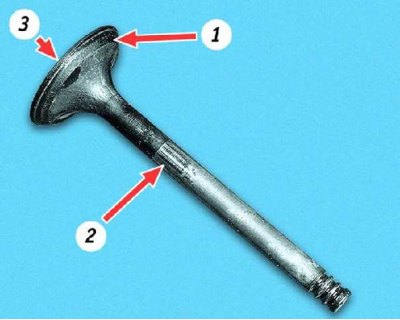
25. Replace valves with the following defects: deep grooves and scratches on the working chamfer 1, cracks, deformations of the stem 2, warping of the plate 3, traces of burnout. Shallow grooves and scratches on the working chamfer can be removed by grinding the valves (see subsection 10.5.2.).
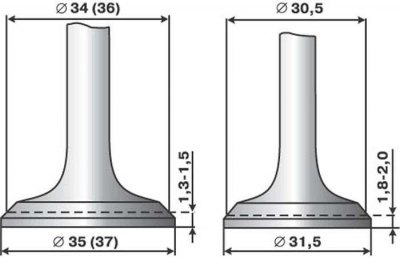
26. In a specialized workshop, the working chamfers of valves with damage that cannot be removed by grinding can be ground on a special machine. When grinding, it is necessary to maintain the dimensions indicated in the figure (in brackets are given different dimensions for engine mod. 11113). On the left in the picture is the inlet valve, on the right is the outlet valve.
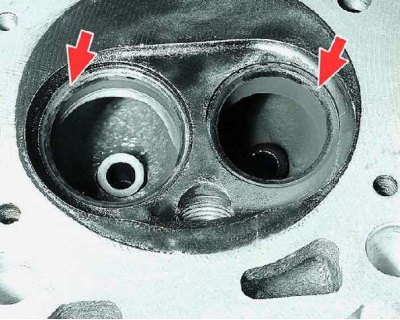
27. Check the condition of the valve seats. There should be no signs of wear, cavities, corrosion, etc. on the working chamfers of the seats. The valve seats can be replaced in a specialized workshop. Minor damage (minor scratches, marks, etc.) can be removed by grinding the valves (see subsection 10.5.2.).
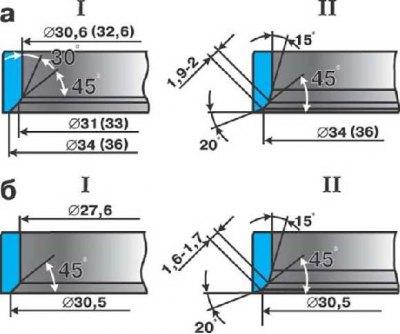
28. More significant valve seat defects are eliminated by grinding to the dimensions shown in the figure: a - inlet valve seat; b - exhaust valve seat; I - new saddle; II - saddle after repair. It is recommended to grind the saddles in a specialized workshop. The different dimensions for engine mod. 11113 are given in brackets.
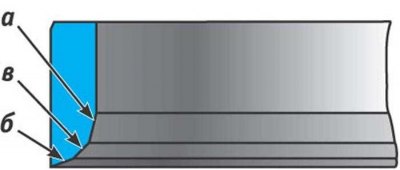
29. If you have metalworking skills, you can eliminate defects manually using a set of special cutters. First, chamfer a is processed at an angle of 15°, then chamfer b at an angle of 20° and chamfer c at an angle of 45°. After processing, it is necessary to grind the valves (see subsection 10.5.2.).
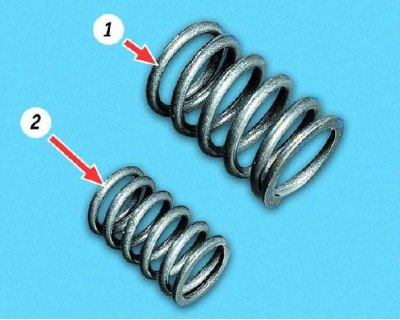
30. Check the condition of the outer 1 and inner 2 valve springs. Replace any bent, broken or cracked springs.
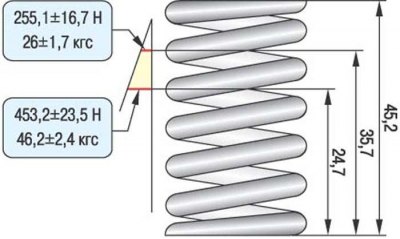
31. To check the elasticity of the outer spring, measure its height in a free state and then under two different loads. If the spring does not meet the required parameters, replace it.
32. Check the elasticity of the inner spring using the same method. If the spring does not meet the required parameters, replace it.
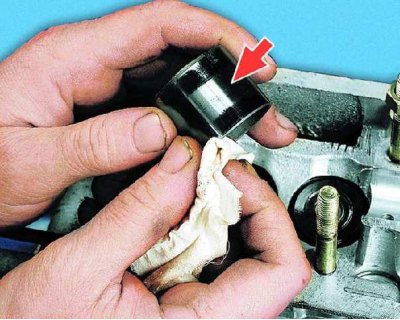
33. Inspect the valve lifters. If there are nicks, scratches, etc. on the working surface of the lifter, replace it.
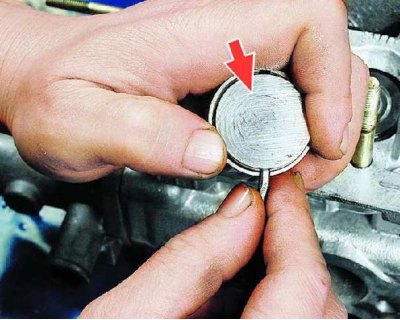
34. The working surfaces of the adjusting washers should not have any burrs, nicks, scratches, traces of stepped or uneven wear, or metal dragging. In case of such defects, the washers should be replaced. Concentric traces of running-in with the camshaft cams are allowed on the washers.
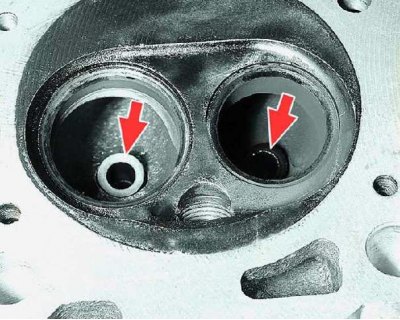
35. Have the clearance between the guide bushings and the valves checked at a specialist workshop. This is defined as the difference between the bushing bore diameter and the valve stem diameter.
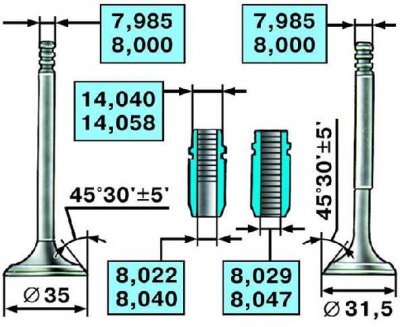
36. To measure the diameter of the bushing hole, a special tool (a bore gauge) is needed. The nominal clearance for intake valves is 0.02-0.05 mm, and for exhaust valves - 0.03-0.06 mm. The maximum permissible clearance for intake and exhaust valves is 0.3 mm.
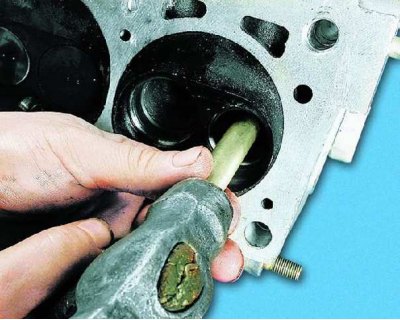
37. A gap that has not reached the maximum permissible value can be eliminated by replacing the valve. If you cannot select a valve or the gap exceeds the maximum permissible value, replace the guide bushing. Press out the bushing from the combustion chamber side using a special mandrel.
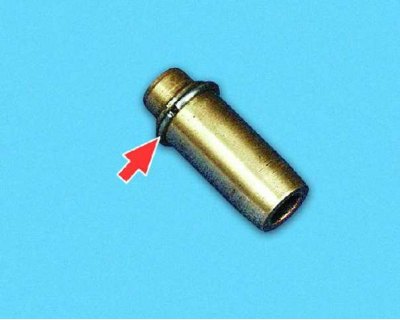
38. Bushings with retaining rings are supplied as spare parts. The bushings have an increased outer diameter and a reduced diameter of the valve opening.
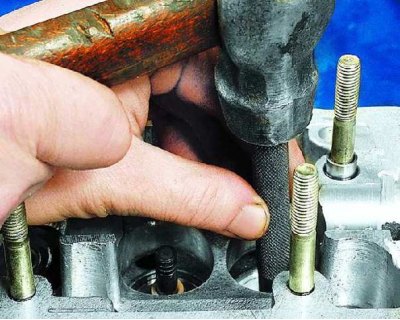
39. After lubricating the bushing with engine oil, insert it into a special mandrel and press it in from the camshaft side until the retaining ring stops against the cylinder head. After that, ream the hole in the bushing using a reamer to a diameter of 8.022-8.040 mm for intake valves and 8.029-8.047 mm for exhaust valves.
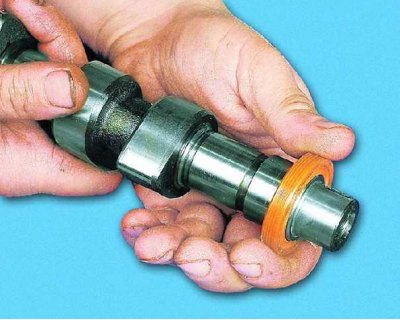
40. Remove the oil seal from the camshaft.
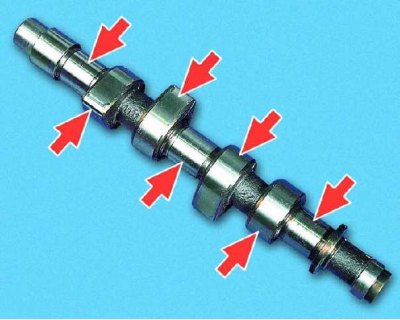
41. Replace the camshaft if its journals and cams show signs of wear, scoring, or deep scratches.
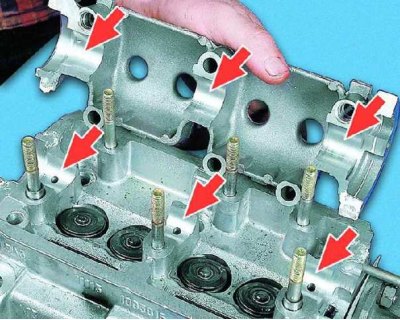
42. Replace the cylinder head and bearing housing if they have cracks or if the bearing surfaces show signs of wear, scoring, or deep scratches. The bearing housing is processed together with the cylinder head, so they must be replaced together.
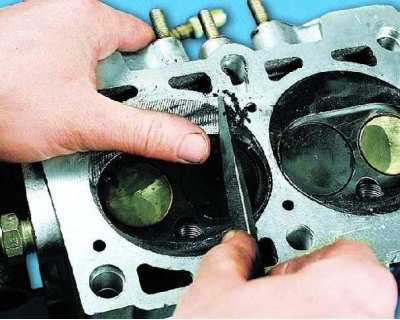
43. Clean the combustion chambers from carbon deposits. Inspect the head. If there are cracks or traces of burnout in the combustion chambers, replace the head and the camshaft bearing housing.
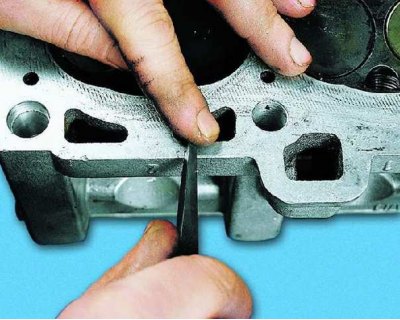
44. Remove burrs and nicks from the mating surface of the cylinder head.
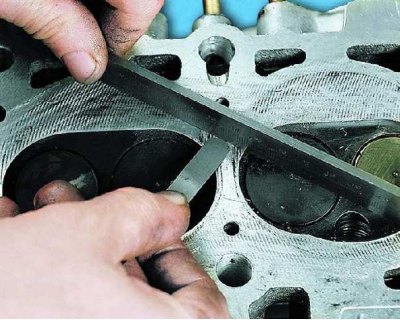
45. Check the flatness of the surface adjacent to the cylinder block. To do this, place a ruler with its edge on the surface of the head in the middle along the axis of the head, and then measure the gap between the plane of the head and the ruler diagonally and with a feeler gauge. Replace the head if the gap exceeds 0.1 mm.
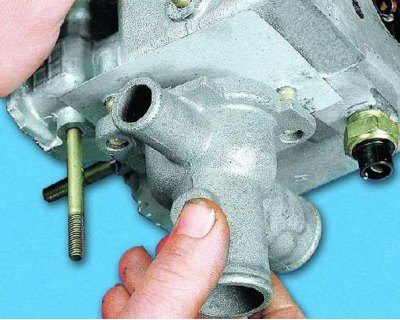
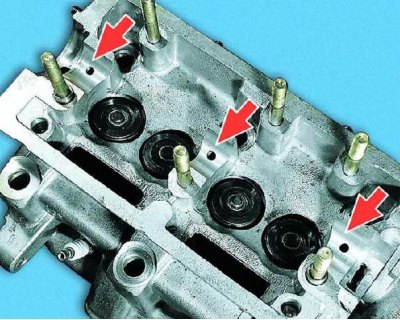
46. To check the tightness of the head, remove the cooling system pipe from the studs by unscrewing the two mounting nuts; plug the hole in the cylinder head by installing, for example, a blind gasket made of thick cardboard under the branch pipe; tighten the mounting nuts and...
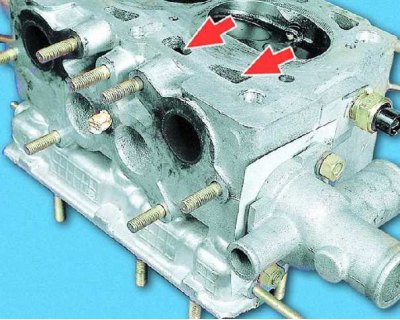
47....pour kerosene into the water jacket channels. If the kerosene level drops, the head has cracks and needs to be replaced. After checking, do not forget to remove the cardboard gasket.
The material is posted on the website (VazBook.ru)
48. Flush the oil channels of the cylinder head with gasoline using a bulb syringe or a syringe and blow out with compressed air.
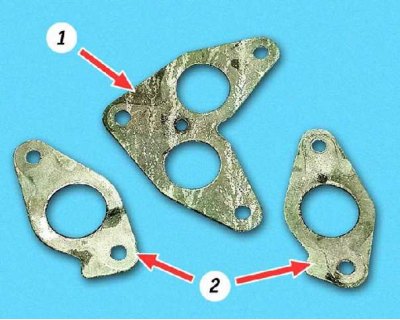
49. Replace damaged gaskets of the inlet 1 and outlet 2 muffler pipes.
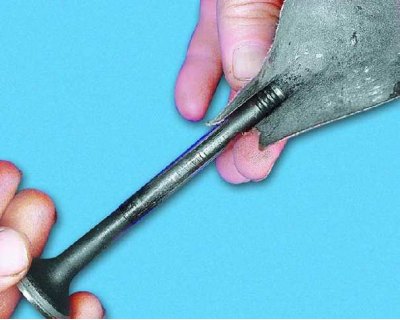
50. Place the valve to the seat (see subsection 10.5.2.). If you are installing an old valve, remove burrs from the grooves under the crackers.
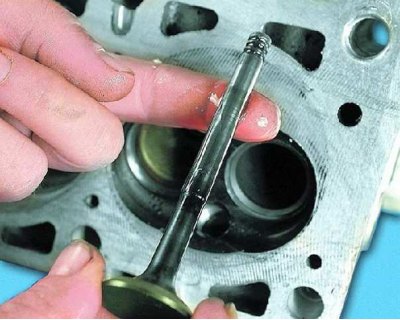
51. Lubricate the valves with engine oil and install them into the head in accordance with the previously made markings.
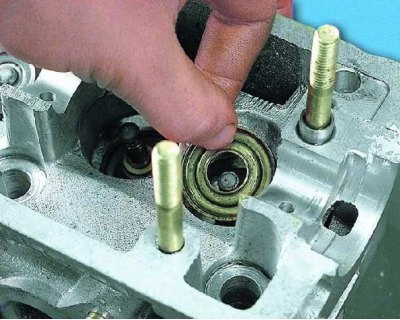
52. Install the lower valve spring retainers.
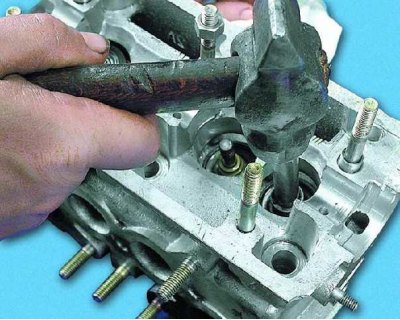
53. Using a mandrel, press in the oil seals, after dipping them in oil (see subsection 10.4.3.).
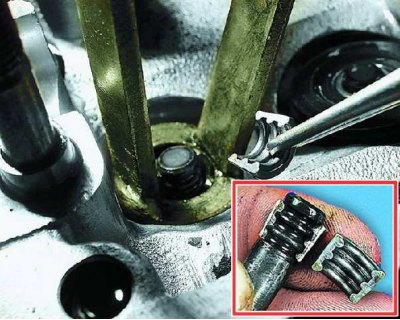
54. Install the springs and the upper spring plate in the reverse order of removal. Install the crackers using the tool so that they fit into the grooves of the valve stem.
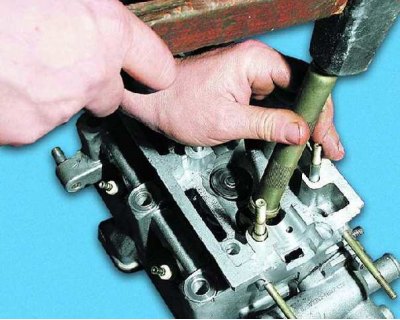
55. Hit the ends of the valves with a hammer through a metal rod to seat the crackers. Install the tappets and intake manifold with gaskets in the reverse order of removal.