




- key "13"
- 5" hexagon"
- cap pressing mandrel
- valve spring compressor
- cap remover
- tin rod about 8mm in diameter (for example, solder)
- tweezers
- beard
- hammer
Disconnect the wire from the "–" terminal of the battery.

Special tool for replacing valve stem seals:
1 - mandrel for pressing caps
2 - device for compressing valve springs
3 - cap removal tool
4 - tin rod with a diameter of about 8 mm (for example, solder)
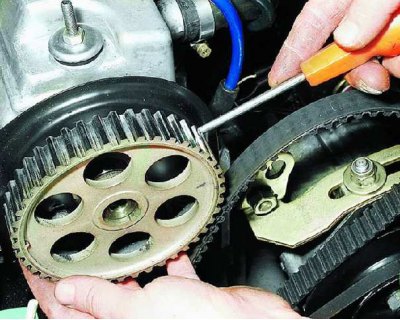
1. Remove the pulley from the camshaft (see subsection 10.4.2, operations 1–5).
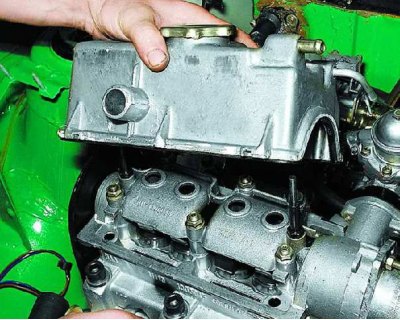
2. Remove the cylinder head cover (see subsection 10.2, operations 1–10).
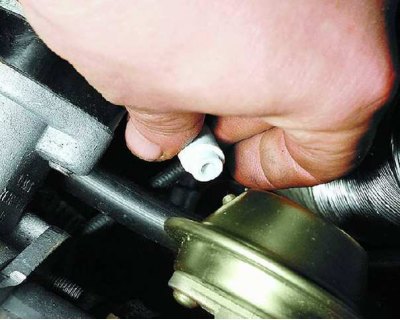
3. Disconnect the vacuum hose from the spark timing sensor vacuum regulator.
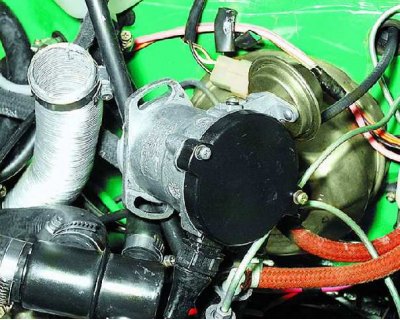
4. Unscrew the three nuts securing the spark timing sensor, remove it from the studs and move it to the side without disconnecting the wiring harness from it.
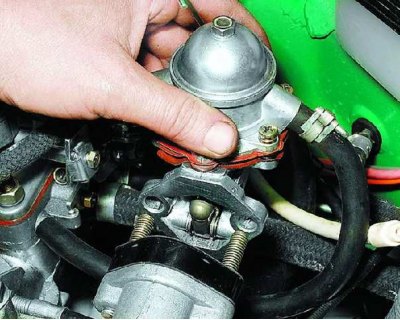
5. Remove the fuel pump from the accessory drive housing studs (see subsection 10.10.3.) and move it to the side without disconnecting the hoses from it.
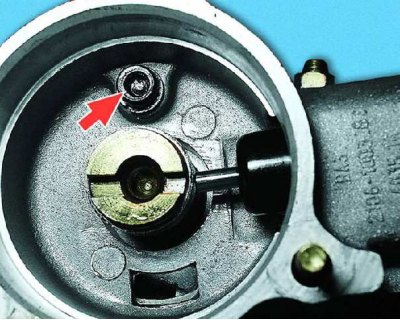
6. Loosen the auxiliary drive housing mounting bolt.
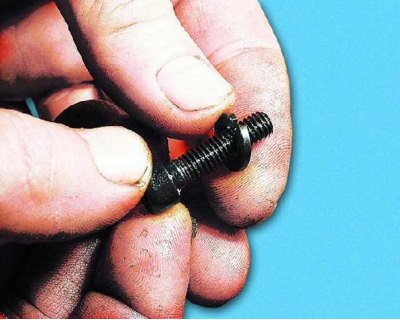
7. Please note: There is a spring washer installed under the bolt head.
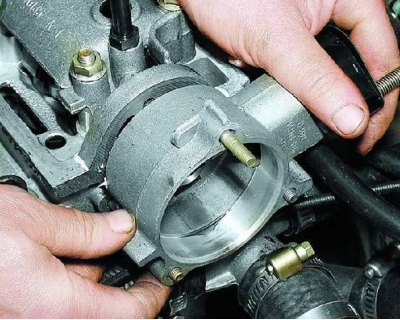
8. Remove the accessory drive housing from the studs.
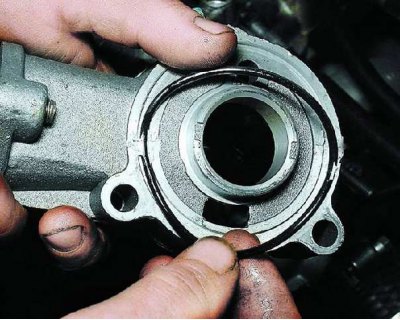
9. Check and replace the torn or loose sealing ring installed in the accessory drive housing.
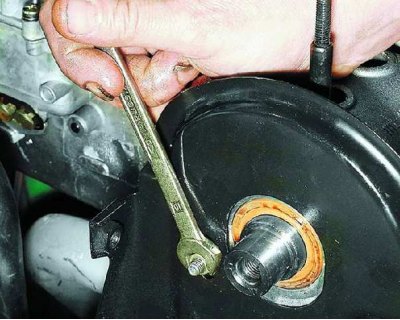
10. Loosen the upper nut of the rear cover of the camshaft drive belt.
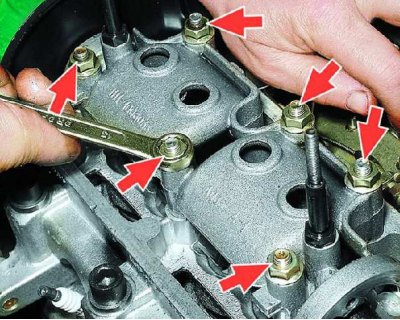
11. Remove the six nuts securing the camshaft bearing housing.
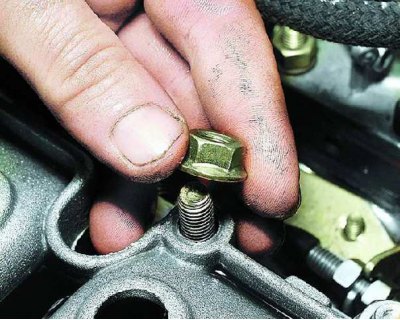
12. Please note that the nuts have serrated flanges.
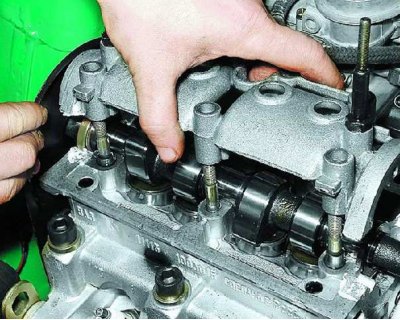
13. Remove the camshaft bearing housing.
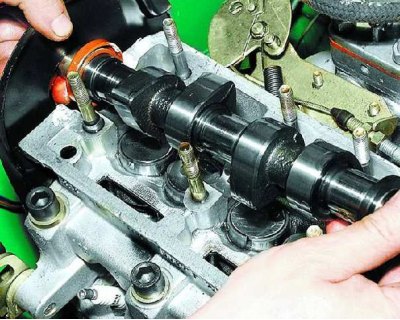
14. Remove the camshaft.
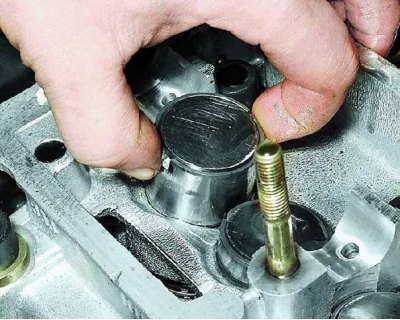
15. Remove the valve lifters.
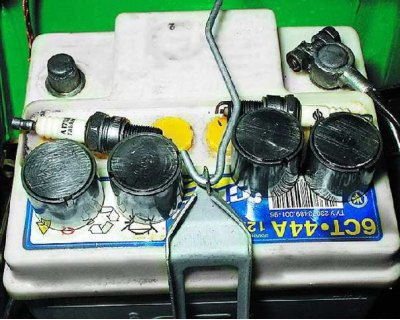
16. Mark the tappets or arrange them in order so that you can put them back in the same place later. Do not remove the adjusting washers from the tappets unless necessary, so as not to mix them up.
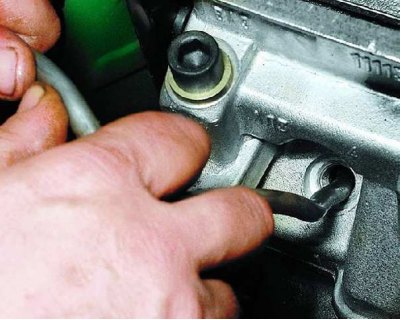
17. Turn the crankshaft so that the piston corresponding to the caps being replaced is at TDC. After removing the spark plug, insert a tin rod through the spark plug hole between the piston and the valve (to prevent the valve from falling down).
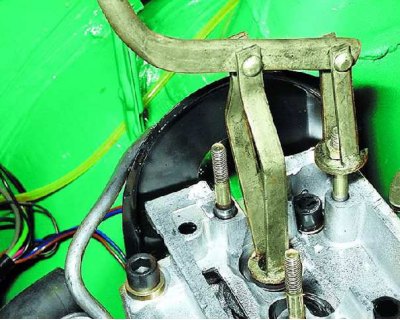
18. Install the valve spring compressor (as shown). When doing this, use a nut without a serrated flange.
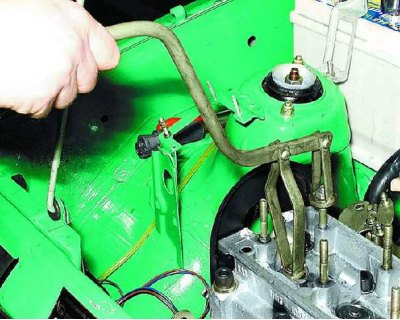
19. Compress the valve springs with the tool.
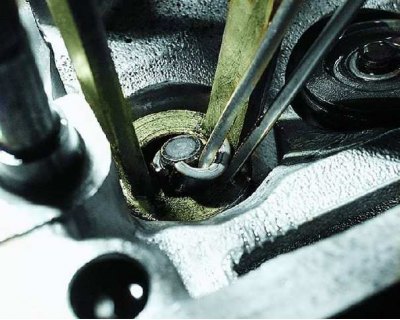
20. Remove the two crackers with tweezers. Then remove the device.
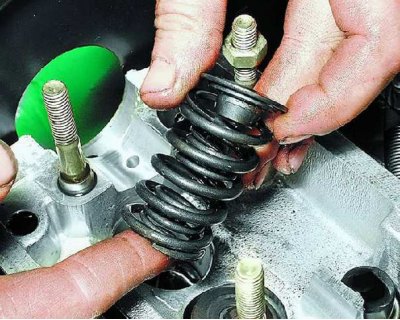
21. Remove the upper spring plate, inner and outer valve springs.
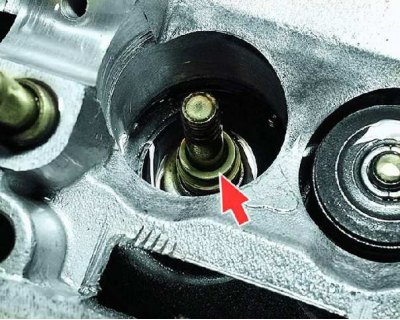
22. Press the oil seal off the guide bushing. To do this...
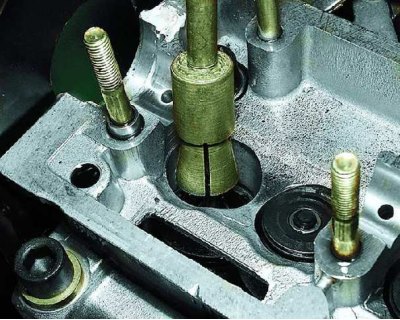
23....install the collet of the device onto the cap and...
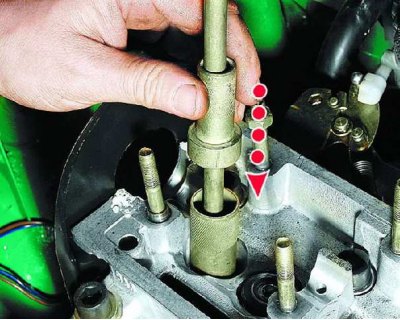
24....sharply strike the striker against the bushing of the device.
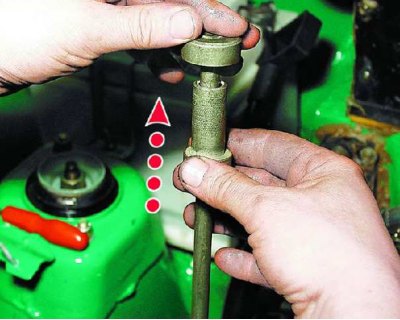
25. Then, just as sharply, strike the handle of the device with the striker.
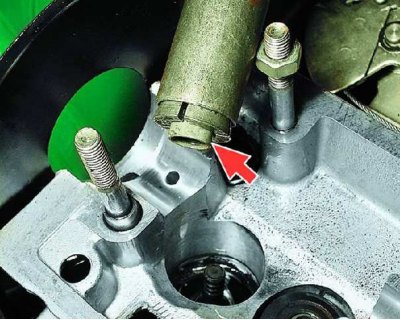
26....thereby pressing the cap off the guide bushing. Remove the cap from the collet of the device.
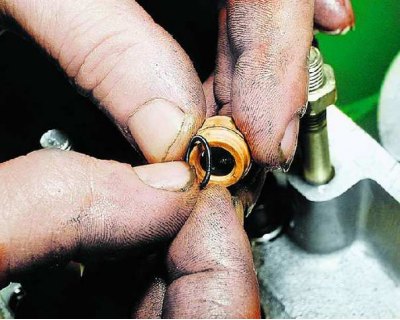
27. Before installing new valve stem seals, it is recommended to remove the springs from them. Otherwise, the seals can be damaged when they pass through the grooves on the valves.
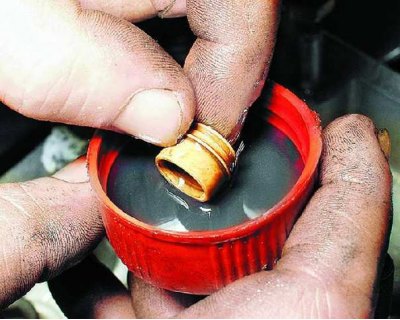
28. Dip the valve stem seals into engine oil.
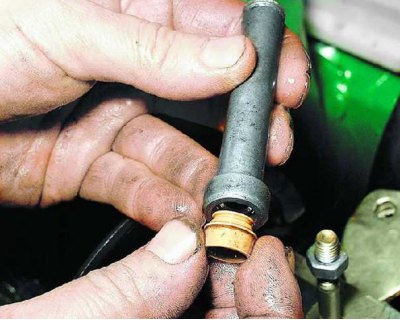
29. Insert the cap into the mandrel.
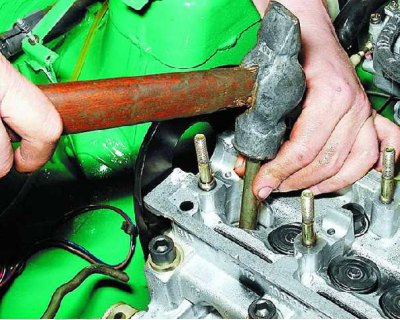
30. Carefully press the cap into the lower plate until it stops.
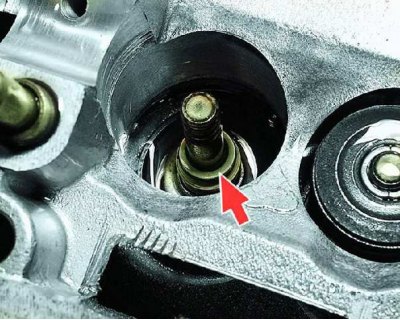
31. Install the spring on the cap if it was removed. Replace the remaining oil scraper caps in the same way.
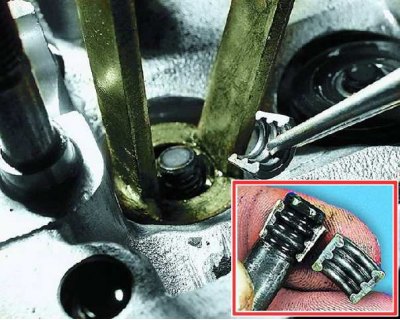
32. Install the springs and the upper spring plate in the reverse order of removal. Install the crackers using the device so that they fit into the grooves of the valve stem. Remove the tin rod from the spark plug hole.
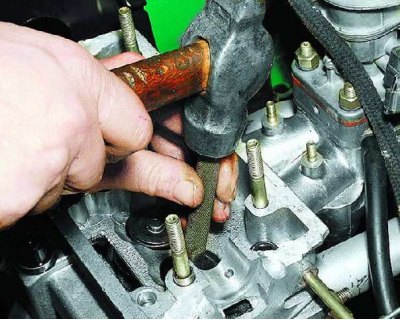
33. After installing the crackers, hit the ends of the valves with a hammer through a metal rod to seat the crackers in place.
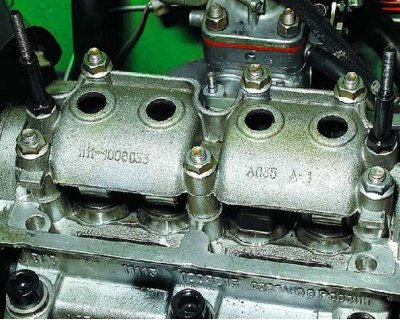
34. Install the tappets, camshaft and bearing cap in their places (see subsection 10.4.1, operations 48-54). Then turn the crankshaft until the TDC marks on the flywheel and the scale on the rear oil seal holder are aligned (see subsection 10.1.) and install the camshaft drive belt (see subsection 10.3.2.).
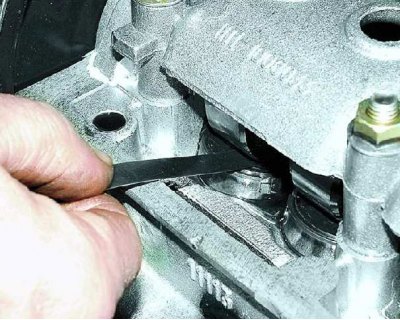
35. Check the valve clearances and adjust them if necessary (see subsection 10.2.). Install all parts, connect hoses and wires in the reverse order of removal.