




Contents: Disassembly ↓ Assembly ↓
Disassembly
Remove the piston rings. Place the piston in a support with a cylindrical recess and, using the A.60308* mandrel, centered in the piston pin hole, press out the pin under a press (with a force of at least 0.8 tf). Using a hammer for pressing out/in is not allowed: it can damage the piston.
* Step mandrel with diameter and length of working part of 21 and 80 mm respectively. Centering shank diameter (14.9±0.05) mm.
If some parts of the connecting rod and piston group are not damaged and slightly worn, they can be used again. Therefore, when disassembling, they are marked so that later the group can be assembled with the same parts and installed in the previous engine cylinder.
Assembly
Before assembly, select the pin to the piston. For correct mating, it is necessary that the piston pin, lubricated with engine oil, enters the piston hole with a simple press of the thumb and does not fall out of it if the piston with the piston pin is held in a vertical position. A falling pin is replaced with another one of the next category (see "Features of the device" in the same chapter). If there was a third-category finger in the piston, then replace the piston with a piston finger.
Since the pin is inserted into the upper head of the connecting rod with tension, it is necessary to heat it to expand the upper head. To do this, place the connecting rods in an electric furnace heated to 240°C for 15 minutes.
The finger is prepared for assembly in advance by placing it on roller 1 (figure 36) fixtures A.60325 (used for older model cars) and installing a 4 mm thick spacer ring between the fingers and the handle, with an outer diameter of 22 mm and an inner diameter of 15 mm. At the end of the device, install guide 2 and secure with screw 3. Tighten the screw loosely to avoid jamming when the finger expands from contact with the heated connecting rod.
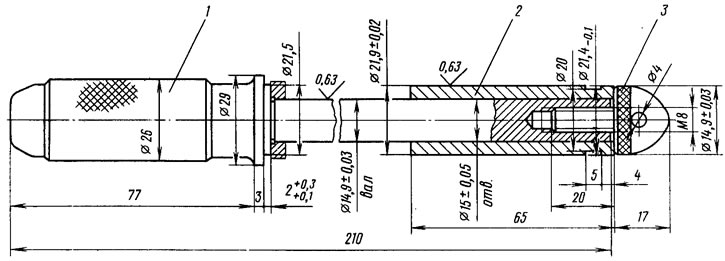
Figure 36. Device A.60325 for pressing in the piston pin
To properly connect the pin to the connecting rod, pressing must be done as quickly as possible, since the connecting rod cools quickly and after cooling it will not be possible to change the position of the pin. The piston with the connecting rod must be assembled so that the arrow on the piston bottom is directed towards the outlet of the oil hole on the lower head of the connecting rod (see figure 4).
The connecting rod, removed from the furnace, is quickly clamped in a vice. The piston is placed on the connecting rod, making sure that the hole for the pin matches the hole in the upper head of the connecting rod. The piston pin, secured to the device, is pushed into the piston hole and into the upper head of the connecting rod (figure 37) until the shoulder of the device stops against the piston. During this operation, the piston should be pressed with its boss against the upper head of the connecting rod in the direction of pressing the pin (shown by the arrow in Figure 37). Then the finger will take the correct position.
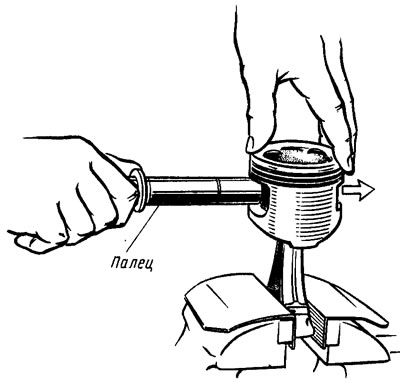
Figure 37. Pressing the piston pin into the upper connecting rod head
After the connecting rod has cooled, lubricate the pin with motor oil through the holes in the piston bosses. Install the piston rings, positioning their locks at 120°. Install the lower compression ring with the groove facing down.
Original source is on the resource www.VAZbook.ru