




The car uses a mechanical transmission, which includes: clutch, gearbox, transfer case, cardan transmissions, final drives, differentials (interwheel and interaxle) and drives of the leading wheels.
Fig. 25 shows the basic diagram of the transmission of the VAZ-2121 Niva car.
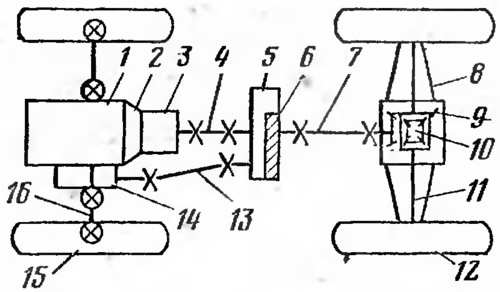
Fig. 25. Schematic diagram of the transmission:
1 - engine; 2 - clutch; 3 - gearbox; 4, 7, 13 - cardan gears; 5 - transfer case; 6 - center differential; 8 - rear axle; 9 - main gear; 10 - interwheel differential; 11, 16 - drive wheels; 12 - Wheel Sculpting; 14 - front axle; 15 - front wheels.
The torque from the engine is transmitted through the clutch 2 to the gearbox 3, where it changes in accordance with the engaged gear. From the gearbox, the torque is transmitted through the cardan transmission 4 to the transfer case 5, in which it is distributed equally between the front 14 and rear 8 driving axles of the car by the interaxle differential 6. From the transfer case, the torque is supplied through cardan transmissions 7 and 13 to the main gears 9 of the driving axles, in which it increases, and then through the differentials 10 and drives 11, 16 to the driving wheels. In the interaxle differentials 10, the torque is distributed equally between the right and left wheels of each axle. The drive of the driving wheels of the rear axle includes only the half-shafts. The drive of the wheels of the front axle consists of two cardan transmissions, each of which has two cardan joints. This makes it possible to supply torque to the front driving and steered wheels.