




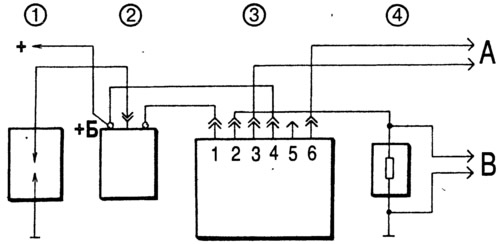
Fig. 7-25. Circuit for testing the switch:
1 - spark gap; 2 - ignition coil; 3 - switch; 4 - resistor 0.01 Ohm ±1%, not less than 20 W; A - to the rectangular pulse generator; B - to the oscilloscope.
Rectangular pulses simulating sensor pulses are fed to terminals "3" and "6" of the switch. The pulse frequency is from 3.33 to 233 Hz, and the duty cycle (the ratio of the period to the pulse duration t/tand) is equal to 3. Maximum voltage Umax - 10 V, and the minimum Umin - no more than 0.4 V (fig. 7-26, II). For a serviceable switch, the shape of the current pulses should correspond to the oscillogram I.
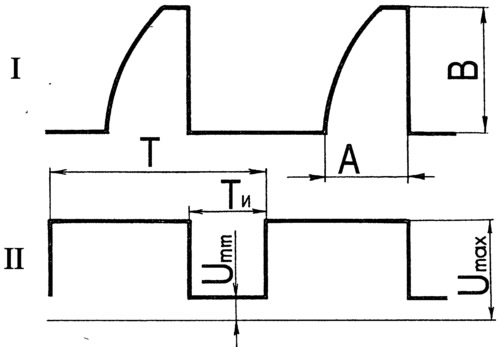
Fig. 7-26. Pulse shape on the oscilloscope screen:
I - commutator pulses; II - generator pulses; A - current accumulation time; B - maximum current value; T - pulse period; Tand - pulse duration.
Original source is on the resource [VAZbook.ru]
For switches 3620.3734 and 76.3734 with a supply voltage of (13.5±0.5) V, the current value (V) should be 7.5-8.5 A. The current accumulation time (A) is not standardized.
For the RT1903 switch, at a supply voltage of (13.5±0.2) V and a pulse frequency of 25 Hz, the current is 7-8 A, and the current accumulation time is 5.5-11.5 ms.
For the PZE4022 switch, at a supply voltage of (14±0.3) V and a frequency of 25 Hz, the current strength is 7.3-7.7 A, and the current accumulation time is not standardized.
For the K563.3747 switch, with a supply voltage of (13.5±0.5) V and a frequency of 33.3 Hz, the current strength is 7.3-7.7 A, and the current accumulation time is not standardized.
If the shape of the commutator pulses is distorted, then there may be interruptions in spark formation or it may occur with a delay. The engine will overheat and not develop rated power.