




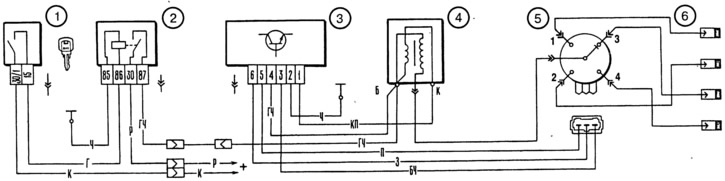
Fig. 7-17. Ignition system diagram:
1 - ignition switch; 2 - ignition relay; 3 - switch; 4 - ignition coil; 5-sensor-ignition distributor; 6 - spark plugs.
Ignition distributor sensor - type 3810.3706, four-spark, unshielded, with vacuum and centrifugal ignition advance regulators, with a built-in microelectronic control pulse sensor.
Switch - type 3620.3734, or 76.3734, or RT1903, or PZE4022, or K563.3747. It converts the control pulses of the sensor into current pulses in the primary winding of the ignition coil.
Ignition coil - type 8352.12, or 27.3705, or 027.3705, or 27.3705-01 - oil-filled, sealed with an open magnetic circuit.
Spark plugs - type A17DVRM or A17DVRM1 with interference suppression resistors.
Ignition switch - type 2101-3704000-11 with anti-theft locking device.
Warnings
The vehicle uses a high-energy ignition system with extensive use of electronics. Therefore, in order to avoid injury and damage to electronic components, it is necessary to follow the following rules.
When the engine is running, do not touch any elements of the ignition system (switch, ignition coil and high-voltage wires).
Do not start the engine using a spark gap and do not check the functionality of the ignition system "for a spark" between the tips of the spark plug wires and the "ground".
Do not run low voltage ignition system wires in the same harness with high voltage wires.
Ensure that the connection to the ground of the switch via the mounting screws is secure. This affects its smooth operation.
When the ignition is on, do not disconnect the wires from the battery terminals or disconnect the plug connector from the switch, as this may cause increased voltage on individual elements of its circuit and damage it.